Kingdom
Pseudomonadati
Phylum
Pseudomonadota
Class
Alphaproteobacteria
Order
Hyphomicrobiales
Family
Rhizobiaceae
Genus
Sinorhizobium
Description
Taxonomy
| Kingdom | Pseudomonadati |
|---|---|
| Phylum | Pseudomonadota |
| Class | Alphaproteobacteria |
| Order | Hyphomicrobiales |
| Family | Rhizobiaceae |
| Genus | Sinorhizobium |
| Species | Sinorhizobium numidicum |
| Strain | No strain |
Profile
| Physiology | |
|---|---|
| Gram staining properties | Not Available |
| Shape | Not Available |
| Mobility | Not Available |
| Flagellar presence | Yes |
| Number of membranes | Not Available |
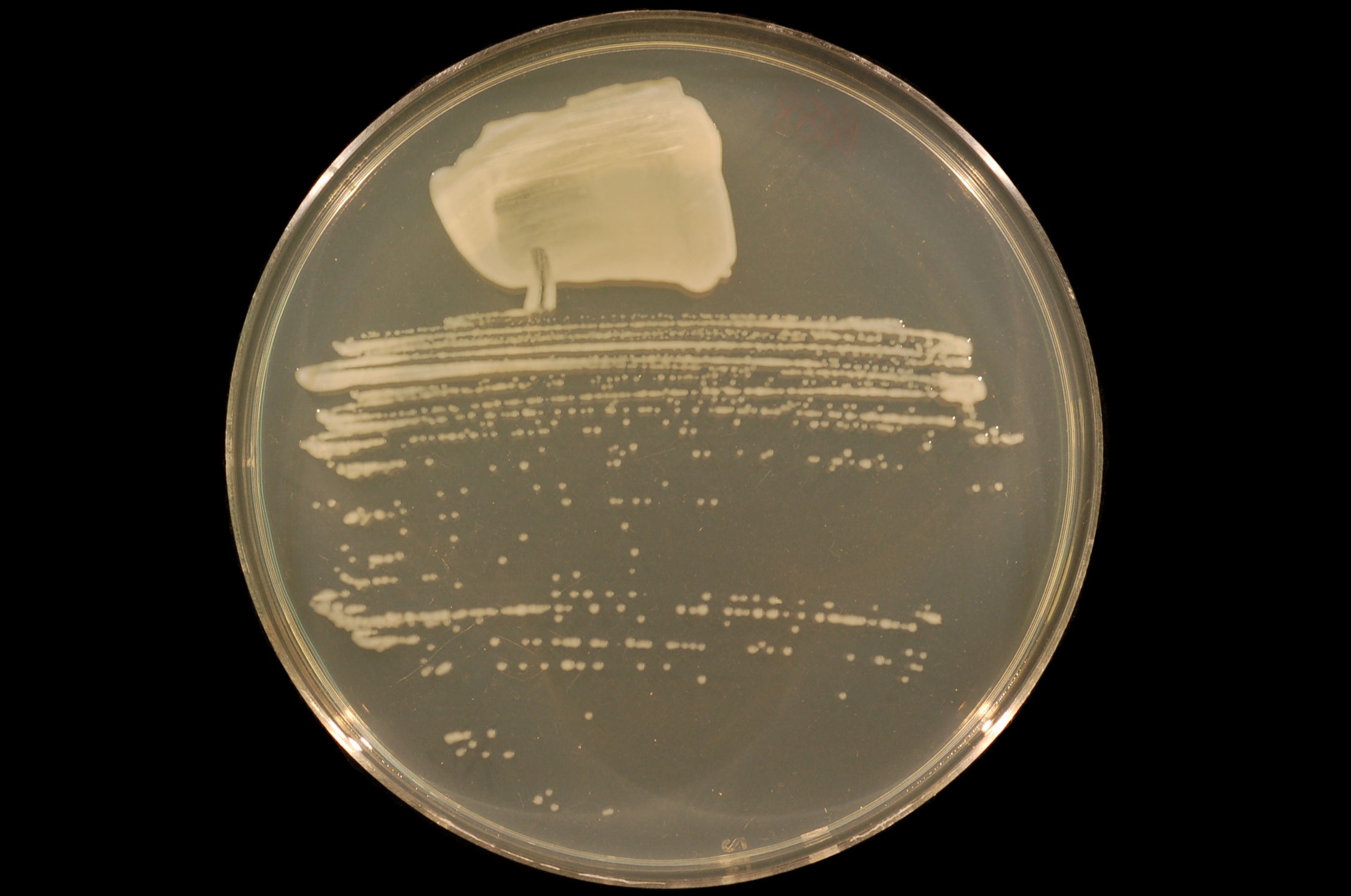
Image source: Wikipedia/Wikimedia
| Ecology, Host, and Life Cycle | |
|---|---|
| Oxygen requirements | Not Available |
| Optimal temperature | Not Available |
| Temperature range | Not Available |
| Habitat | Not Available |
| Biotic relationship | Not Available |
| Host(s) | Not Available |
| Cell arrangement | Not Available |
| Sporulation | Not Available |
| Energy source | Not Available |
| Pathogenicity | Not Available |
Gene Summary
Adenine Count
729492 bp
Thymine Count
731019 bp
Guanine Count
1151657 bp
Cytosine Count
1156351 bp
Genome Length
3768519 bp
Protein-coding Genes
3530 genes
Non-Coding Genes
90 genes
# of Chromosomes/Plasmids
3
Genes
| Name | Locus Tag | UniProt ID | Strand Orientation | Gene Start/End | Protein Molecular Weight |
|---|---|---|---|---|---|
| glutathione s-transferase family protein | PYH37_003922 | P07346 | Positive | 1763879 - 1764330 | 16663.1 |
| tylf/mycf family methyltransferase | PYH37_003923 | Q9AJU0 | Positive | 1764652 - 1765344 | 25584.4 |
| glutathione s-transferase family protein | PYH37_003924 | Q9WZ31 | Positive | 1765453 - 1765884 | 16626.5 |
| dna repair protein radc | PYH37_003925 | C3MBW4 | Negative | 1766021 - 1766812 | 29260.4 |
| type i methionyl aminopeptidase | PYH37_003926 | Q9ZCD3 | Negative | 1766809 - 1767648 | 30333.3 |
| dna/rna nuclease sfsa | PYH37_003927 | O87322 | Negative | 1767677 - 1768396 | 26300.6 |
| poly(3-hydroxyalkanoate) polymerase subunit phac | PYH37_003928 | P50176 | Negative | 1768414 - 1770258 | 68624.1 |
| shoct domain-containing protein | PYH37_003929 | Not Available | Positive | 1770403 - 1770672 | 9670.45 |
| ll-diaminopimelate aminotransferase | PYH37_003930 | O87320 | Positive | 1770796 - 1772013 | 44572.6 |
| homoserine dehydrogenase | PYH37_003931 | P29365 | Positive | 1772096 - 1773418 | 46727.2 |
Pathways
0 pathways
No pathways found
No metabolic pathways have been associated with this bacterium yet.
Health Effects
No health effects information available for this bacterium.