Kingdom
Pseudomonadati
Phylum
Pseudomonadota
Class
Alphaproteobacteria
Order
Hyphomicrobiales
Family
Rhizobiaceae
Genus
Sinorhizobium
Description
Taxonomy
| Kingdom | Pseudomonadati |
|---|---|
| Phylum | Pseudomonadota |
| Class | Alphaproteobacteria |
| Order | Hyphomicrobiales |
| Family | Rhizobiaceae |
| Genus | Sinorhizobium |
| Species | Sinorhizobium numidicum |
| Strain | No strain |
Profile
| Physiology | |
|---|---|
| Gram staining properties | Not Available |
| Shape | Not Available |
| Mobility | Not Available |
| Flagellar presence | Yes |
| Number of membranes | Not Available |
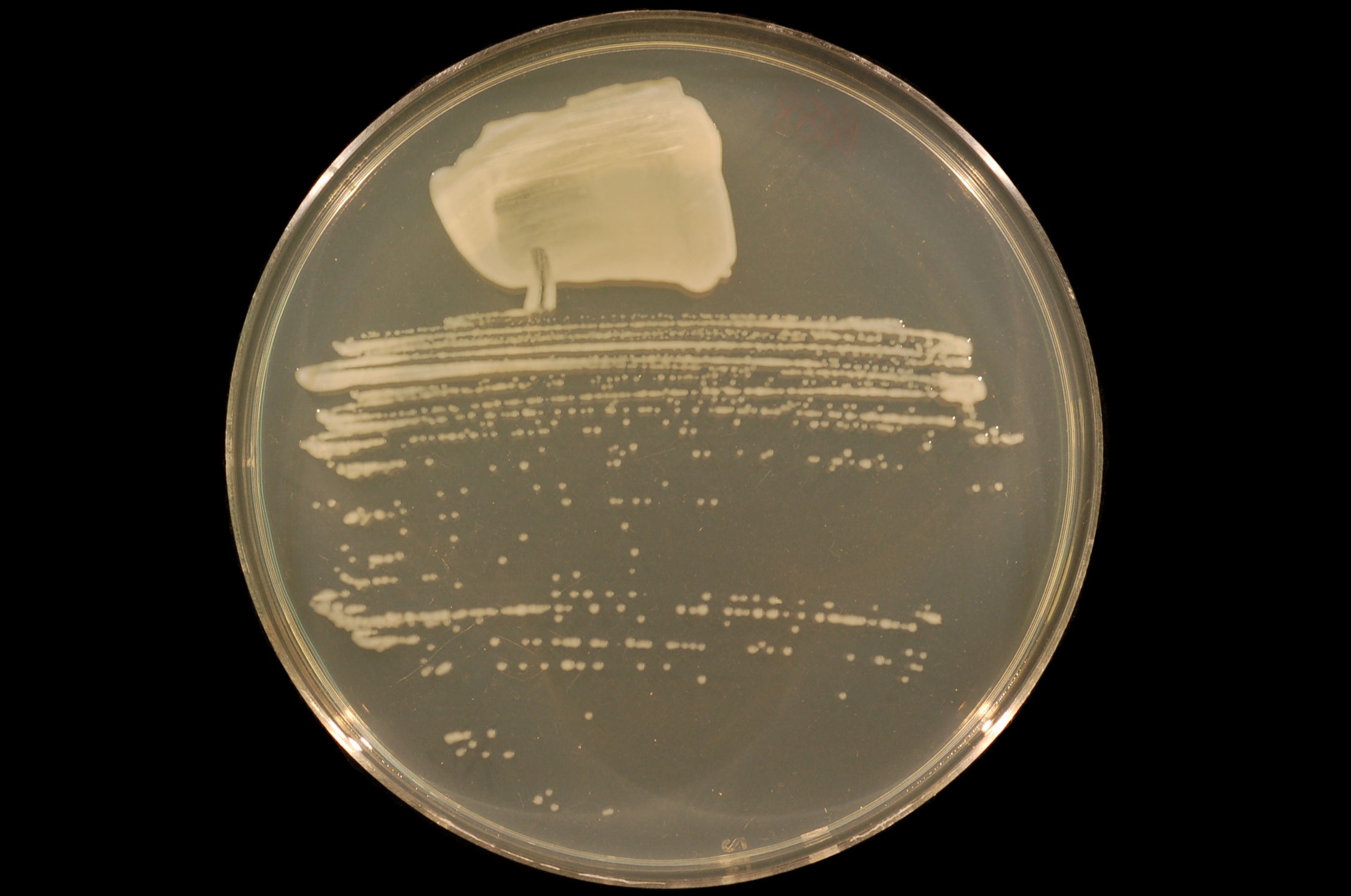
Image source: Wikipedia/Wikimedia
| Ecology, Host, and Life Cycle | |
|---|---|
| Oxygen requirements | Not Available |
| Optimal temperature | Not Available |
| Temperature range | Not Available |
| Habitat | Not Available |
| Biotic relationship | Not Available |
| Host(s) | Not Available |
| Cell arrangement | Not Available |
| Sporulation | Not Available |
| Energy source | Not Available |
| Pathogenicity | Not Available |
Gene Summary
Adenine Count
729492 bp
Thymine Count
731019 bp
Guanine Count
1151657 bp
Cytosine Count
1156351 bp
Genome Length
3768519 bp
Protein-coding Genes
3530 genes
Non-Coding Genes
90 genes
# of Chromosomes/Plasmids
3
Genes
| Name | Locus Tag | UniProt ID | Strand Orientation | Gene Start/End | Protein Molecular Weight |
|---|---|---|---|---|---|
| arac family transcriptional regulator | PYH37_003902 | P35319 | Positive | 1740777 - 1741802 | 37481.4 |
| glutathione s-transferase family protein | PYH37_003903 | Q2YUN1 | Negative | 1741833 - 1742039 | 7381.98 |
| fad-binding oxidoreductase | PYH37_003904 | Q99LB7 | Negative | 1742275 - 1743600 | 47032.2 |
| lrp/asnc family transcriptional regulator | PYH37_003905 | E1V7V9 | Positive | 1743835 - 1744311 | 17874.0 |
| abc transporter atp-binding protein | PYH37_003906 | Q8X6W1 | Negative | 1744541 - 1746196 | 59724.4 |
| abc transporter permease | PYH37_003907 | P94312 | Negative | 1746196 - 1747065 | 30766.3 |
| abc transporter permease | PYH37_003908 | Q8FJK9 | Negative | 1747062 - 1748012 | 34169.2 |
| abc transporter substrate-binding protein | PYH37_003909 | P33950 | Negative | 1748104 - 1749714 | 58263.4 |
| had-ia family hydrolase | PYH37_003910 | Not Available | Negative | 1749785 - 1750498 | 26148.8 |
| aspartate aminotransferase family protein | PYH37_003911 | Q9I6J2 | Negative | 1750728 - 1752104 | 49317.8 |
Pathways
0 pathways
No pathways found
No metabolic pathways have been associated with this bacterium yet.
Health Effects
No health effects information available for this bacterium.