Kingdom
Pseudomonadati
Phylum
Pseudomonadota
Class
Alphaproteobacteria
Order
Hyphomicrobiales
Family
Rhizobiaceae
Genus
Sinorhizobium
Description
Taxonomy
| Kingdom | Pseudomonadati |
|---|---|
| Phylum | Pseudomonadota |
| Class | Alphaproteobacteria |
| Order | Hyphomicrobiales |
| Family | Rhizobiaceae |
| Genus | Sinorhizobium |
| Species | Sinorhizobium numidicum |
| Strain | No strain |
Profile
| Physiology | |
|---|---|
| Gram staining properties | Not Available |
| Shape | Not Available |
| Mobility | Not Available |
| Flagellar presence | Yes |
| Number of membranes | Not Available |
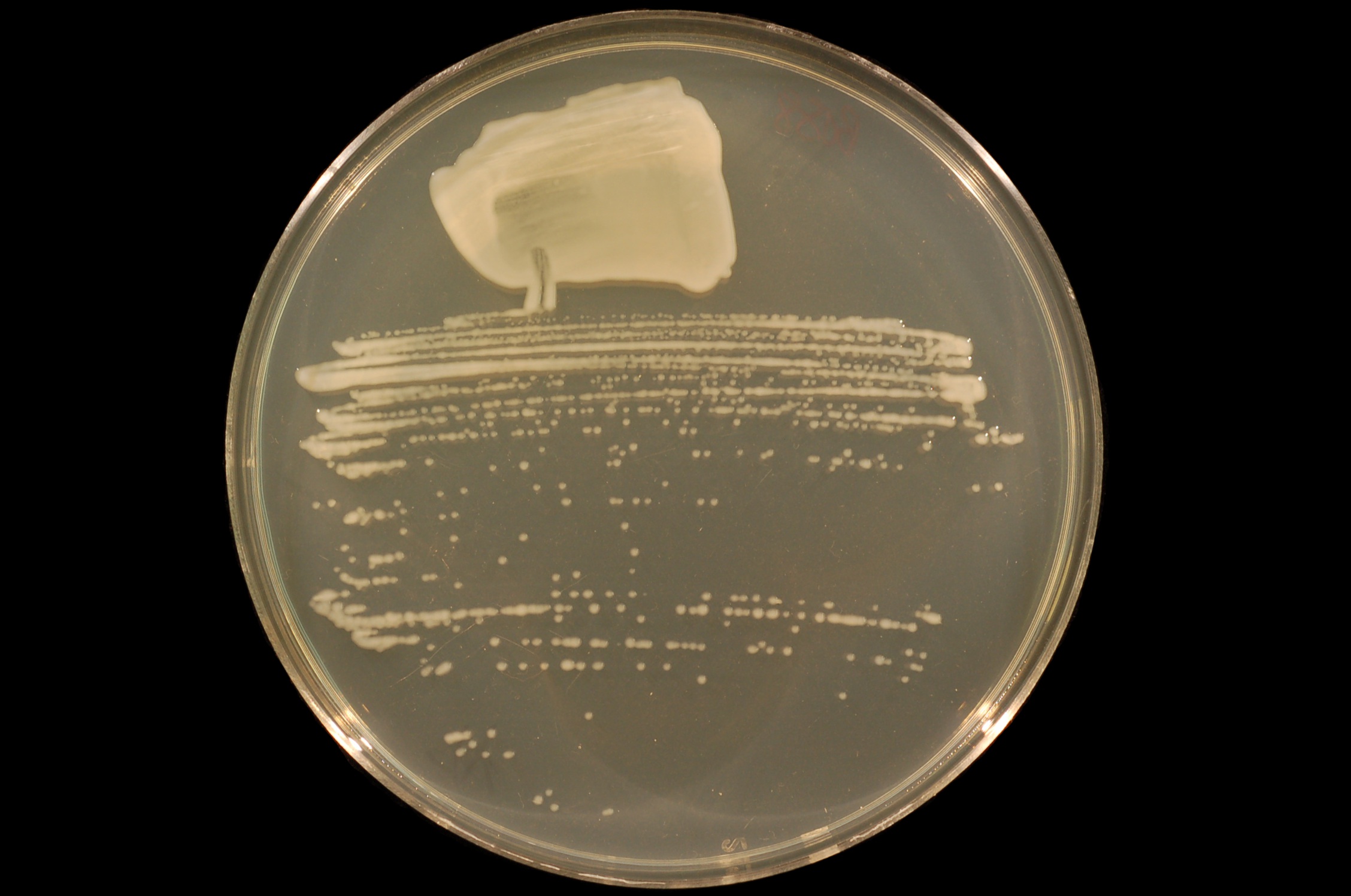
Image source: Wikipedia/Wikimedia
| Ecology, Host, and Life Cycle | |
|---|---|
| Oxygen requirements | Not Available |
| Optimal temperature | Not Available |
| Temperature range | Not Available |
| Habitat | Not Available |
| Biotic relationship | Not Available |
| Host(s) | Not Available |
| Cell arrangement | Not Available |
| Sporulation | Not Available |
| Energy source | Not Available |
| Pathogenicity | Not Available |
Gene Summary
Adenine Count
729492 bp
Thymine Count
731019 bp
Guanine Count
1151657 bp
Cytosine Count
1156351 bp
Genome Length
3768519 bp
Protein-coding Genes
3530 genes
Non-Coding Genes
90 genes
# of Chromosomes/Plasmids
3
Genes
| Name | Locus Tag | UniProt ID | Strand Orientation | Gene Start/End | Protein Molecular Weight |
|---|---|---|---|---|---|
| flp pilus assembly protein cpab | PYH37_002333 | Not Available | Positive | 125276 - 126085 | 28242.1 |
| type ii and iii secretion system protein family protein | PYH37_002334 | P55702 | Positive | 126082 - 127638 | 55003.5 |
| cpad family pilus assembly protein | PYH37_002335 | Not Available | Positive | 127695 - 128393 | 24637.2 |
| ctpf protein | PYH37_002336 | Not Available | Positive | 128415 - 129701 | 46320.7 |
| cpaf family protein | PYH37_002337 | P9WMT2 | Positive | 129732 - 131198 | 53508.3 |
| type ii secretion system f family protein | PYH37_002338 | Not Available | Positive | 131246 - 132256 | 36553.4 |
| type ii secretion system f family protein | PYH37_002339 | Not Available | Positive | 132267 - 133250 | 36251.7 |
| tetratricopeptide repeat protein | PYH37_002340 | Not Available | Negative | 133314 - 134132 | 29223.7 |
| m17 family metallopeptidase | PYH37_002341 | Q2IX74 | Positive | 134374 - 135765 | 49242.4 |
| marr family transcriptional regulator | PYH37_002342 | Q1C786 | Positive | 135869 - 136213 | 12868.0 |
Pathways
0 pathways
No pathways found
No metabolic pathways have been associated with this bacterium yet.
Health Effects
No health effects information available for this bacterium.