Kingdom
Pseudomonadati
Phylum
Pseudomonadota
Class
Alphaproteobacteria
Order
Hyphomicrobiales
Family
Rhizobiaceae
Genus
Sinorhizobium
Description
Taxonomy
| Kingdom | Pseudomonadati |
|---|---|
| Phylum | Pseudomonadota |
| Class | Alphaproteobacteria |
| Order | Hyphomicrobiales |
| Family | Rhizobiaceae |
| Genus | Sinorhizobium |
| Species | Sinorhizobium numidicum |
| Strain | No strain |
Profile
| Physiology | |
|---|---|
| Gram staining properties | Not Available |
| Shape | Not Available |
| Mobility | Not Available |
| Flagellar presence | Yes |
| Number of membranes | Not Available |
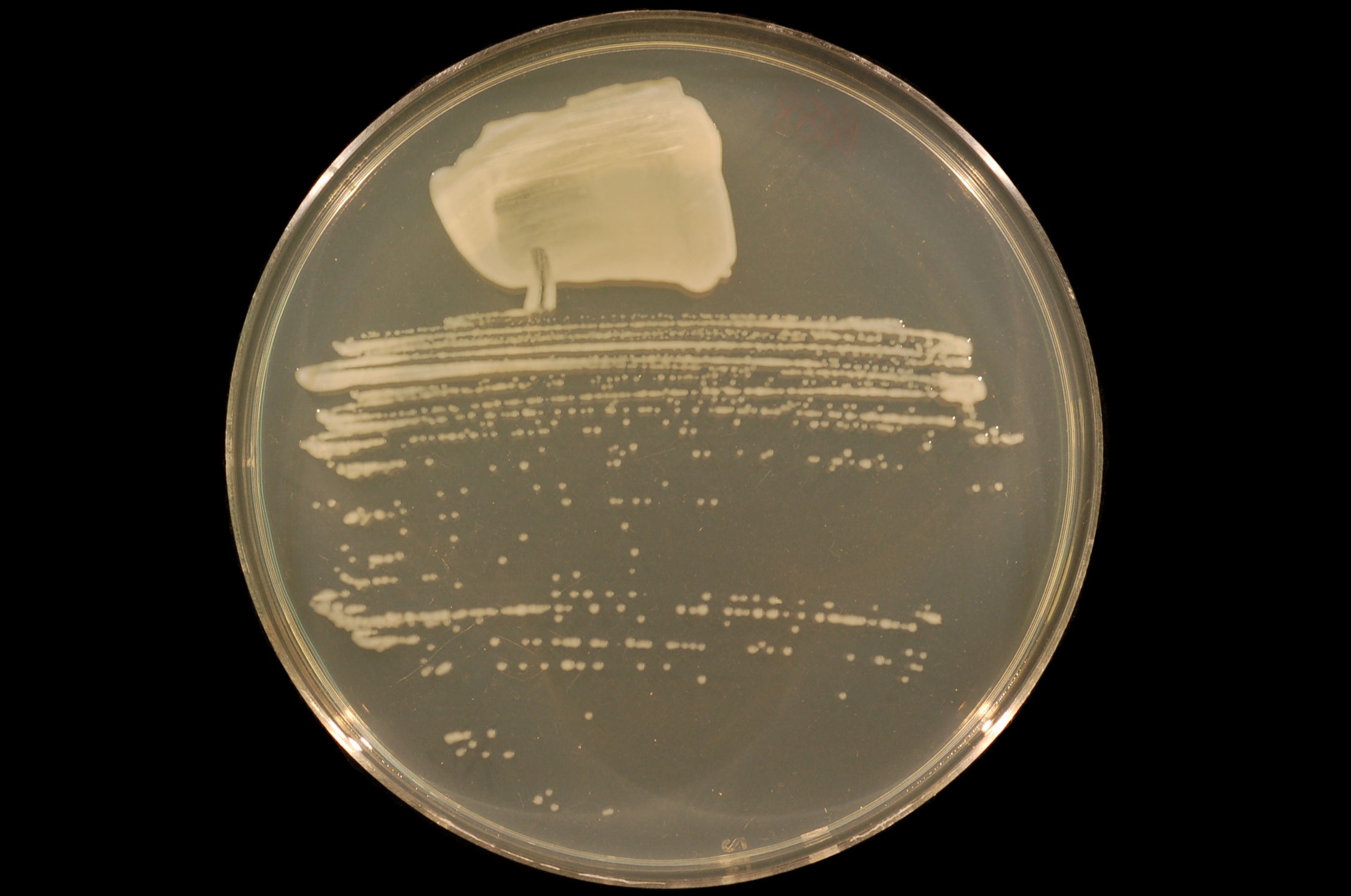
Image source: Wikipedia/Wikimedia
| Ecology, Host, and Life Cycle | |
|---|---|
| Oxygen requirements | Not Available |
| Optimal temperature | Not Available |
| Temperature range | Not Available |
| Habitat | Not Available |
| Biotic relationship | Not Available |
| Host(s) | Not Available |
| Cell arrangement | Not Available |
| Sporulation | Not Available |
| Energy source | Not Available |
| Pathogenicity | Not Available |
Gene Summary
Adenine Count
729492 bp
Thymine Count
731019 bp
Guanine Count
1151657 bp
Cytosine Count
1156351 bp
Genome Length
3768519 bp
Protein-coding Genes
3530 genes
Non-Coding Genes
90 genes
# of Chromosomes/Plasmids
3
Genes
| Name | Locus Tag | UniProt ID | Strand Orientation | Gene Start/End | Protein Molecular Weight |
|---|---|---|---|---|---|
| duf1624 domain-containing protein | PYH37_003652 | Not Available | Negative | 1484424 - 1485440 | 36234.4 |
| duf599 domain-containing protein | PYH37_003653 | Not Available | Negative | 1485567 - 1486256 | 26180.1 |
| hypothetical protein | PYH37_003654 | Not Available | Positive | 1486414 - 1486638 | 8219.2 |
| l-serine ammonia-lyase | PYH37_003655 | O86564 | Positive | 1486938 - 1488338 | 49612.4 |
| duf1489 family protein | PYH37_003656 | Not Available | Positive | 1488507 - 1488944 | 16147.5 |
| hypothetical protein | PYH37_003657 | Not Available | Negative | 1489035 - 1489304 | 9841.19 |
| d-alanyl-d-alanine carboxypeptidase | PYH37_003658 | P38422 | Negative | 1489382 - 1490860 | 51728.7 |
| hypothetical protein | PYH37_003659 | Not Available | Negative | 1491043 - 1491777 | 27210.8 |
| transglutaminase-like cysteine peptidase | PYH37_003660 | Not Available | Negative | 1492077 - 1492685 | 22129.3 |
| pilz domain-containing protein | PYH37_003661 | Not Available | Negative | 1493299 - 1493907 | 22612.1 |
Pathways
0 pathways
No pathways found
No metabolic pathways have been associated with this bacterium yet.
Health Effects
No health effects information available for this bacterium.