Kingdom
Pseudomonadati
Phylum
Pseudomonadota
Class
Alphaproteobacteria
Order
Hyphomicrobiales
Family
Rhizobiaceae
Genus
Sinorhizobium
Description
Taxonomy
| Kingdom | Pseudomonadati |
|---|---|
| Phylum | Pseudomonadota |
| Class | Alphaproteobacteria |
| Order | Hyphomicrobiales |
| Family | Rhizobiaceae |
| Genus | Sinorhizobium |
| Species | Sinorhizobium numidicum |
| Strain | No strain |
Profile
| Physiology | |
|---|---|
| Gram staining properties | Not Available |
| Shape | Not Available |
| Mobility | Not Available |
| Flagellar presence | Yes |
| Number of membranes | Not Available |
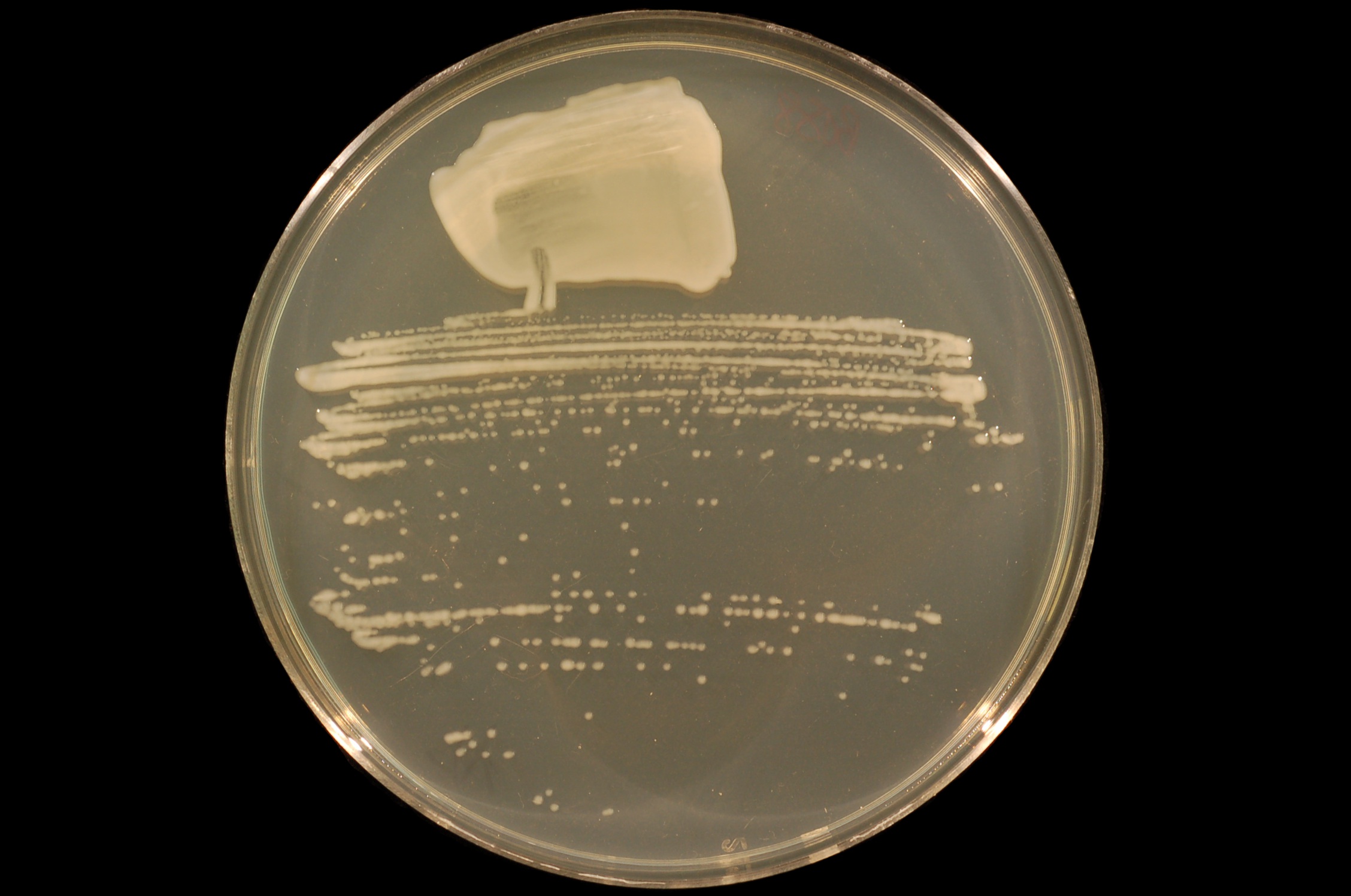
Image source: Wikipedia/Wikimedia
| Ecology, Host, and Life Cycle | |
|---|---|
| Oxygen requirements | Not Available |
| Optimal temperature | Not Available |
| Temperature range | Not Available |
| Habitat | Not Available |
| Biotic relationship | Not Available |
| Host(s) | Not Available |
| Cell arrangement | Not Available |
| Sporulation | Not Available |
| Energy source | Not Available |
| Pathogenicity | Not Available |
Gene Summary
Adenine Count
729492 bp
Thymine Count
731019 bp
Guanine Count
1151657 bp
Cytosine Count
1156351 bp
Genome Length
3768519 bp
Protein-coding Genes
3530 genes
Non-Coding Genes
90 genes
# of Chromosomes/Plasmids
3
Genes
| Name | Locus Tag | UniProt ID | Strand Orientation | Gene Start/End | Protein Molecular Weight |
|---|---|---|---|---|---|
| Trna-tyr | Not Available | Not Available | Positive | 1425637 - 1425721 | Not Available |
| Trna-gly | Not Available | Not Available | Positive | 1425745 - 1425818 | Not Available |
| elongation factor tu | PYH37_003584 | Q925Y6 | Positive | 1426079 - 1427254 | 42723.4 |
| hypothetical protein | PYH37_003585 | Not Available | Positive | 1427326 - 1428153 | 29057.7 |
| nad(p)-dependent oxidoreductase | PYH37_003586 | Q57664 | Positive | 1428265 - 1429158 | 33634.9 |
| Trna-trp | Not Available | Not Available | Positive | 1429326 - 1429401 | Not Available |
| preprotein translocase subunit sece | PYH37_003588 | Q9HWC3 | Positive | 1429598 - 1429798 | 7397.1 |
| transcription termination/antitermination protein nusg | PYH37_003589 | Q9KV35 | Positive | 1429815 - 1430345 | 19963.8 |
| 50s ribosomal protein l11 | PYH37_003590 | C3MAW7 | Positive | 1430560 - 1430988 | 15094.6 |
| 50s ribosomal protein l1 | PYH37_003591 | C3MAW8 | Positive | 1430993 - 1431691 | 24149.6 |
Pathways
0 pathways
No pathways found
No metabolic pathways have been associated with this bacterium yet.
Health Effects
No health effects information available for this bacterium.