Kingdom
Pseudomonadati
Phylum
Pseudomonadota
Class
Gammaproteobacteria
Order
Vibrionales
Family
Vibrionaceae
Genus
Photobacterium
Description
Taxonomy
| Kingdom | Pseudomonadati |
|---|---|
| Phylum | Pseudomonadota |
| Class | Gammaproteobacteria |
| Order | Vibrionales |
| Family | Vibrionaceae |
| Genus | Photobacterium |
| Species | Photobacterium ganghwense |
| Strain | C2.2 |
Profile
| Physiology | |
|---|---|
| Gram staining properties | Not Available |
| Shape | Not Available |
| Mobility | Not Available |
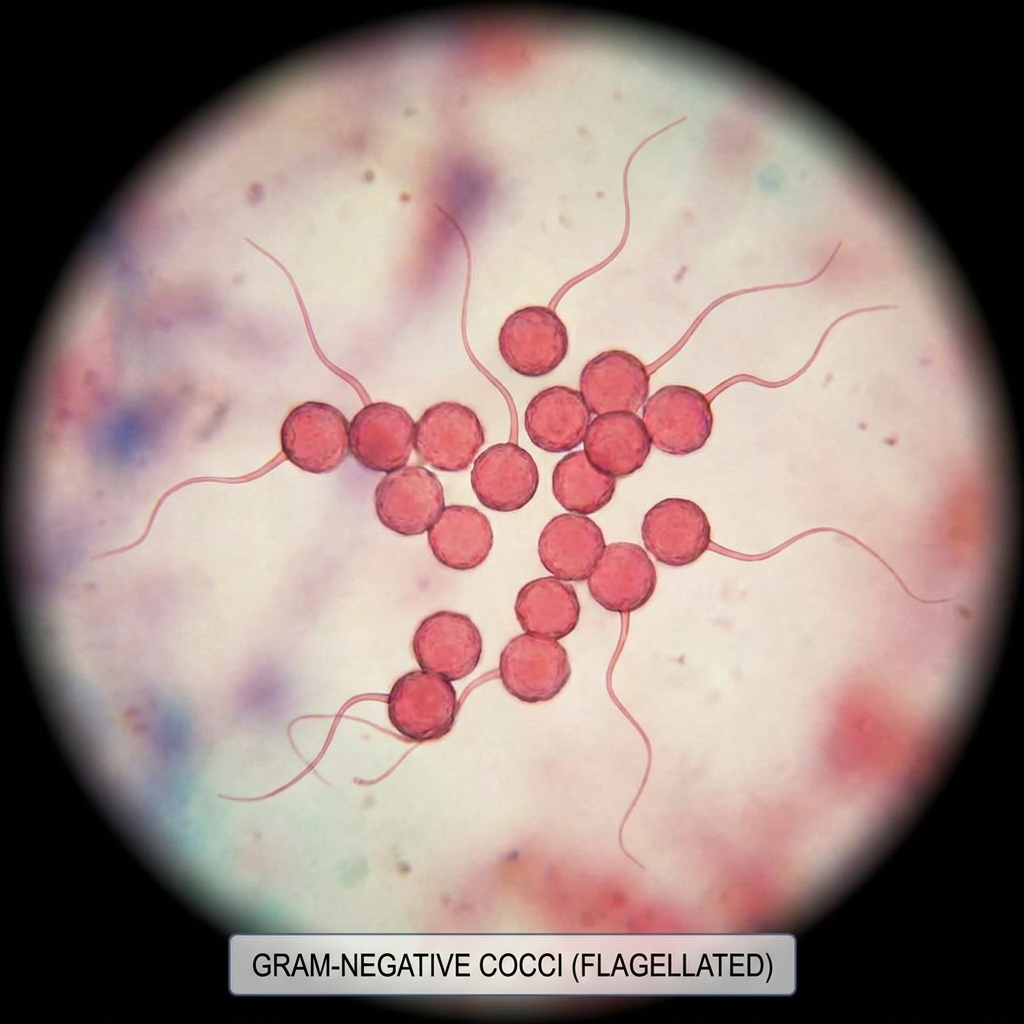
| Flagellar presence | Yes |
| Number of membranes | Not Available |
| Ecology, Host, and Life Cycle | |
|---|---|
| Oxygen requirements | Not Available |
| Optimal temperature | Not Available |
| Temperature range | Not Available |
| Habitat | Not Available |
| Biotic relationship | Not Available |
| Host(s) | Not Available |
| Cell arrangement | Not Available |
| Sporulation | Not Available |
| Energy source | Not Available |
| Pathogenicity | Not Available |
Gene Summary
Adenine Count
850235 bp
Thymine Count
853956 bp
Guanine Count
903562 bp
Cytosine Count
907631 bp
Genome Length
3515384 bp
Protein-coding Genes
2914 genes
Non-Coding Genes
277 genes
# of Chromosomes/Plasmids
3
Genes
| Name | Locus Tag | UniProt ID | Strand Orientation | Gene Start/End | Protein Molecular Weight |
|---|---|---|---|---|---|
| padr family transcriptional regulator | FH974_01005 | P94443 | Negative | 210548 - 211111 | 21771.8 |
| phosphoenolpyruvate carboxylase | FH974_01010 | Q6LVH1 | Negative | 211501 - 214131 | 98541.4 |
| n-acetyl-gamma-glutamyl-phosphate reductase | FH974_01015 | Q87L55 | Positive | 214734 - 215747 | 35860.1 |
| acetylglutamate kinase | FH974_01020 | Q6LVG9 | Positive | 215758 - 216546 | 26995.2 |
| argininosuccinate synthase | FH974_01025 | Q6LVG8 | Positive | 216643 - 217854 | 44254.6 |
| argininosuccinate lyase | FH974_01030 | Q5E2E8 | Positive | 217913 - 219790 | 69683.7 |
| duf3624 domain-containing protein | FH974_01035 | Not Available | Negative | 220043 - 220336 | 10898.5 |
| dihydrolipoyl dehydrogenase | FH974_01040 | O34324 | Negative | 220505 - 221956 | 52671.3 |
| glutathione peroxidase | FH974_01045 | P44758 | Negative | 222031 - 222759 | 26563.6 |
| dna-binding transcriptional regulator oxyr | FH974_01050 | Q9X725 | Positive | 222928 - 223830 | 33018.2 |
Pathways
0 pathways
No pathways found
No metabolic pathways have been associated with this bacterium yet.
Health Effects
No health effects information available for this bacterium.