Kingdom
Pseudomonadati
Phylum
Pseudomonadota
Class
Gammaproteobacteria
Order
Vibrionales
Family
Vibrionaceae
Genus
Photobacterium
Description
Taxonomy
| Kingdom | Pseudomonadati |
|---|---|
| Phylum | Pseudomonadota |
| Class | Gammaproteobacteria |
| Order | Vibrionales |
| Family | Vibrionaceae |
| Genus | Photobacterium |
| Species | Photobacterium ganghwense |
| Strain | C2.2 |
Profile
| Physiology | |
|---|---|
| Gram staining properties | Not Available |
| Shape | Not Available |
| Mobility | Not Available |
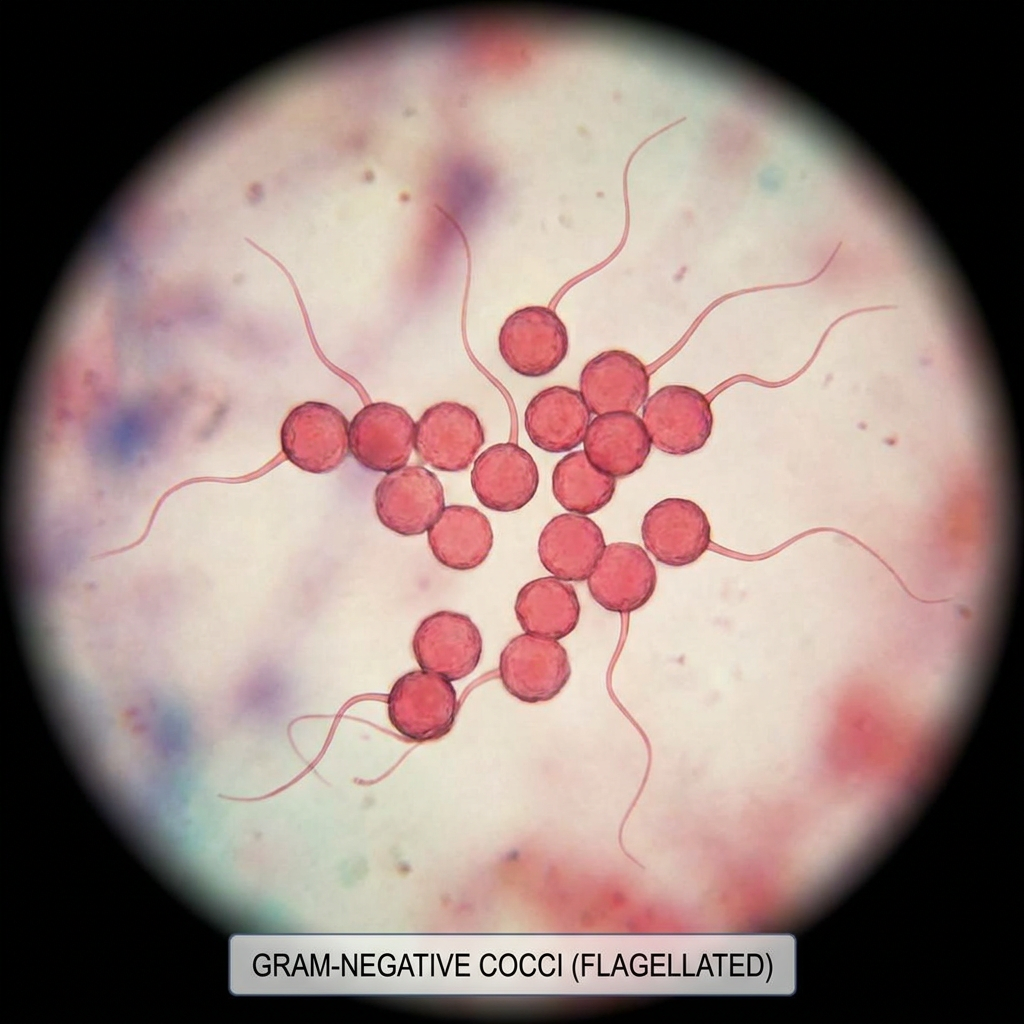
| Flagellar presence | Yes |
| Number of membranes | Not Available |
| Ecology, Host, and Life Cycle | |
|---|---|
| Oxygen requirements | Not Available |
| Optimal temperature | Not Available |
| Temperature range | Not Available |
| Habitat | Not Available |
| Biotic relationship | Not Available |
| Host(s) | Not Available |
| Cell arrangement | Not Available |
| Sporulation | Not Available |
| Energy source | Not Available |
| Pathogenicity | Not Available |
Gene Summary
Adenine Count
850235 bp
Thymine Count
853956 bp
Guanine Count
903562 bp
Cytosine Count
907631 bp
Genome Length
3515384 bp
Protein-coding Genes
2914 genes
Non-Coding Genes
277 genes
# of Chromosomes/Plasmids
3
Genes
| Name | Locus Tag | UniProt ID | Strand Orientation | Gene Start/End | Protein Molecular Weight |
|---|---|---|---|---|---|
| Hypothetical protein | FH974_10835 | P51739 | Negative | 2397517 - 2398206 | 25703.1 |
| Tail-collar fiber protein | FH974_10840 | P51738 | Negative | 2398216 - 2398752 | 19546.4 |
| Tail protein | FH974_10845 | P51735 | Negative | 2400995 - 2401834 | 30696.9 |
| Baseplate j-like protein | FH974_10850 | P51734 | Negative | 2401848 - 2402450 | 23025.8 |
| Baseplate j/gp47 family protein | FH974_10855 | P51733 | Negative | 2402437 - 2403624 | 44077.4 |
| Tail tape measure protein | FH974_10860 | P51732 | Negative | 2403617 - 2403964 | 12627.0 |
| Tail tape measure protein | FH974_10865 | P51731 | Negative | 2403964 - 2405934 | 69644.6 |
| Tail assembly chaperone | FH974_10870 | Not Available | Negative | 2406145 - 2406408 | 9275.93 |
| hypothetical protein | FH974_10875 | Not Available | Negative | 2406405 - 2406683 | 10547.4 |
| Hypothetical protein | FH974_10880 | Not Available | Negative | 2406684 - 2407268 | 20691.3 |
Pathways
0 pathways
No pathways found
No metabolic pathways have been associated with this bacterium yet.
Health Effects
No health effects information available for this bacterium.