Kingdom
Pseudomonadati
Phylum
Pseudomonadota
Class
Gammaproteobacteria
Order
Vibrionales
Family
Vibrionaceae
Genus
Photobacterium
Description
Taxonomy
| Kingdom | Pseudomonadati |
|---|---|
| Phylum | Pseudomonadota |
| Class | Gammaproteobacteria |
| Order | Vibrionales |
| Family | Vibrionaceae |
| Genus | Photobacterium |
| Species | Photobacterium ganghwense |
| Strain | C2.2 |
Profile
| Physiology | |
|---|---|
| Gram staining properties | Not Available |
| Shape | Not Available |
| Mobility | Not Available |
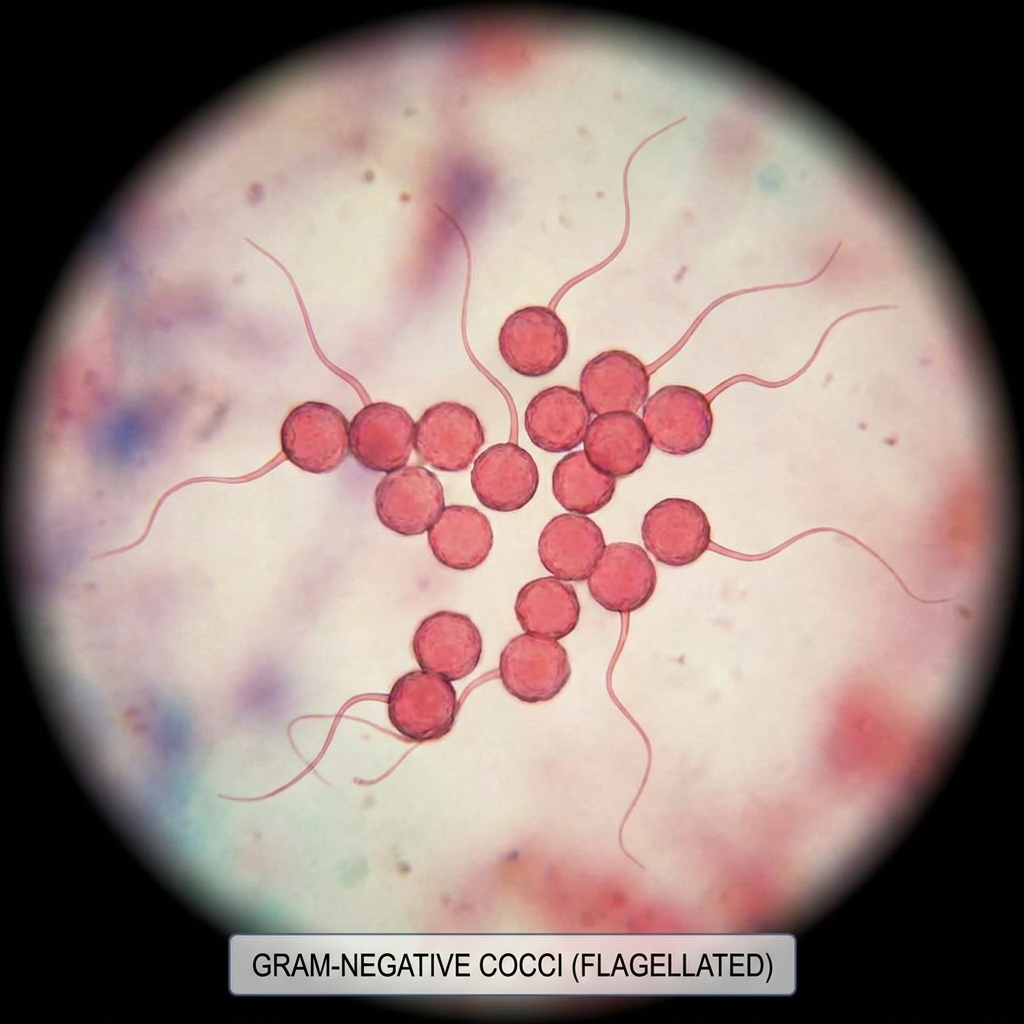
| Flagellar presence | Yes |
| Number of membranes | Not Available |
| Ecology, Host, and Life Cycle | |
|---|---|
| Oxygen requirements | Not Available |
| Optimal temperature | Not Available |
| Temperature range | Not Available |
| Habitat | Not Available |
| Biotic relationship | Not Available |
| Host(s) | Not Available |
| Cell arrangement | Not Available |
| Sporulation | Not Available |
| Energy source | Not Available |
| Pathogenicity | Not Available |
Gene Summary
Adenine Count
850235 bp
Thymine Count
853956 bp
Guanine Count
903562 bp
Cytosine Count
907631 bp
Genome Length
3515384 bp
Protein-coding Genes
2914 genes
Non-Coding Genes
277 genes
# of Chromosomes/Plasmids
3
Genes
| Name | Locus Tag | UniProt ID | Strand Orientation | Gene Start/End | Protein Molecular Weight |
|---|---|---|---|---|---|
| carbon starvation induced protein csid | FH974_24105 | E1WA38 | Negative | 1775729 - 1776688 | 37138.0 |
| lysr family transcriptional regulator | FH974_24110 | P37499 | Positive | 1776935 - 1777828 | 33460.7 |
| aspartate aminotransferase family protein | FH974_24115 | Q9A3Q9 | Positive | 1778085 - 1779404 | 47544.8 |
| dm13 domain-containing protein | FH974_24120 | Not Available | Negative | 1779727 - 1780200 | 17628.4 |
| lysr family transcriptional regulator | FH974_24125 | P0DUU5 | Negative | 1780411 - 1781304 | 32880.4 |
| pace efflux transporter | FH974_24130 | Q87QJ4 | Positive | 1781492 - 1781929 | 16458.6 |
| tyrosine--trna ligase | FH974_24135 | Q6LUR9 | Positive | 1782110 - 1783324 | 44780.2 |
| hypothetical protein | FH974_24140 | Not Available | Positive | 1783698 - 1783937 | 9066.31 |
| qnrs family quinolone resistance pentapeptide repeat protein | FH974_24145 | Q87K03 | Negative | 1784232 - 1784888 | 24759.1 |
| duf1456 family protein | FH974_24150 | P33355 | Negative | 1785623 - 1786102 | 18296.1 |
Pathways
0 pathways
No pathways found
No metabolic pathways have been associated with this bacterium yet.
Health Effects
No health effects information available for this bacterium.