Kingdom
Pseudomonadati
Phylum
Pseudomonadota
Class
Gammaproteobacteria
Order
Vibrionales
Family
Vibrionaceae
Genus
Photobacterium
Description
Taxonomy
| Kingdom | Pseudomonadati |
|---|---|
| Phylum | Pseudomonadota |
| Class | Gammaproteobacteria |
| Order | Vibrionales |
| Family | Vibrionaceae |
| Genus | Photobacterium |
| Species | Photobacterium ganghwense |
| Strain | C2.2 |
Profile
| Physiology | |
|---|---|
| Gram staining properties | Not Available |
| Shape | Not Available |
| Mobility | Not Available |
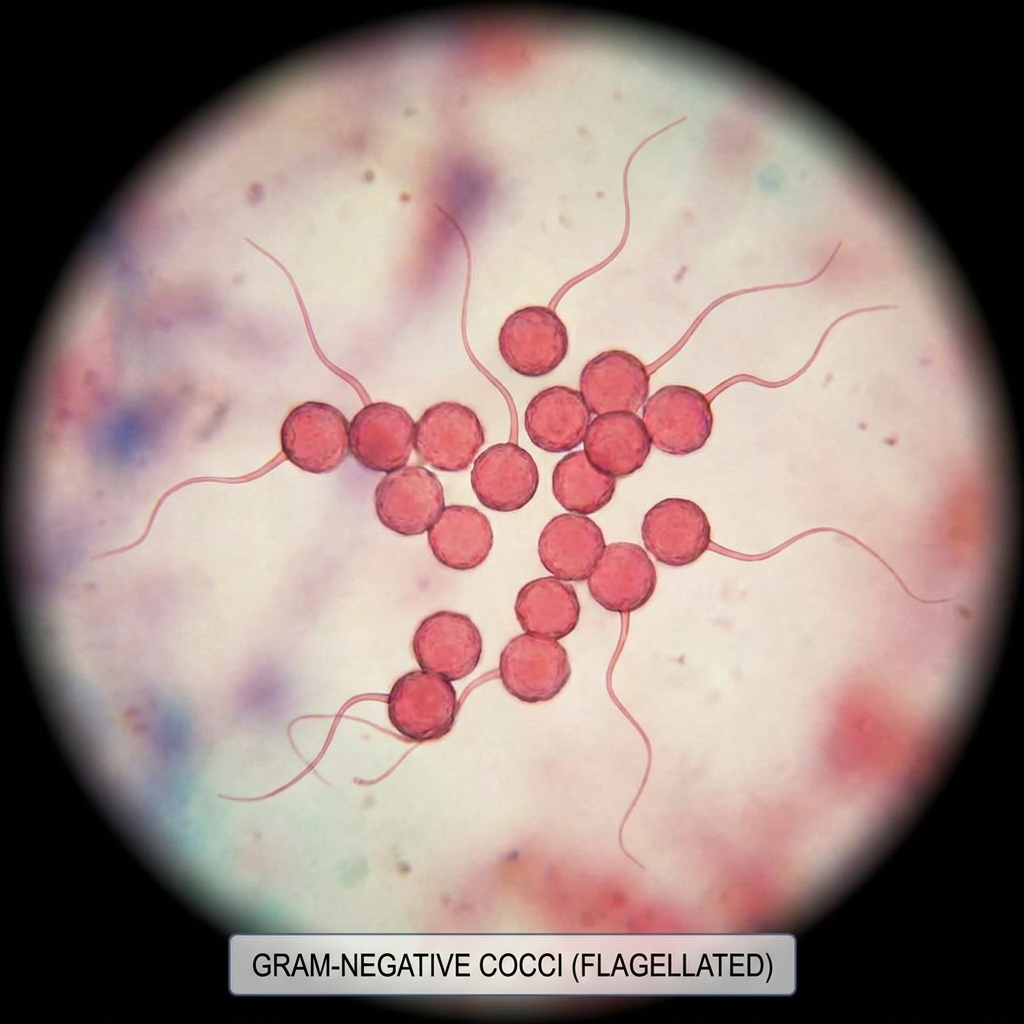
| Flagellar presence | Yes |
| Number of membranes | Not Available |
| Ecology, Host, and Life Cycle | |
|---|---|
| Oxygen requirements | Not Available |
| Optimal temperature | Not Available |
| Temperature range | Not Available |
| Habitat | Not Available |
| Biotic relationship | Not Available |
| Host(s) | Not Available |
| Cell arrangement | Not Available |
| Sporulation | Not Available |
| Energy source | Not Available |
| Pathogenicity | Not Available |
Gene Summary
Adenine Count
850235 bp
Thymine Count
853956 bp
Guanine Count
903562 bp
Cytosine Count
907631 bp
Genome Length
3515384 bp
Protein-coding Genes
2914 genes
Non-Coding Genes
277 genes
# of Chromosomes/Plasmids
3
Genes
| Name | Locus Tag | UniProt ID | Strand Orientation | Gene Start/End | Protein Molecular Weight |
|---|---|---|---|---|---|
| tonb-dependent siderophore receptor | FH974_23355 | Q47162 | Negative | 1596293 - 1598380 | 77671.2 |
| abc transporter atp-binding protein | FH974_23360 | Q57180 | Positive | 1598743 - 1600587 | 68340.7 |
| phosphotransferase | FH974_23365 | Not Available | Negative | 1600723 - 1601742 | 38261.3 |
| nucleotidyltransferase family protein | FH974_23370 | Not Available | Negative | 1602517 - 1603086 | 22284.6 |
| bifunctional diaminohydroxyphosphoribosylaminopyrimidine deaminase/5-amino-6-(5-phosphoribosylamino)uracil reductase ribd | FH974_23375 | P57533 | Negative | 1603230 - 1603655 | 14805.1 |
| hamp domain-containing protein | FH974_23380 | G3XD24 | Negative | 1603859 - 1605418 | 56042.8 |
| dna starvation/stationary phase protection protein | FH974_23385 | P45173 | Positive | 1605805 - 1606275 | 17748.2 |
| hypothetical protein | FH974_23390 | Not Available | Negative | 1606597 - 1606791 | 7599.36 |
| dna polymerase iii subunit epsilon | FH974_23395 | A5IJJ8 | Negative | 1606857 - 1607570 | 26448.9 |
| cyclic nucleotide-binding/cbs domain-containing protein | FH974_23400 | Q9LF97 | Negative | 1607576 - 1609441 | 69998.1 |
Pathways
0 pathways
No pathways found
No metabolic pathways have been associated with this bacterium yet.
Health Effects
No health effects information available for this bacterium.