Kingdom
Pseudomonadati
Phylum
Pseudomonadota
Class
Gammaproteobacteria
Order
Vibrionales
Family
Vibrionaceae
Genus
Photobacterium
Description
Taxonomy
| Kingdom | Pseudomonadati |
|---|---|
| Phylum | Pseudomonadota |
| Class | Gammaproteobacteria |
| Order | Vibrionales |
| Family | Vibrionaceae |
| Genus | Photobacterium |
| Species | Photobacterium ganghwense |
| Strain | C2.2 |
Profile
| Physiology | |
|---|---|
| Gram staining properties | Not Available |
| Shape | Not Available |
| Mobility | Not Available |
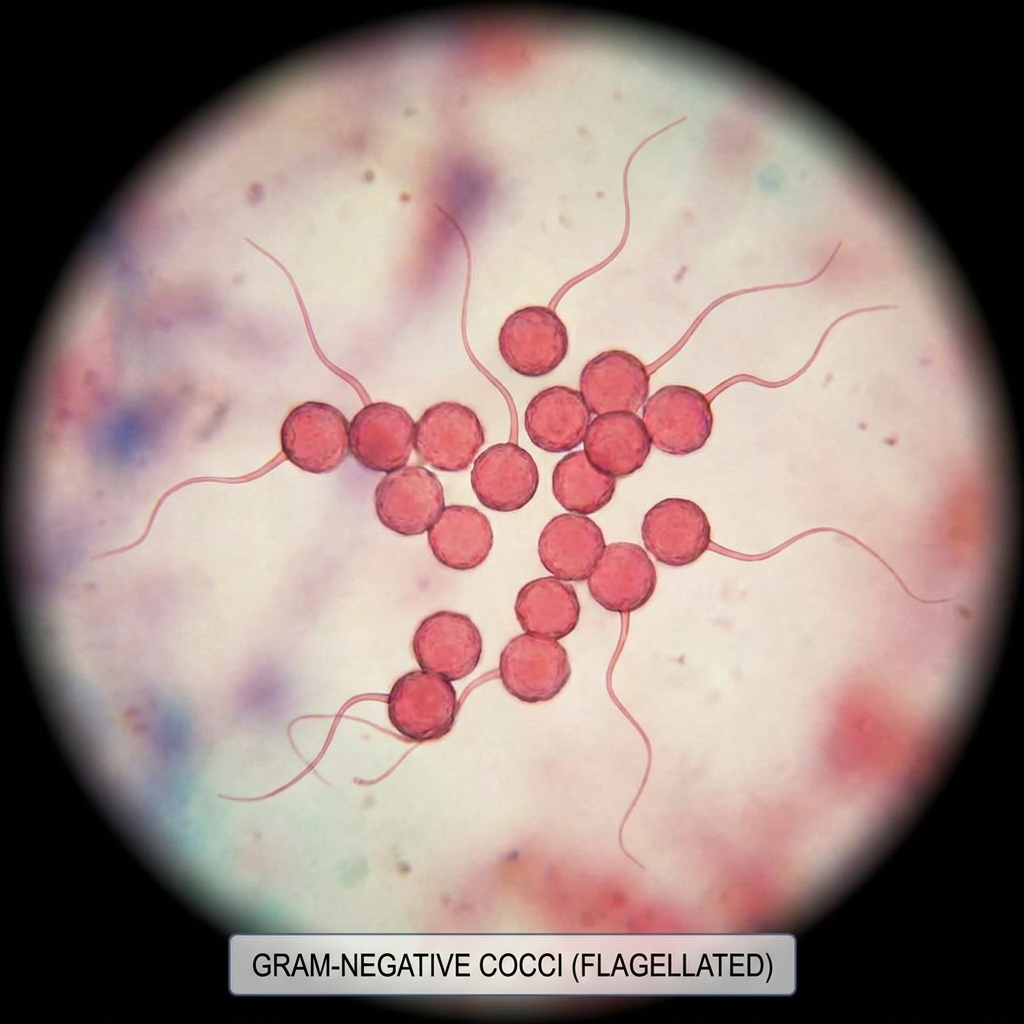
| Flagellar presence | Yes |
| Number of membranes | Not Available |
| Ecology, Host, and Life Cycle | |
|---|---|
| Oxygen requirements | Not Available |
| Optimal temperature | Not Available |
| Temperature range | Not Available |
| Habitat | Not Available |
| Biotic relationship | Not Available |
| Host(s) | Not Available |
| Cell arrangement | Not Available |
| Sporulation | Not Available |
| Energy source | Not Available |
| Pathogenicity | Not Available |
Gene Summary
Adenine Count
850235 bp
Thymine Count
853956 bp
Guanine Count
903562 bp
Cytosine Count
907631 bp
Genome Length
3515384 bp
Protein-coding Genes
2914 genes
Non-Coding Genes
277 genes
# of Chromosomes/Plasmids
3
Genes
| Name | Locus Tag | UniProt ID | Strand Orientation | Gene Start/End | Protein Molecular Weight |
|---|---|---|---|---|---|
| bifunctional 23s rrna (guanine(2069)-n(7))-methyltransferase rlmk/23s rrna (guanine(2445)-n(2))-methyltransferase rlml | FH974_07965 | Q6LRA0 | Negative | 1710377 - 1712515 | 80245.5 |
| cell division protein zapc | FH974_07970 | Q6LRA1 | Negative | 1714220 - 1714765 | 20426.5 |
| quinone-dependent dihydroorotate dehydrogenase | FH974_07975 | Q6LRA2 | Negative | 1715005 - 1716018 | 36921.8 |
| nad-glutamate dehydrogenase | FH974_07980 | Q9HZE0 | Negative | 1716298 - 1721127 | 183875.0 |
| duf2835 domain-containing protein | FH974_07985 | Not Available | Negative | 1721535 - 1721756 | 8419.15 |
| aminopeptidase n | FH974_07990 | P04825 | Negative | 1721936 - 1724542 | 99223.2 |
| nicotinate phosphoribosyltransferase | FH974_07995 | Q6LRA6 | Positive | 1725021 - 1726220 | 45316.8 |
| lipocalin family protein | FH974_08000 | Not Available | Negative | 1726490 - 1727155 | 25146.6 |
| carboxy terminal-processing peptidase | FH974_08005 | P43669 | Negative | 1727393 - 1729393 | 75482.4 |
| rna chaperone proq | FH974_08010 | Q6LQV0 | Negative | 1729411 - 1730058 | 23754.5 |
Pathways
0 pathways
No pathways found
No metabolic pathways have been associated with this bacterium yet.
Health Effects
No health effects information available for this bacterium.