Kingdom
Pseudomonadati
Phylum
Pseudomonadota
Class
Betaproteobacteria
Order
Burkholderiales
Family
Oxalobacteraceae
Genus
Massilia
Description
Taxonomy
| Kingdom | Pseudomonadati |
|---|---|
| Phylum | Pseudomonadota |
| Class | Betaproteobacteria |
| Order | Burkholderiales |
| Family | Oxalobacteraceae |
| Genus | Massilia |
| Species | Massilia antarctica |
| Strain | P8398 |
Profile
| Physiology | |
|---|---|
| Gram staining properties | Gram-negative |
| Shape | rod |
| Mobility | Not Available |
| Flagellar presence | Not Available |
| Number of membranes | Not Available |

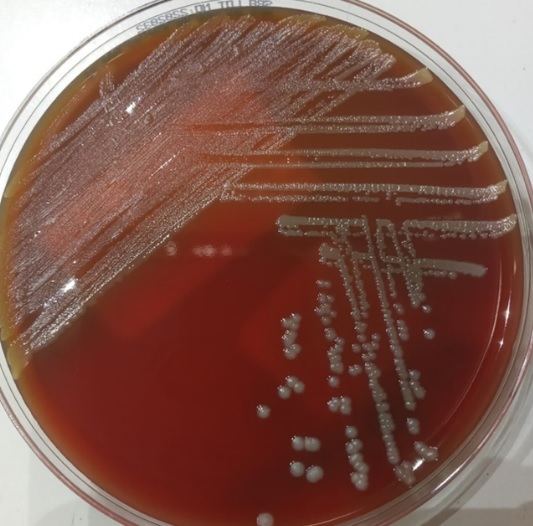
Image source: Wikipedia/Wikimedia
| Ecology, Host, and Life Cycle | |
|---|---|
| Oxygen requirements | Not Available |
| Optimal temperature | Not Available |
| Temperature range | Not Available |
| Habitat | Not Available |
| Biotic relationship | Not Available |
| Host(s) | Not Available |
| Cell arrangement | Not Available |
| Sporulation | Not Available |
| Energy source | Not Available |
| Pathogenicity | Not Available |
Gene Summary
Adenine Count
1351388 bp
Thymine Count
1340499 bp
Guanine Count
2369260 bp
Cytosine Count
2371258 bp
Genome Length
7432405 bp
Protein-coding Genes
6364 genes
Non-Coding Genes
147 genes
# of Chromosomes/Plasmids
1
Genes
| Name | Locus Tag | UniProt ID | Strand Orientation | Gene Start/End | Protein Molecular Weight |
|---|---|---|---|---|---|
| aaa family atpase | IV454_22140 | P45754 | Positive | 4984189 - 4985079 | 33075.6 |
| tetratricopeptide repeat protein | IV454_22145 | Not Available | Positive | 4985076 - 4986272 | 42087.9 |
| gnat family n-acetyltransferase | IV454_22150 | P26945 | Positive | 4986345 - 4986800 | 16406.7 |
| hd domain-containing protein | IV454_22155 | Q9HWS0 | Negative | 4986809 - 4987906 | 39697.8 |
| pyridoxal phosphate-dependent aminotransferase | IV454_22160 | P77806 | Negative | 4987929 - 4989086 | 41942.4 |
| hypothetical protein | IV454_22165 | Not Available | Negative | 4989614 - 4989805 | 7104.68 |
| calcium-binding protein | IV454_22170 | Not Available | Positive | 4990180 - 4990716 | 18577.1 |
| calcium-binding protein | IV454_22175 | Not Available | Positive | 4991163 - 4991699 | 18530.0 |
| putative toxin-antitoxin system toxin component, pin family | IV454_22180 | Not Available | Negative | 4992102 - 4992563 | 16942.7 |
| peroxide stress protein yaaa | IV454_22185 | A6SXS8 | Positive | 4992601 - 4993371 | 28487.3 |
Pathways
0 pathways
No pathways found
No metabolic pathways have been associated with this bacterium yet.
Health Effects
No health effects information available for this bacterium.