Kingdom
Pseudomonadati
Phylum
Bacteroidota
Class
Cytophagia
Order
Cytophagales
Family
Cytophagaceae
Genus
Spirosoma
Description
Taxonomy
| Kingdom | Pseudomonadati |
|---|---|
| Phylum | Bacteroidota |
| Class | Cytophagia |
| Order | Cytophagales |
| Family | Cytophagaceae |
| Genus | Spirosoma |
| Species | Spirosoma aureum |
| Strain | BT328 |
Profile
| Physiology | |
|---|---|
| Gram staining properties | Not Available |
| Shape | Not Available |
| Mobility | Not Available |
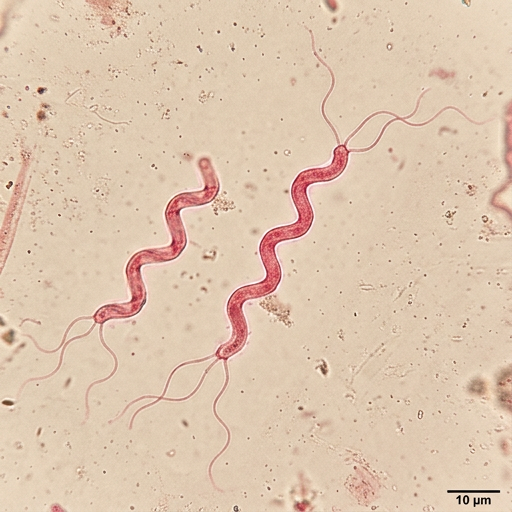
| Flagellar presence | Yes |
| Number of membranes | Not Available |
| Ecology, Host, and Life Cycle | |
|---|---|
| Oxygen requirements | Not Available |
| Optimal temperature | Not Available |
| Temperature range | Not Available |
| Habitat | Not Available |
| Biotic relationship | Not Available |
| Host(s) | Not Available |
| Cell arrangement | Not Available |
| Sporulation | Not Available |
| Energy source | Not Available |
| Pathogenicity | Not Available |
Gene Summary
Adenine Count
2328762 bp
Thymine Count
2328361 bp
Guanine Count
2121574 bp
Cytosine Count
2119545 bp
Genome Length
8898242 bp
Protein-coding Genes
7058 genes
Non-Coding Genes
71 genes
# of Chromosomes/Plasmids
1
Genes
| Name | Locus Tag | UniProt ID | Strand Orientation | Gene Start/End | Protein Molecular Weight |
|---|---|---|---|---|---|
| tigr00730 family rossman fold protein | G8759_01865 | P48636 | Negative | 447983 - 448534 | 20193.6 |
| peptidoglycan synthetase | G8759_01870 | Q1WUP1 | Negative | 448592 - 449974 | 51186.0 |
| arginine decarboxylase | G8759_01875 | A2BNH3 | Positive | 450222 - 451703 | 57278.7 |
| had family hydrolase | G8759_01880 | Q9AGY5 | Negative | 452043 - 452561 | 19317.1 |
| valine--trna ligase | G8759_01885 | A6LIG7 | Negative | 452786 - 455443 | 101663.0 |
| duf72 domain-containing protein | G8759_01890 | Q8XCI6 | Positive | 455607 - 456518 | 34928.9 |
| imidazole glycerol phosphate synthase subunit hish | G8759_01895 | Q64RT0 | Positive | 456706 - 457308 | 22359.9 |
| 1-(5-phosphoribosyl)-5-[(5- phosphoribosylamino)methylideneamino]imidazole-4- carboxamide isomerase | G8759_01900 | Q11VM2 | Positive | 457368 - 458090 | 26608.8 |
| hypothetical protein | G8759_01905 | Not Available | Positive | 458100 - 458756 | 24640.0 |
| gnat family n-acetyltransferase | G8759_01910 | I1RV22 | Positive | 458770 - 459192 | 15966.4 |
Pathways
0 pathways
No pathways found
No metabolic pathways have been associated with this bacterium yet.
Health Effects
No health effects information available for this bacterium.