Kingdom
Pseudomonadati
Phylum
Pseudomonadota
Class
Gammaproteobacteria
Order
Enterobacterales
Family
Yersiniaceae
Genus
Yersinia
Description
Taxonomy
| Kingdom | Pseudomonadati |
|---|---|
| Phylum | Pseudomonadota |
| Class | Gammaproteobacteria |
| Order | Enterobacterales |
| Family | Yersiniaceae |
| Genus | Yersinia |
| Species | Yersinia aleksiciae |
| Strain | Y159, H254-36/86, Y 159 |
Profile
| Physiology | |
|---|---|
| Gram staining properties | Negative |
| Shape | rod |
| Mobility | No |
| Flagellar presence | Yes |
| Number of membranes | Not Available |

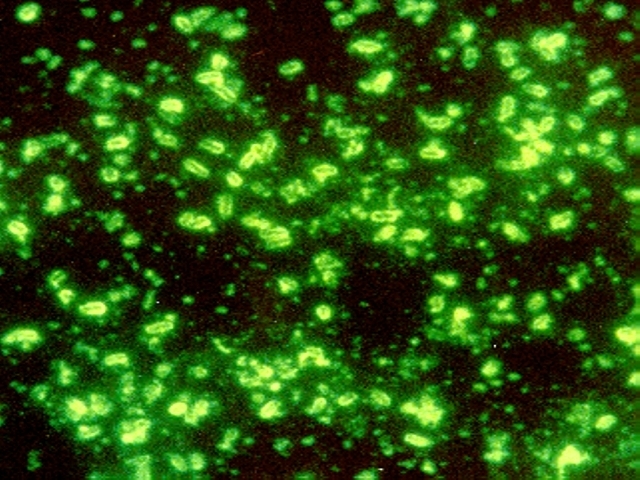
Image source: Wikipedia/Wikimedia
| Ecology, Host, and Life Cycle | |
|---|---|
| Oxygen requirements | Aerobe |
| Optimal temperature | 30 |
| Temperature range | Mesophilic |
| Habitat | Not Available |
| Biotic relationship | Not Available |
| Host(s) | Homo sapiens, Sus scrofa, Mammalia |
| Cell arrangement | Not Available |
| Sporulation | Not Available |
| Energy source | Chemoheterotroph |
| Pathogenicity | Non-pathogenic |
Gene Summary
Adenine Count
1019871 bp
Thymine Count
1018750 bp
Guanine Count
982648 bp
Cytosine Count
978994 bp
Genome Length
4000307 bp
Protein-coding Genes
3266 genes
Non-Coding Genes
266 genes
# of Chromosomes/Plasmids
1
Genes
| Name | Locus Tag | UniProt ID | Strand Orientation | Gene Start/End | Protein Molecular Weight |
|---|---|---|---|---|---|
| Tail length tape-measure protein | ACZ76_17115 | B0ZSH1 | Positive | 3830277 - 3833486 | 112449.0 |
| Tail protein | ACZ76_17120 | B0ZSH1 | Positive | 3833489 - 3833914 | 15612.9 |
| Conserved hypothetical tail fiber protein | ACZ76_17125 | P77656 | Negative | 3833986 - 3834465 | 18057.2 |
| Phage tail collar domain protein | ACZ76_17130 | P26700 | Negative | 3834467 - 3835762 | 44642.2 |
| Tail fibers protein | ACZ76_17135 | P26701 | Negative | 3835759 - 3836367 | 22303.8 |
| Baseplate assembly protein | ACZ76_17140 | P51767 | Negative | 3836360 - 3837268 | 32457.5 |
| Baseplate assembly protein | ACZ76_17145 | P51768 | Negative | 3837265 - 3837615 | 12839.8 |
| Baseplate assembly protein v | ACZ76_17150 | P31340 | Negative | 3837612 - 3838250 | 22466.6 |
| Hypothetical protein | ACZ76_17155 | P20751 | Negative | 3838365 - 3838952 | 22663.8 |
| hypothetical protein | ACZ76_17160 | Not Available | Negative | 3838949 - 3839137 | 7255.68 |
Pathways
0 pathways
No pathways found
No metabolic pathways have been associated with this bacterium yet.
Health Effects
No health effects information available for this bacterium.