Kingdom
Pseudomonadati
Phylum
Pseudomonadota
Class
Gammaproteobacteria
Order
Enterobacterales
Family
Yersiniaceae
Genus
Yersinia
Description
Taxonomy
| Kingdom | Pseudomonadati |
|---|---|
| Phylum | Pseudomonadota |
| Class | Gammaproteobacteria |
| Order | Enterobacterales |
| Family | Yersiniaceae |
| Genus | Yersinia |
| Species | Yersinia aleksiciae |
| Strain | Y159, H254-36/86, Y 159 |
Profile
| Physiology | |
|---|---|
| Gram staining properties | Negative |
| Shape | rod |
| Mobility | No |
| Flagellar presence | Yes |
| Number of membranes | Not Available |

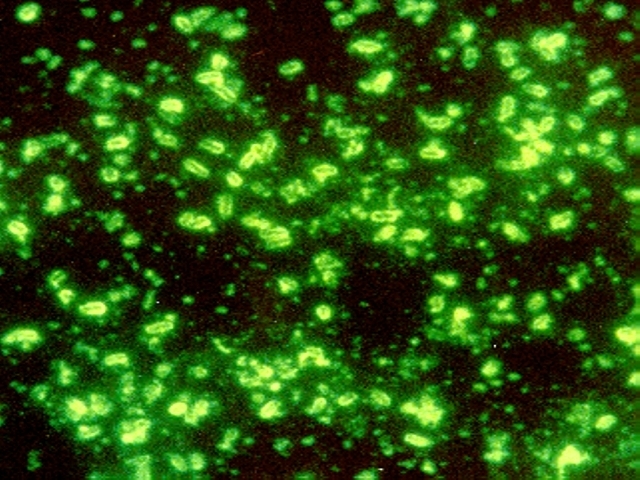
Image source: Wikipedia/Wikimedia
| Ecology, Host, and Life Cycle | |
|---|---|
| Oxygen requirements | Aerobe |
| Optimal temperature | 30 |
| Temperature range | Mesophilic |
| Habitat | Not Available |
| Biotic relationship | Not Available |
| Host(s) | Homo sapiens, Sus scrofa, Mammalia |
| Cell arrangement | Not Available |
| Sporulation | Not Available |
| Energy source | Chemoheterotroph |
| Pathogenicity | Non-pathogenic |
Gene Summary
Adenine Count
1019871 bp
Thymine Count
1018750 bp
Guanine Count
982648 bp
Cytosine Count
978994 bp
Genome Length
4000307 bp
Protein-coding Genes
3266 genes
Non-Coding Genes
266 genes
# of Chromosomes/Plasmids
1
Genes
| Name | Locus Tag | UniProt ID | Strand Orientation | Gene Start/End | Protein Molecular Weight |
|---|---|---|---|---|---|
| lipid transporter atp-binding/permease | ACZ76_16535 | Q1CA68 | Positive | 3693947 - 3695695 | 64445.5 |
| tetraacyldisaccharide 4'-kinase | ACZ76_16540 | A7FJW3 | Positive | 3695692 - 3696678 | 36175.0 |
| hypothetical protein | ACZ76_16545 | P76097 | Negative | 3696686 - 3698092 | 52616.9 |
| cold-shock protein | ACZ76_16550 | Q89A90 | Positive | 3698767 - 3698976 | 7586.88 |
| hypothetical protein | ACZ76_16555 | A1JMK8 | Positive | 3699440 - 3699622 | 6792.25 |
| 3-deoxy-manno-octulosonate cytidylyltransferase | ACZ76_16560 | A7FJV8 | Positive | 3699619 - 3700371 | 27422.1 |
| hypothetical protein | ACZ76_16565 | P0AB04 | Positive | 3700663 - 3701556 | 34185.1 |
| hypothetical protein | ACZ76_16570 | P0AB02 | Negative | 3701566 - 3702357 | 28746.0 |
| sam-dependent methyltransferase | ACZ76_16575 | Q8XDG3 | Positive | 3702558 - 3703343 | 29440.8 |
| condesin subunit f | ACZ76_16580 | A1JML8 | Positive | 3703340 - 3704662 | 50303.8 |
Pathways
0 pathways
No pathways found
No metabolic pathways have been associated with this bacterium yet.
Health Effects
No health effects information available for this bacterium.