Kingdom
Pseudomonadati
Phylum
Pseudomonadota
Class
Gammaproteobacteria
Order
Enterobacterales
Family
Yersiniaceae
Genus
Yersinia
Description
Taxonomy
| Kingdom | Pseudomonadati |
|---|---|
| Phylum | Pseudomonadota |
| Class | Gammaproteobacteria |
| Order | Enterobacterales |
| Family | Yersiniaceae |
| Genus | Yersinia |
| Species | Yersinia aleksiciae |
| Strain | Y159, H254-36/86, Y 159 |
Profile
| Physiology | |
|---|---|
| Gram staining properties | Negative |
| Shape | rod |
| Mobility | No |
| Flagellar presence | Yes |
| Number of membranes | Not Available |

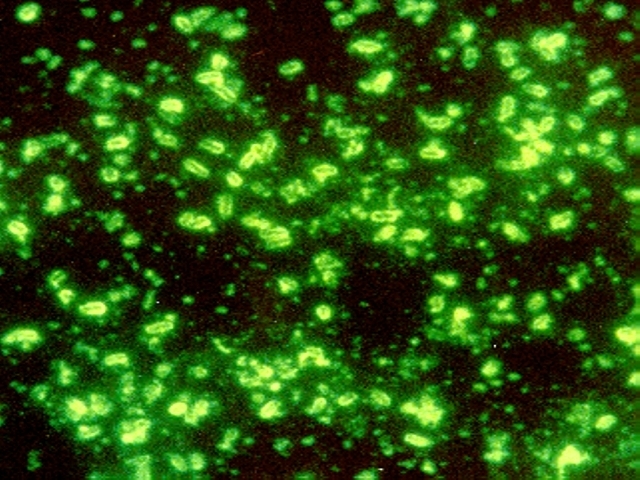
Image source: Wikipedia/Wikimedia
| Ecology, Host, and Life Cycle | |
|---|---|
| Oxygen requirements | Aerobe |
| Optimal temperature | 30 |
| Temperature range | Mesophilic |
| Habitat | Not Available |
| Biotic relationship | Not Available |
| Host(s) | Homo sapiens, Sus scrofa, Mammalia |
| Cell arrangement | Not Available |
| Sporulation | Not Available |
| Energy source | Chemoheterotroph |
| Pathogenicity | Non-pathogenic |
Gene Summary
Adenine Count
1019871 bp
Thymine Count
1018750 bp
Guanine Count
982648 bp
Cytosine Count
978994 bp
Genome Length
4000307 bp
Protein-coding Genes
3266 genes
Non-Coding Genes
266 genes
# of Chromosomes/Plasmids
1
Genes
| Name | Locus Tag | UniProt ID | Strand Orientation | Gene Start/End | Protein Molecular Weight |
|---|---|---|---|---|---|
| rna-binding protein yhby | ACZ76_11425 | P0AGK6 | Negative | 2524550 - 2524843 | 10875.5 |
| 23s rrna methyltransferase | ACZ76_11430 | A1JIW2 | Positive | 2524991 - 2525620 | 23388.6 |
| atp-dependent metalloprotease | ACZ76_11435 | P63344 | Positive | 2525677 - 2527632 | 71440.2 |
| dihydropteroate synthase | ACZ76_11440 | P0AC14 | Positive | 2527750 - 2528583 | 30039.3 |
| phosphoglucosamine mutase | ACZ76_11445 | A7FMS6 | Positive | 2528593 - 2529933 | 47875.9 |
| preprotein translocase subunit secg | ACZ76_11450 | P0AGA1 | Positive | 2530155 - 2530490 | 11497.0 |
| Trna-leu | Not Available | Not Available | Positive | 2530582 - 2530668 | Not Available |
| Trna-met | Not Available | Not Available | Positive | 2530729 - 2530805 | Not Available |
| ribosome maturation protein rimp | ACZ76_11465 | Q1CC05 | Positive | 2531021 - 2531473 | 16702.0 |
| transcription elongation factor nusa | ACZ76_11470 | P0AFF8 | Positive | 2531495 - 2532982 | 54763.9 |
Pathways
0 pathways
No pathways found
No metabolic pathways have been associated with this bacterium yet.
Health Effects
No health effects information available for this bacterium.