Kingdom
Pseudomonadati
Phylum
Pseudomonadota
Class
Betaproteobacteria
Order
Neisseriales
Family
Chromobacteriaceae
Genus
Chromobacterium
Description
Taxonomy
| Kingdom | Pseudomonadati |
|---|---|
| Phylum | Pseudomonadota |
| Class | Betaproteobacteria |
| Order | Neisseriales |
| Family | Chromobacteriaceae |
| Genus | Chromobacterium |
| Species | Chromobacterium paludis |
| Strain | No strain |
Profile
| Physiology | |
|---|---|
| Gram staining properties | Not Available |
| Shape | Not Available |
| Mobility | Not Available |
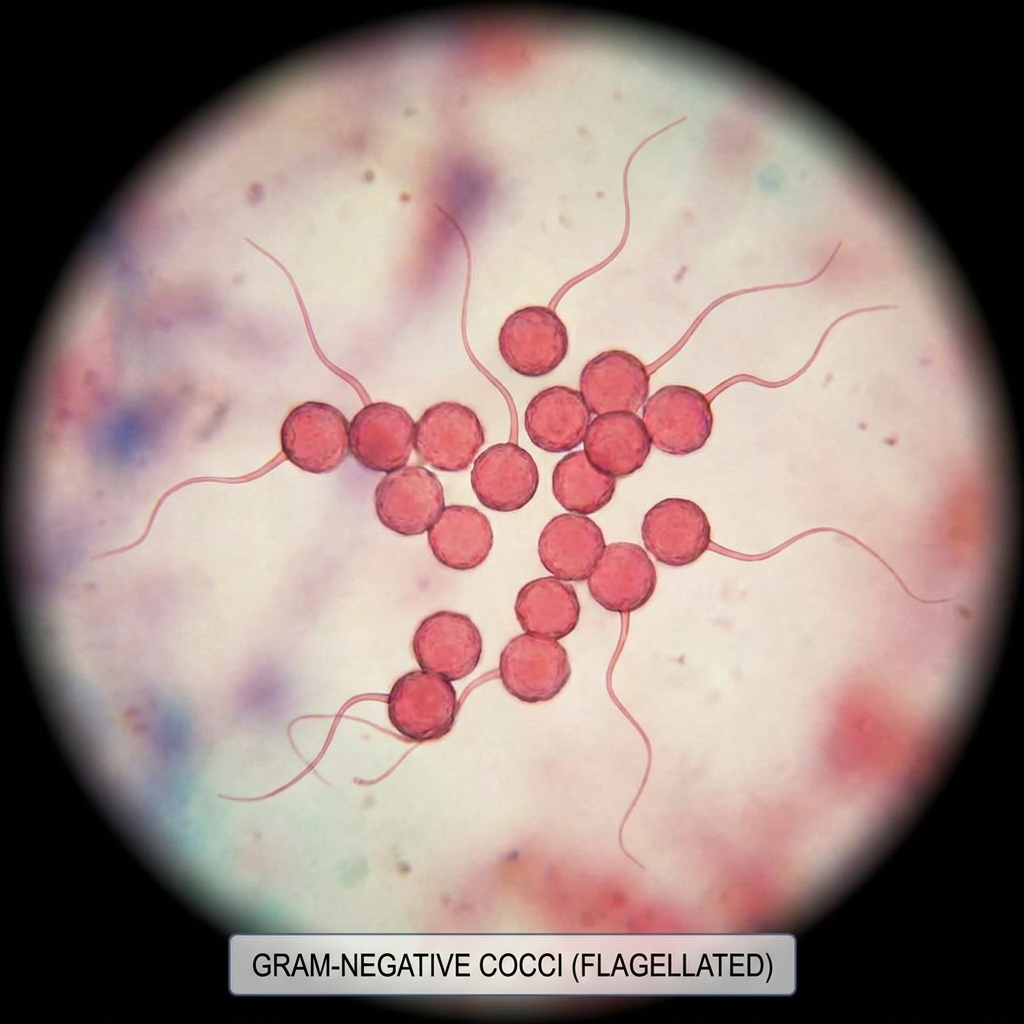
| Flagellar presence | Yes |
| Number of membranes | Not Available |
| Ecology, Host, and Life Cycle | |
|---|---|
| Oxygen requirements | Not Available |
| Optimal temperature | Not Available |
| Temperature range | Not Available |
| Habitat | Not Available |
| Biotic relationship | Not Available |
| Host(s) | Not Available |
| Cell arrangement | Not Available |
| Sporulation | Not Available |
| Energy source | Not Available |
| Pathogenicity | Not Available |
Gene Summary
Adenine Count
779307 bp
Thymine Count
777233 bp
Guanine Count
1358234 bp
Cytosine Count
1365000 bp
Genome Length
4279774 bp
Protein-coding Genes
3875 genes
Non-Coding Genes
196 genes
# of Chromosomes/Plasmids
1
Genes
| Name | Locus Tag | UniProt ID | Strand Orientation | Gene Start/End | Protein Molecular Weight |
|---|---|---|---|---|---|
| duf2523 domain-containing protein | FYK34_13285 | Not Available | Negative | 2827118 - 2827501 | 13947.5 |
| hypothetical protein | FYK34_13290 | Not Available | Negative | 2827408 - 2828739 | 45909.1 |
| hypothetical protein | FYK34_13295 | Not Available | Negative | 2828894 - 2829142 | 8305.41 |
| hypothetical protein | FYK34_13300 | Not Available | Negative | 2829155 - 2829364 | 7918.65 |
| replication endonuclease | FYK34_13305 | P41064 | Negative | 2829375 - 2831243 | 70605.6 |
| hypothetical protein | FYK34_13310 | O80294 | Negative | 2831246 - 2831563 | 11900.0 |
| hypothetical protein | FYK34_13315 | Not Available | Negative | 2831602 - 2831787 | 6742.48 |
| hypothetical protein | FYK34_13320 | Not Available | Positive | 2831944 - 2832507 | 21393.4 |
| tyrosine-type recombinase/integrase | FYK34_13325 | P06723 | Positive | 2832526 - 2833533 | 37920.8 |
| integrase family protein | FYK34_13330 | P71298 | Positive | 2833799 - 2835085 | 48759.4 |
Pathways
0 pathways
No pathways found
No metabolic pathways have been associated with this bacterium yet.
Health Effects
No health effects information available for this bacterium.