Kingdom
Pseudomonadati
Phylum
Pseudomonadota
Class
Alphaproteobacteria
Order
Hyphomicrobiales
Family
Rhizobiaceae
Genus
Sinorhizobium
Description
Taxonomy
| Kingdom | Pseudomonadati |
|---|---|
| Phylum | Pseudomonadota |
| Class | Alphaproteobacteria |
| Order | Hyphomicrobiales |
| Family | Rhizobiaceae |
| Genus | Sinorhizobium |
| Species | Sinorhizobium kummerowiae |
| Strain | No strain |
Profile
| Physiology | |
|---|---|
| Gram staining properties | Not Available |
| Shape | Not Available |
| Mobility | Not Available |
| Flagellar presence | Yes |
| Number of membranes | Not Available |
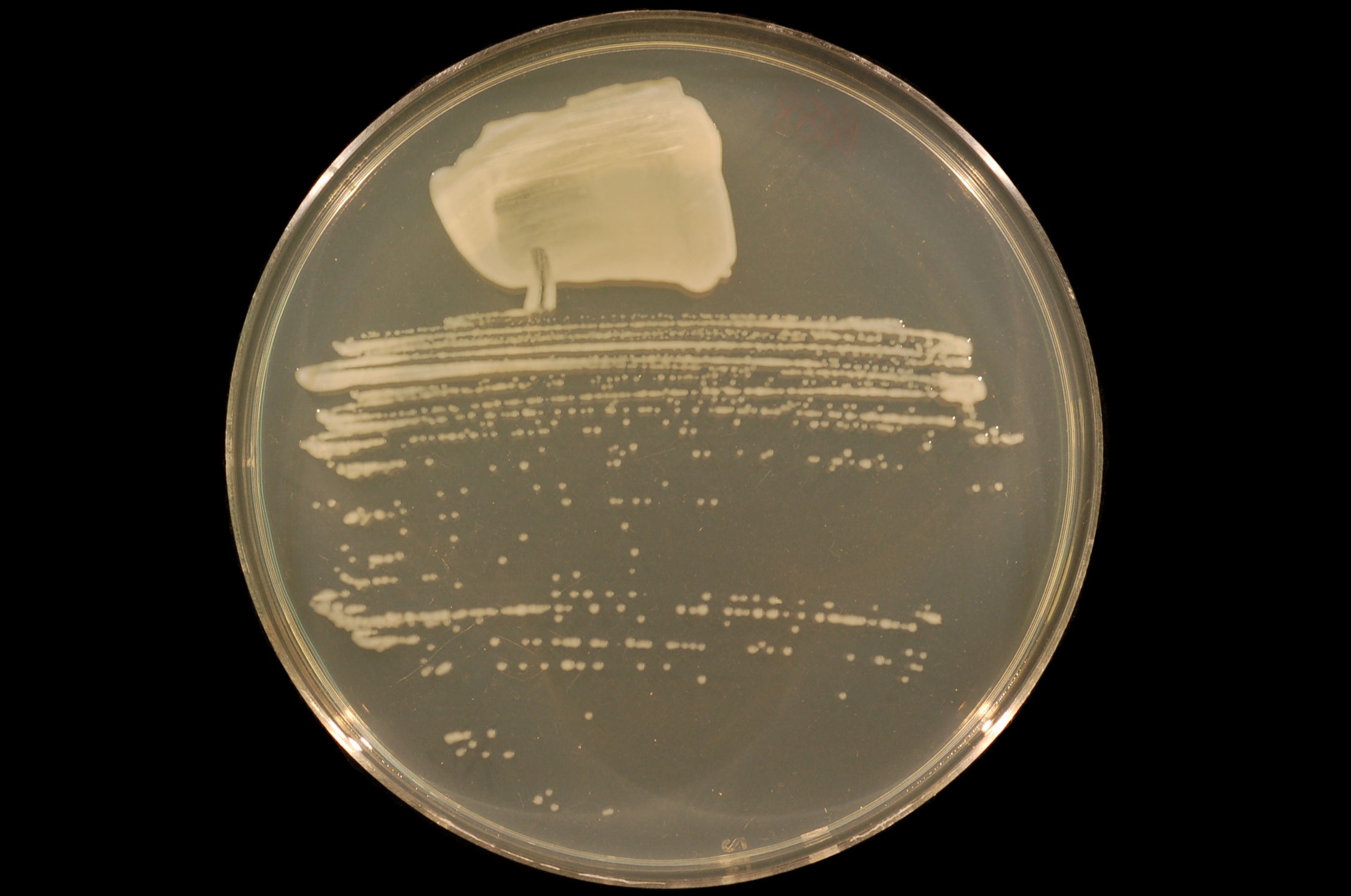
Image source: Wikipedia/Wikimedia
| Ecology, Host, and Life Cycle | |
|---|---|
| Oxygen requirements | Not Available |
| Optimal temperature | Not Available |
| Temperature range | Not Available |
| Habitat | Not Available |
| Biotic relationship | Not Available |
| Host(s) | Not Available |
| Cell arrangement | Not Available |
| Sporulation | Not Available |
| Energy source | Not Available |
| Pathogenicity | Not Available |
Genome Summary
Ensifer kummerowiae , Complete Genome
Gene Summary
Adenine Count
678864 bp
Thymine Count
678193 bp
Guanine Count
1133839 bp
Cytosine Count
1143936 bp
Genome Length
3634832 bp
Protein-coding Genes
3368 genes
Non-Coding Genes
102 genes
# of Chromosomes/Plasmids
6
Genes
| Name | Locus Tag | UniProt ID | Strand Orientation | Gene Start/End | Protein Molecular Weight |
|---|---|---|---|---|---|
| carboxymuconolactone decarboxylase family protein | VPK21_002712 | P96684 | Negative | 1406112 - 1406585 | 17167.6 |
| lysr family transcriptional regulator | VPK21_002713 | Not Available | Negative | 1406764 - 1406982 | 7776.35 |
| c45 family autoproteolytic acyltransferase/hydolase | VPK21_002714 | Not Available | Positive | 1407222 - 1408196 | 36255.2 |
| tripartite tricarboxylate transporter permease | VPK21_002715 | P70795 | Negative | 1408243 - 1409748 | 52695.0 |
| tripartite tricarboxylate transporter tctb family protein | VPK21_002716 | P70794 | Negative | 1409761 - 1410222 | 16617.9 |
| tripartite tricarboxylate transporter substrate binding protein bugd | VPK21_002717 | P70791 | Negative | 1410429 - 1411406 | 34073.9 |
| pseudouridine synthase | VPK21_002718 | O67444 | Negative | 1411657 - 1412445 | 29229.7 |
| hydantoinase b/oxoprolinase family protein | VPK21_002719 | O14841 | Positive | 1412629 - 1416246 | 129443.0 |
| dienelactone hydrolase family protein | VPK21_002720 | Not Available | Negative | 1416324 - 1416890 | 20436.2 |
| lrp/asnc family transcriptional regulator | VPK21_002721 | P0ACJ7 | Negative | 1417424 - 1417894 | 17320.9 |
Pathways
0 pathways
No pathways found
No metabolic pathways have been associated with this bacterium yet.
Health Effects
No health effects information available for this bacterium.