Kingdom
Pseudomonadati
Phylum
Pseudomonadota
Class
Alphaproteobacteria
Order
Rhodobacterales
Family
Paracoccaceae
Genus
Paracoccus
Description
Taxonomy
| Kingdom | Pseudomonadati |
|---|---|
| Phylum | Pseudomonadota |
| Class | Alphaproteobacteria |
| Order | Rhodobacterales |
| Family | Paracoccaceae |
| Genus | Paracoccus |
| Species | Paracoccus yeei |
| Strain | G 1212 |
Profile
| Physiology | |
|---|---|
| Gram staining properties | Negative |
| Shape | Cocci |
| Mobility | No |
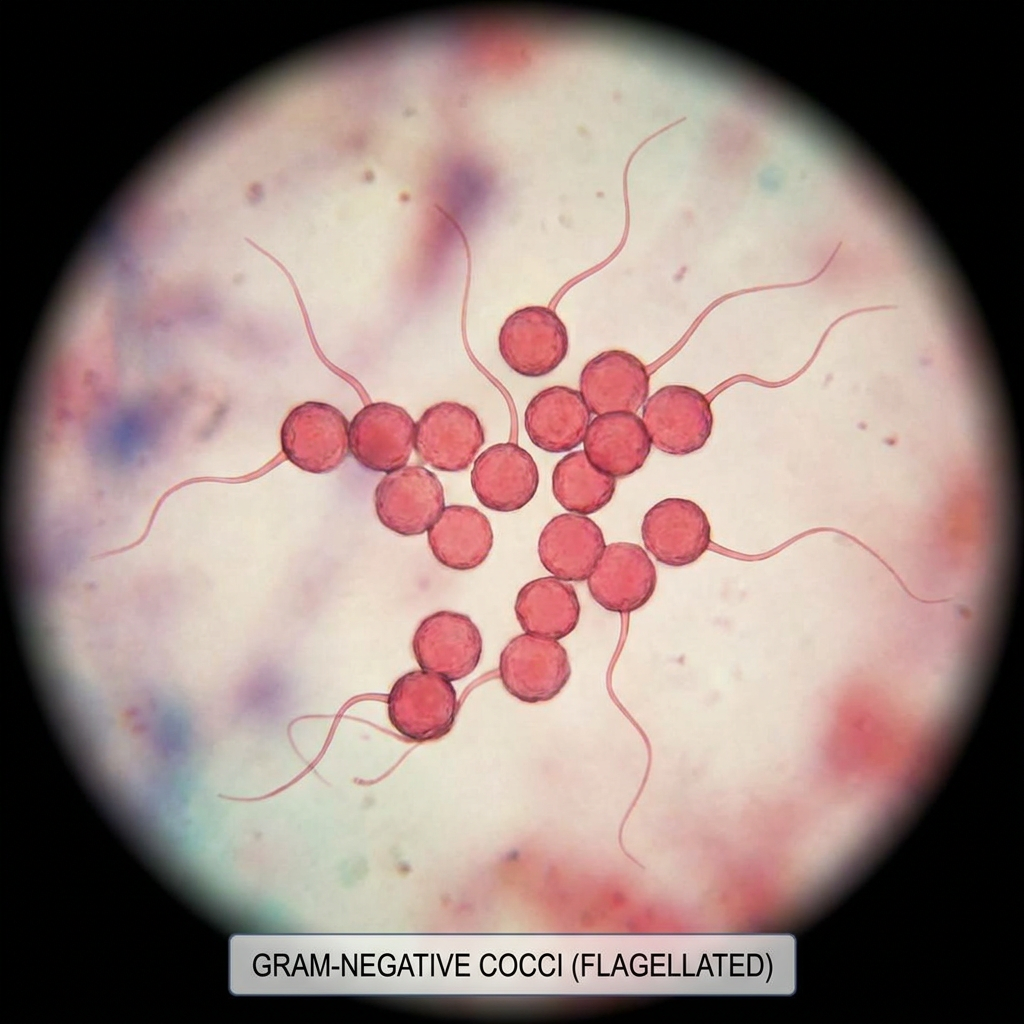
| Flagellar presence | Yes |
| Number of membranes | Not Available |

Image source: Wikipedia/Wikimedia
| Ecology, Host, and Life Cycle | |
|---|---|
| Oxygen requirements | Aerobe |
| Optimal temperature | Not Available |
| Temperature range | Mesophilic |
| Habitat | Not Available |
| Biotic relationship | Not Available |
| Host(s) | Not Available |
| Cell arrangement | Not Available |
| Sporulation | Not Available |
| Energy source | Chemoheterotroph |
| Pathogenicity | Not Available |
Genome Summary
Paracoccus yeei G 1212, Complete Genome
Gene Summary
Adenine Count
551202 bp
Thymine Count
550511 bp
Guanine Count
1145811 bp
Cytosine Count
1146249 bp
Genome Length
3393773 bp
Protein-coding Genes
3162 genes
Non-Coding Genes
167 genes
# of Chromosomes/Plasmids
14
Genes
| Name | Locus Tag | UniProt ID | Strand Orientation | Gene Start/End | Protein Molecular Weight |
|---|---|---|---|---|---|
| abc transporter permease | E2975_19060 | A0A0H2ZFV0 | Negative | 2766254 - 2767165 | 33431.2 |
| abc transporter permease | E2975_19065 | Q5PGP5 | Negative | 2767178 - 2768089 | 32913.6 |
| peptide abc transporter substrate-binding protein | E2975_19070 | P23847 | Negative | 2768143 - 2769639 | 54814.1 |
| glycosyl hydrolase | E2975_19075 | Not Available | Positive | 2770001 - 2771200 | 42642.2 |
| 4-hydroxythreonine-4-phosphate dehydrogenase pdxa | E2975_19080 | Q92X16 | Positive | 2771197 - 2772147 | 32918.3 |
| iron-containing alcohol dehydrogenase | E2975_19085 | A4IP64 | Positive | 2772229 - 2773338 | 38245.1 |
| fadr family transcriptional regulator | E2975_19090 | O07007 | Negative | 2773453 - 2774172 | 26676.8 |
| four-carbon acid sugar kinase family protein | E2975_19095 | A0A0H3LX82 | Negative | 2774169 - 2775209 | 34530.9 |
| tripartite tricarboxylate transporter permease | E2975_19100 | P70795 | Negative | 2775206 - 2776705 | 51757.2 |
| tripartite tricarboxylate transporter tctb family protein | E2975_19105 | P70794 | Negative | 2776702 - 2777187 | 16660.2 |
Pathways
0 pathways
No pathways found
No metabolic pathways have been associated with this bacterium yet.
Health Effects
No health effects information available for this bacterium.