Kingdom
Pseudomonadati
Phylum
Pseudomonadota
Class
Alphaproteobacteria
Order
Rhodobacterales
Family
Paracoccaceae
Genus
Paracoccus
Description
Taxonomy
| Kingdom | Pseudomonadati |
|---|---|
| Phylum | Pseudomonadota |
| Class | Alphaproteobacteria |
| Order | Rhodobacterales |
| Family | Paracoccaceae |
| Genus | Paracoccus |
| Species | Paracoccus yeei |
| Strain | G 1212 |
Profile
| Physiology | |
|---|---|
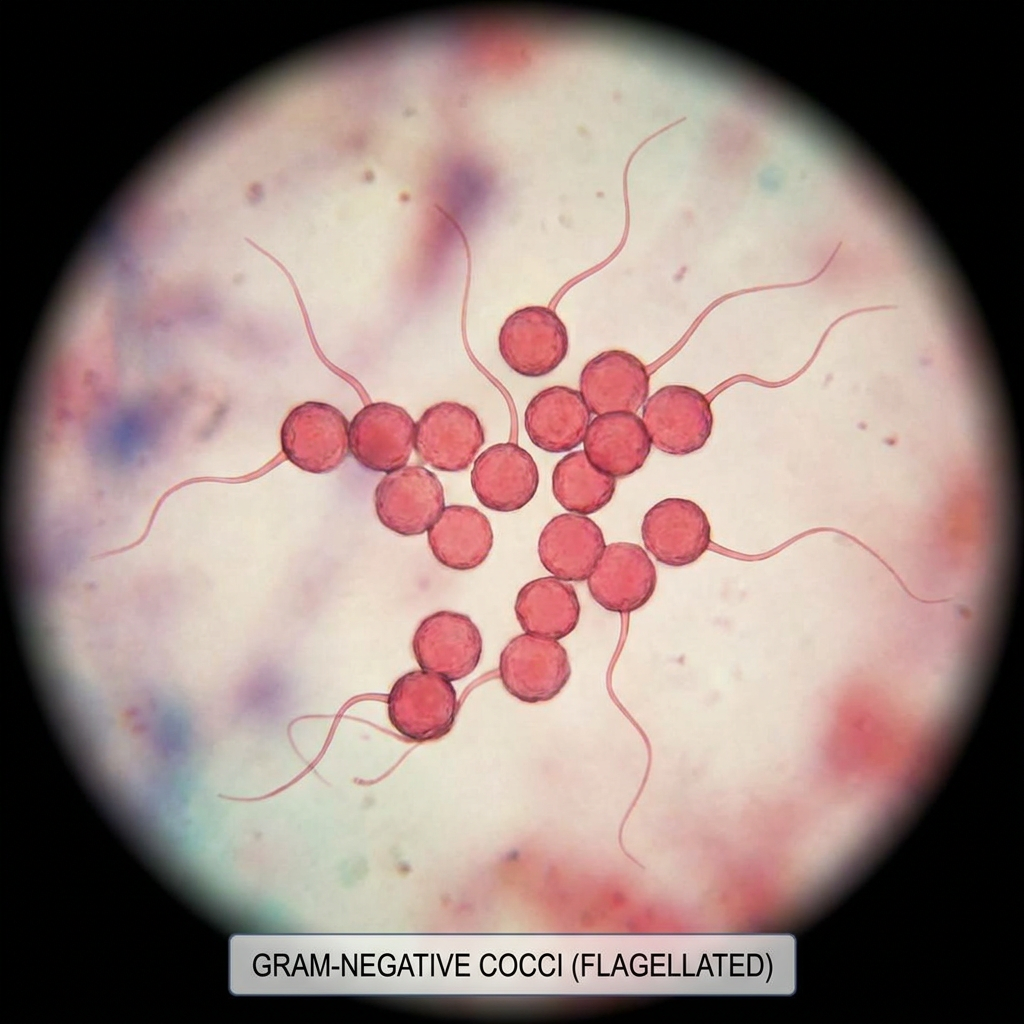
| Gram staining properties | Negative |
| Shape | Cocci |
| Mobility | No |
| Flagellar presence | Yes |
| Number of membranes | Not Available |

Image source: Wikipedia/Wikimedia
| Ecology, Host, and Life Cycle | |
|---|---|
| Oxygen requirements | Aerobe |
| Optimal temperature | Not Available |
| Temperature range | Mesophilic |
| Habitat | Not Available |
| Biotic relationship | Not Available |
| Host(s) | Not Available |
| Cell arrangement | Not Available |
| Sporulation | Not Available |
| Energy source | Chemoheterotroph |
| Pathogenicity | Not Available |
Genome Summary
Paracoccus yeei G 1212, Complete Genome
Gene Summary
Adenine Count
551202 bp
Thymine Count
550511 bp
Guanine Count
1145811 bp
Cytosine Count
1146249 bp
Genome Length
3393773 bp
Protein-coding Genes
3162 genes
Non-Coding Genes
167 genes
# of Chromosomes/Plasmids
14
Genes
| Name | Locus Tag | UniProt ID | Strand Orientation | Gene Start/End | Protein Molecular Weight |
|---|---|---|---|---|---|
| mapeg family protein | E2975_12975 | Not Available | Negative | 1504281 - 1504673 | 14141.4 |
| hypothetical protein | E2975_12980 | Not Available | Negative | 1504673 - 1504930 | 9738.26 |
| 2-oxoglutarate dehydrogenase complex dihydrolipoyllysine-residue succinyltransferase | E2975_12985 | Q8GCY1 | Negative | 1505069 - 1506619 | 54352.3 |
| 2-oxoglutarate dehydrogenase e1 component | E2975_12990 | A6WXF0 | Negative | 1506622 - 1509588 | 109867.0 |
| hypothetical protein | E2975_12995 | Not Available | Negative | 1509690 - 1510070 | 13375.1 |
| succinate--coa ligase subunit alpha | E2975_13000 | Q1RH56 | Negative | 1510174 - 1511058 | 30295.8 |
| hypothetical protein | E2975_13005 | Not Available | Negative | 1511117 - 1511617 | 17395.8 |
| adp-forming succinate--coa ligase subunit beta | E2975_13010 | A1AZH7 | Negative | 1511619 - 1512812 | 42459.4 |
| malate dehydrogenase | E2975_13015 | A3PN14 | Negative | 1513063 - 1514025 | 33491.7 |
| sulfite exporter taue/safe family protein | E2975_13020 | Not Available | Positive | 1514250 - 1514984 | 25580.0 |
Pathways
0 pathways
No pathways found
No metabolic pathways have been associated with this bacterium yet.
Health Effects
No health effects information available for this bacterium.