Escherichia coli strain KCJK8857

Gram-negativeRodMotileFacultative anaerobe

Kingdom

Pseudomonadati

Phylum

Pseudomonadota

Class

Gammaproteobacteria

Order

Enterobacterales

Family

Enterobacteriaceae

Genus

Escherichia

Description

Escherichia coli strain KCJK8857 is a Gram-negative, rod-shaped bacterium that exhibits a facultative anaerobic metabolism, allowing it to thrive in both aerobic and anaerobic environments. This strain is characterized by its mobility, attributed to the presence of flagella, and typically arranges itself in pairs or singly. It is mesophilic, with an optimal growth temperature of 37°C, which corresponds to the body temperature of many warm-blooded hosts. KCJK8857 is associated with a diverse range of hosts, including Homo sapiens, various mammals such as Bos taurus and Canis lupus familiaris, and even some plants like Solanum lycopersicum and Brassica oleracea var. italica. This wide host range indicates that KCJK8857 has adapted to various ecological niches, making it a free-living organism with significant interactions in different biological communities. The health effects associated with this strain are notable. KCJK8857 is linked to various pathogenic conditions in humans, such as urinary tract infections (UTIs), gastrointestinal infections, and even severe outcomes like hemolytic uremic syndrome (HUS) and neonatal meningitis. The strain’s pathogenic potential underscores its role in both human health and disease, highlighting its importance in clinical microbiology and public health. In summary, E. coli strain KCJK8857 exemplifies a versatile bacterium capable of colonizing multiple hosts and causing a range of health issues, emphasizing the need for ongoing monitoring and research regarding its pathogenicity and ecological interactions.

Taxonomy

KingdomPseudomonadati
PhylumPseudomonadota
ClassGammaproteobacteria
OrderEnterobacterales
FamilyEnterobacteriaceae
GenusEscherichia
SpeciesEscherichia coli
Strainstrain KCJK8857

Profile

Physiology
Gram staining propertiesNegative
ShapeRod
MobilityYes
Flagellar presenceYes
Number of membranes2
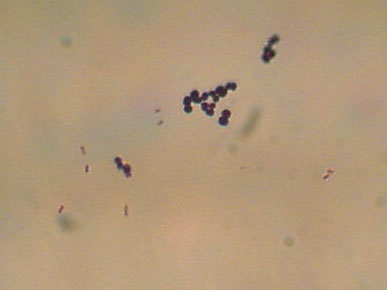
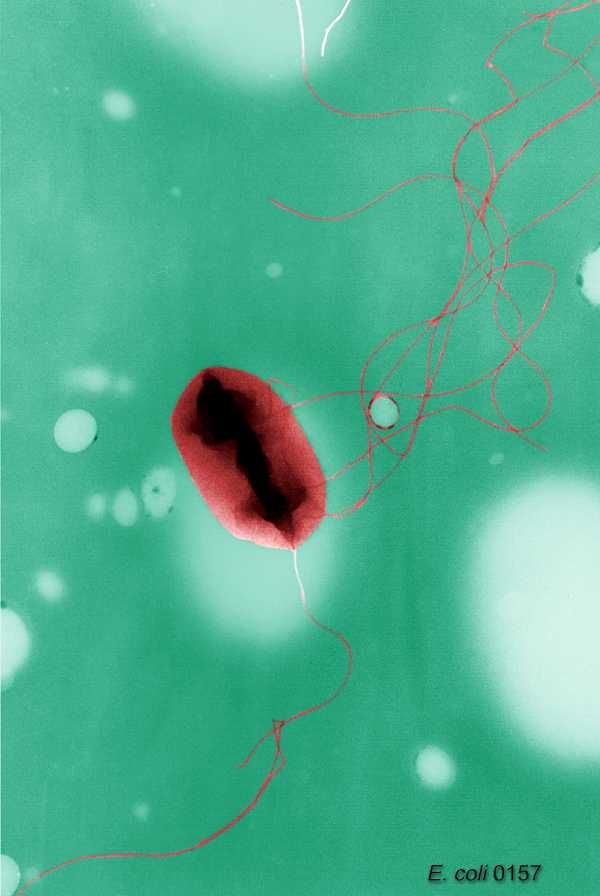
Image of Escherichia coli strain KCJK8857
Image source: Wikipedia/Wikimedia
Ecology, Host, and Life Cycle
Oxygen requirementsFacultative anaerobe
Optimal temperature37
Temperature rangeMesophilic
HabitatHostAssociated
Biotic relationshipFree living
Host(s)Homo sapiens, Gallus gallus, Bos taurus
Cell arrangementPairs - Singles
SporulationNot Available
Energy sourceNot Available
PathogenicityHuman

Genome Summary

Escherichia coli strain KCJK8857 NODE_450_length_202_cov_7.786667,

Gene Summary

Adenine Count

1157751 bp

Thymine Count

1158331 bp

Guanine Count

1193775 bp

Cytosine Count

1202692 bp

Genome Length

4712549 bp

Protein-coding Genes

4474 genes

Non-Coding Genes

214 genes

# of Chromosomes/Plasmids

1

Genes

NameLocus TagUniProt IDStrand OrientationGene Start/EndProtein Molecular Weight
Host specificity proteinFIB23_11095Not AvailableNegative2280444 - 228081012824.0
Putative tail componentFIB23_11100Not AvailableNegative2280871 - 228151822542.4
Tail fiber componentFIB23_11105Not AvailableNegative2281416 - 228215928295.4
Tail componentFIB23_11110Not AvailableNegative2282165 - 228286325694.9
Tail componentFIB23_11115Not AvailableNegative2282863 - 228319212487.0
Tail componentFIB23_11120Not AvailableNegative2283189 - 228573892050.3
Tail componentFIB23_11125Not AvailableNegative2285731 - 228616516092.0
Tail componentFIB23_11130Not AvailableNegative2286147 - 228656915609.3
Major tail protein vFIB23_11135Not AvailableNegative2286585 - 228732525687.0
Tail componentFIB23_11140Not AvailableNegative2287333 - 228772814665.9

Displaying genes 1 – 10 of 4688 in total

Metabolites

4785 records
Metabolite IDMetabolite nameStructureCAS number
BASm0000173(R)-3-Hydroxybutyric acidC4H8O3Chemical structure of (R)-3-Hydroxybutyric acid625-72-3
Average104.0473Da
Monoisotopic104.047344122Da
BASm0000217alpha-ribazoleC14H18N2O4Chemical structure of alpha-ribazoleNot available
Average278.3037Da
Monoisotopic278.126657074Da
BASm0000237(R)-4'-phosphopantothenateC9H18NO8PChemical structure of (R)-4'-phosphopantothenateNot available
Average299.2149Da
Monoisotopic299.0770031Da
BASm0000238(R)-3-phenyllactateC9H9O3Chemical structure of (R)-3-phenyllactateNot available
Average165.169Da
Monoisotopic165.05571773Da
BASm00002482,3-dihydroxy-3-methylbutanoateC5H10O4Chemical structure of 2,3-dihydroxy-3-methylbutanoate1756-18-9
Average134.1305Da
Monoisotopic134.0579088Da
BASm00002502,5-didehydro-D-gluconateC6H7O7Chemical structure of 2,5-didehydro-D-gluconate53736-12-2
Average191.1156Da
Monoisotopic191.019177578Da
BASm00002512-dehydropantoateC6H9O4Chemical structure of 2-dehydropantoateNot available
Average145.1333Da
Monoisotopic145.050083776Da
BASm00002532-oxopent-4-enoateC5H5O3Chemical structure of 2-oxopent-4-enoateNot available
Average113.093Da
Monoisotopic113.024417601Da
BASm00002593alpha,12alpha-dihydroxy-7-oxo-5beta-cholanateC24H37O5Chemical structure of 3alpha,12alpha-dihydroxy-7-oxo-5beta-cholanateNot available
Average405.556Da
Monoisotopic405.264647871Da
BASm00002603alpha,7alpha-dihydroxy-12-oxo-5beta-cholanateC24H37O5Chemical structure of 3alpha,7alpha-dihydroxy-12-oxo-5beta-cholanateNot available
Average405.556Da
Monoisotopic405.264647871Da

Displaying 1–10 of 4785 metabolites

Health Effects

Health ConditionRelationReference
BacteriaemiaCausesPMC12660362
EnteritisCausesPMC12831630
Haemorrhagic colitisCausesPMC12831630
Haemolytic uraemic syndromeCausesPMC12831630
Yak calf diarrheaCausesPMC13110503
Watery diarrheaCausesPMC13110503
DiarrheaCausesPMC13110503
MeningitisCausesPMC2168960
MeningitisCausesPMC263034
DiarrhoeaCausesPMC3505186

Displaying health effects 81 – 90 of 103 in total