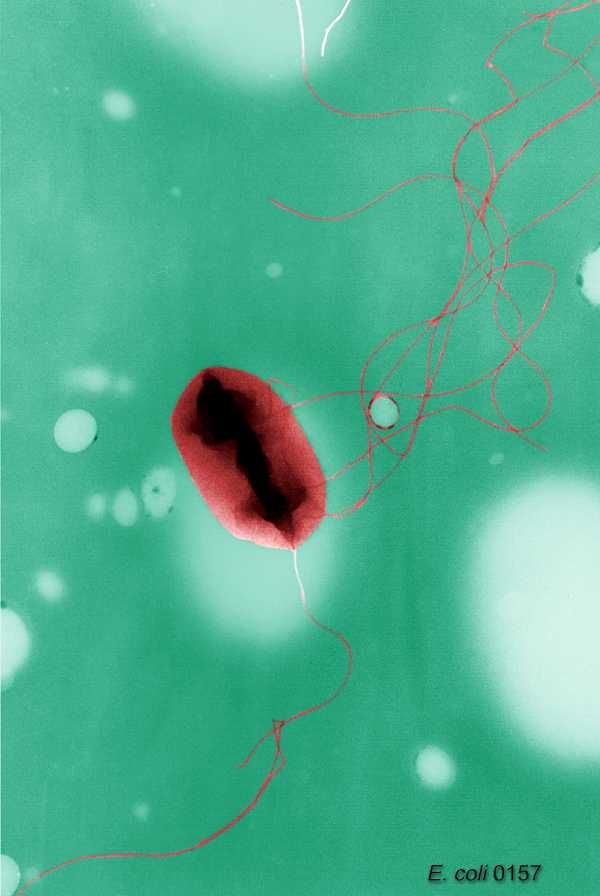
Escherichia coli strain KCJK8453

Gram-negativeRodMotileFacultative anaerobe

Kingdom

Pseudomonadati

Phylum

Pseudomonadota

Class

Gammaproteobacteria

Order

Enterobacterales

Family

Enterobacteriaceae

Genus

Escherichia

Description

Escherichia coli strain KCJK8453 is a Gram-negative, rod-shaped bacterium that exhibits mobility due to the presence of flagella. It is classified as a facultative anaerobe, meaning it can thrive in both the presence and absence of oxygen. The strain is mesophilic, with an optimal growth temperature of 37°C, and it typically exists in pairs or singles. This strain is host-associated and has a diverse range of hosts, including various mammals such as Homo sapiens (humans), Gallus gallus (chickens), and Bos taurus (cattle), as well as other vertebrates and even some plants like Solanum lycopersicum (tomato) and Brassica oleracea var. italica (broccoli). Its biotic relationship is characterized as free-living, indicating its ability to survive independently. E. coli strain KCJK8453 is associated with numerous health effects, primarily in humans. It is known to cause urinary tract infections (UTIs), gastrointestinal infections, and potentially severe conditions such as septicemia, neonatal meningitis, and hemolytic uremic syndrome (HUS). The strain's pathogenic potential highlights its role in both foodborne infections and clinical settings, leading to various health complications including diarrhea, colibacillosis, and even colorectal cancer. The ecological insight from these traits suggests that E. coli KCJK8453 plays a significant role in both the microbiota of its hosts and in the transmission of diseases. Its adaptability to different environments and hosts underlines the importance of monitoring such strains in public health and food safety contexts.

Taxonomy

KingdomPseudomonadati
PhylumPseudomonadota
ClassGammaproteobacteria
OrderEnterobacterales
FamilyEnterobacteriaceae
GenusEscherichia
SpeciesEscherichia coli
Strainstrain KCJK8453

Profile

Physiology
Gram staining propertiesNegative
ShapeRod
MobilityYes
Flagellar presenceYes
Number of membranes2
Image of Escherichia coli strain KCJK8453
Image source: Wikipedia/Wikimedia
Ecology, Host, and Life Cycle
Oxygen requirementsFacultative anaerobe
Optimal temperature37
Temperature rangeMesophilic
HabitatHostAssociated
Biotic relationshipFree living
Host(s)Homo sapiens, Gallus gallus, Bos taurus
Cell arrangementPairs - Singles
SporulationNot Available
Energy sourceNot Available
PathogenicityHuman

Genome Summary

Escherichia coli strain KCJK8453 NODE_795_length_202_cov_4.506667,

Gene Summary

Adenine Count

1319844 bp

Thymine Count

1324842 bp

Guanine Count

1354779 bp

Cytosine Count

1359947 bp

Genome Length

5359427 bp

Protein-coding Genes

5370 genes

Non-Coding Genes

219 genes

# of Chromosomes/Plasmids

1

Genes

NameLocus TagUniProt IDStrand OrientationGene Start/EndProtein Molecular Weight
3-dehydroquinate synthaseFHR03_13105Not AvailablePositive2676967 - 267805538865.3
cell division protein damxFHR03_13110Not AvailablePositive2678147 - 267943346108.2
adenine-specific dna-methyltransferaseFHR03_13115Not AvailablePositive2679540 - 268037632101.2
ribulose-phosphate 3-epimeraseFHR03_13120Not AvailablePositive2680394 - 268107124555.7
phosphoglycolate phosphataseFHR03_13125Not AvailablePositive2681064 - 268182227390.7
tryptophan--trna ligaseFHR03_13130Not AvailablePositive2681815 - 268281937468.0
hypothetical proteinFHR03_13135Not AvailablePositive2683088 - 268399333432.3
prd domain-containing proteinFHR03_13140Not AvailablePositive2684010 - 268437213510.4
yhfx family plp-dependent enzymeFHR03_13145Not AvailablePositive2684456 - 268561942386.8
phosphopentomutaseFHR03_13150Not AvailablePositive2685619 - 268684544669.4

Displaying genes 2681 – 2690 of 5589 in total

Metabolites

4785 records
Metabolite IDMetabolite nameStructureCAS number
BASm0000173(R)-3-Hydroxybutyric acidC4H8O3Chemical structure of (R)-3-Hydroxybutyric acid625-72-3
Average104.0473Da
Monoisotopic104.047344122Da
BASm0000217alpha-ribazoleC14H18N2O4Chemical structure of alpha-ribazoleNot available
Average278.3037Da
Monoisotopic278.126657074Da
BASm0000237(R)-4'-phosphopantothenateC9H18NO8PChemical structure of (R)-4'-phosphopantothenateNot available
Average299.2149Da
Monoisotopic299.0770031Da
BASm0000238(R)-3-phenyllactateC9H9O3Chemical structure of (R)-3-phenyllactateNot available
Average165.169Da
Monoisotopic165.05571773Da
BASm00002482,3-dihydroxy-3-methylbutanoateC5H10O4Chemical structure of 2,3-dihydroxy-3-methylbutanoate1756-18-9
Average134.1305Da
Monoisotopic134.0579088Da
BASm00002502,5-didehydro-D-gluconateC6H7O7Chemical structure of 2,5-didehydro-D-gluconate53736-12-2
Average191.1156Da
Monoisotopic191.019177578Da
BASm00002512-dehydropantoateC6H9O4Chemical structure of 2-dehydropantoateNot available
Average145.1333Da
Monoisotopic145.050083776Da
BASm00002532-oxopent-4-enoateC5H5O3Chemical structure of 2-oxopent-4-enoateNot available
Average113.093Da
Monoisotopic113.024417601Da
BASm00002593alpha,12alpha-dihydroxy-7-oxo-5beta-cholanateC24H37O5Chemical structure of 3alpha,12alpha-dihydroxy-7-oxo-5beta-cholanateNot available
Average405.556Da
Monoisotopic405.264647871Da
BASm00002603alpha,7alpha-dihydroxy-12-oxo-5beta-cholanateC24H37O5Chemical structure of 3alpha,7alpha-dihydroxy-12-oxo-5beta-cholanateNot available
Average405.556Da
Monoisotopic405.264647871Da

Displaying 1–10 of 4785 metabolites

Health Effects

Health ConditionRelationReference
Gi diseaseCausesPMC11149725
UtisCausesPMC11434687
Colorectal cancerCausesPMC12198655
Pyogenic liver abscessesCausesPMC12392612
UtiCausesPMC13014981
ColibacillosisCausesPMC13255289
Enteric infectionsCausesPMC13255289
Foodborne infectionsCausesPMC13255289
Clinical mastitisCausesPMC13293316
DiarrheaCausesPMC3035056

Displaying health effects 1 – 10 of 103 in total