Kingdom
Pseudomonadati
Phylum
Pseudomonadota
Class
Gammaproteobacteria
Order
Pseudomonadales
Family
Pseudomonadaceae
Genus
Pseudomonas
Description
Taxonomy
| Kingdom | Pseudomonadati |
|---|---|
| Phylum | Pseudomonadota |
| Class | Gammaproteobacteria |
| Order | Pseudomonadales |
| Family | Pseudomonadaceae |
| Genus | Pseudomonas |
| Species | Pseudomonas aeruginosa |
| Strain | strain MED26 |
Profile
| Physiology | |
|---|---|
| Gram staining properties | Negative |
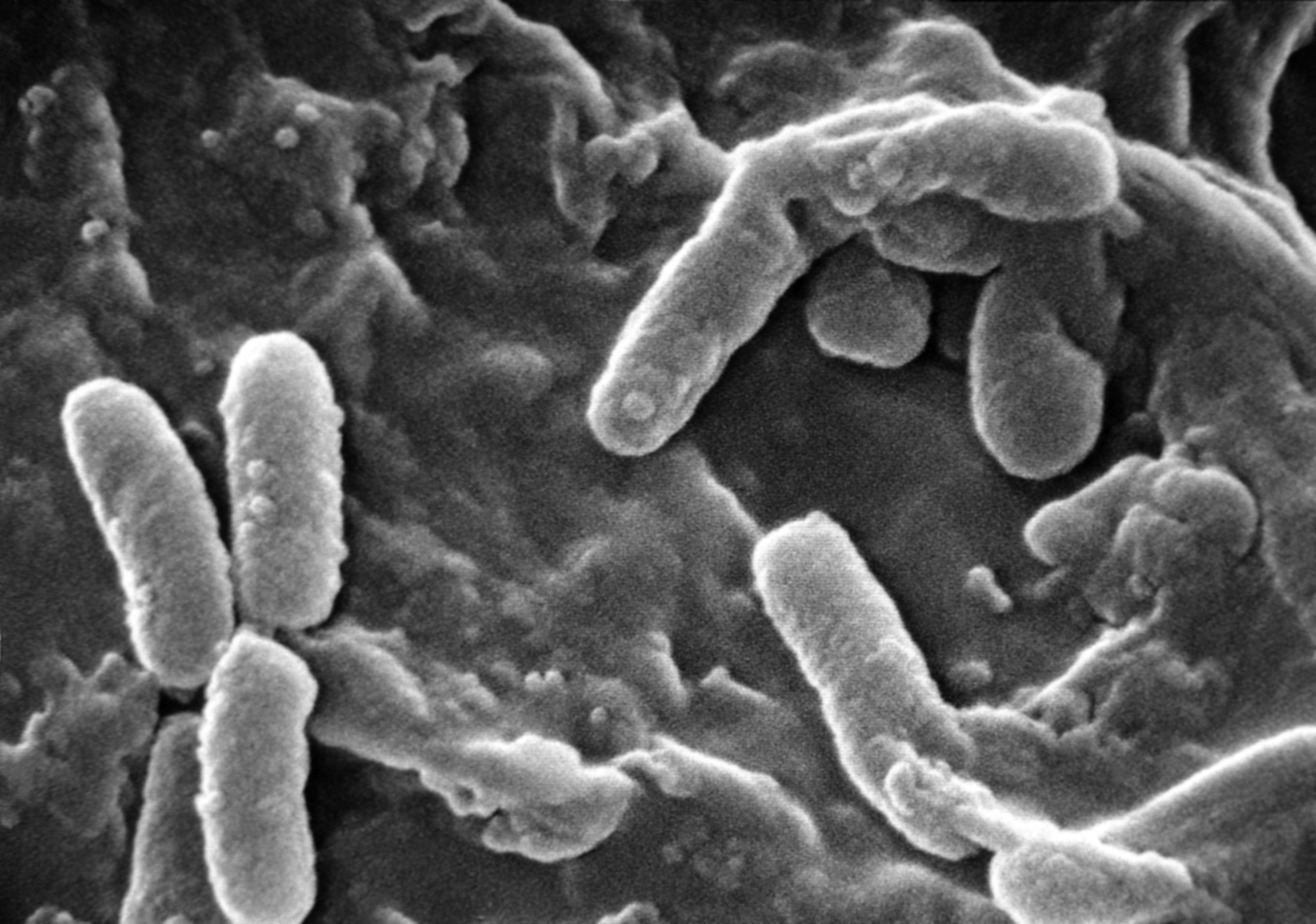
| Shape | Rod |
| Mobility | Yes |
| Flagellar presence | Yes |
| Number of membranes | 2 |

Image source: Wikipedia/Wikimedia
| Ecology, Host, and Life Cycle | |
|---|---|
| Oxygen requirements | Aerobe |
| Optimal temperature | 25 |
| Temperature range | Mesophilic |
| Habitat | Multiple |
| Biotic relationship | Free living |
| Host(s) | Homo sapiens, Oncorhynchus mykiss, Metazoa |
| Cell arrangement | Singles |
| Sporulation | Not Available |
| Energy source | Heterotroph |
| Pathogenicity | Animal; Human; Plant |
Gene Summary
Adenine Count
1248026 bp
Thymine Count
1240990 bp
Guanine Count
2377719 bp
Cytosine Count
2390807 bp
Genome Length
7263039 bp
Protein-coding Genes
6730 genes
Non-Coding Genes
254 genes
# of Chromosomes/Plasmids
1
Genes
| Name | Locus Tag | UniProt ID | Strand Orientation | Gene Start/End | Protein Molecular Weight |
|---|---|---|---|---|---|
| lipid iv(a) 4-amino-4-deoxy-l-arabinosyltransferase | FEM20_13260 | Not Available | Positive | 2813584 - 2815233 | 61701.2 |
| 4-amino-4-deoxy-l-arabinose-phosphoundecaprenol flippase subunit arne | FEM20_13265 | Not Available | Positive | 2815230 - 2815577 | 12496.8 |
| 4-amino-4-deoxy-l-arabinose-phosphoundecaprenol flippase subunit arnf | FEM20_13270 | Not Available | Positive | 2815574 - 2815987 | 14273.6 |
| udp-glucose/gdp-mannose dehydrogenase family protein | FEM20_13275 | Not Available | Positive | 2815984 - 2817378 | 51753.9 |
| pts fructose-like transporter subunit iib | FEM20_13280 | Not Available | Negative | 2817488 - 2819245 | 58941.0 |
| 1-phosphofructokinase | FEM20_13285 | Not Available | Negative | 2819247 - 2820191 | 33383.1 |
| phosphoenolpyruvate--protein phosphotransferase | FEM20_13290 | Not Available | Negative | 2820191 - 2823061 | 101526.0 |
| catabolite repressor/activator | FEM20_13295 | Not Available | Positive | 2823389 - 2824378 | 36389.6 |
| tatd family deoxyribonuclease | FEM20_13300 | Not Available | Positive | 2824389 - 2825168 | 29304.0 |
| barstar | FEM20_13305 | Not Available | Negative | 2825169 - 2825471 | 11347.5 |
Pathways
1314 pathways
Health Effects
| Health Condition | Relation | Reference |
|---|---|---|
| Pd-related peritonitis | Causes | PMC10292988 |
| Infections | Causes | PMC11433527 |
| Nosocomial infections | Causes | PMC11585281 |
| Ventilator-associated pneumonia | Causes | PMC11651626 |
| Sepsis | Causes | PMC11651626 |
| Sepsis shock | Causes | PMC11651626 |
| Catheter-associated urinary tract infections | Causes | PMC11651626 |
| Surgical site infections | Causes | PMC11651626 |
| Burn wound infection | Causes | PMC12198309 |
| Bacterial infection | Causes | PMC12801787 |