Kingdom
Pseudomonadati
Phylum
Pseudomonadota
Class
Gammaproteobacteria
Order
Enterobacterales
Family
Yersiniaceae
Genus
Yersinia
Description
Taxonomy
| Kingdom | Pseudomonadati |
|---|---|
| Phylum | Pseudomonadota |
| Class | Gammaproteobacteria |
| Order | Enterobacterales |
| Family | Yersiniaceae |
| Genus | Yersinia |
| Species | Yersinia frederiksenii |
| Strain | strain NCTC11470 |
Profile
| Physiology | |
|---|---|
| Gram staining properties | Negative |
| Shape | Rod |
| Mobility | Not Available |
| Flagellar presence | Yes |
| Number of membranes | Not Available |

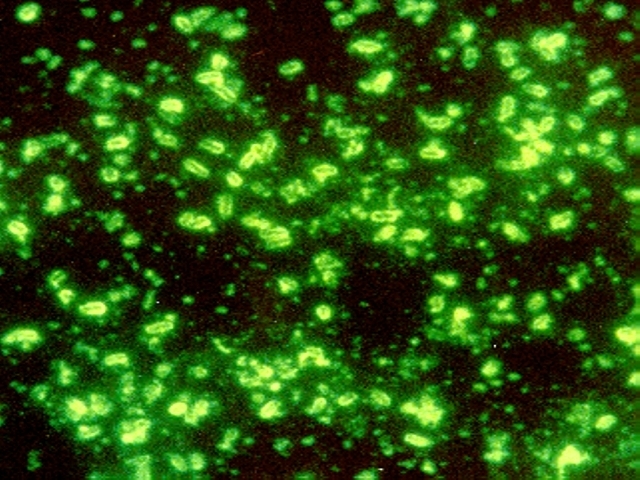
Image source: Wikipedia/Wikimedia
| Ecology, Host, and Life Cycle | |
|---|---|
| Oxygen requirements | Not Available |
| Optimal temperature | Not Available |
| Temperature range | Not Available |
| Habitat | environment; food |
| Biotic relationship | Not Available |
| Host(s) | Homo sapiens, Metazoa |
| Cell arrangement | Not Available |
| Sporulation | Not Available |
| Energy source | Not Available |
| Pathogenicity | Not Available |
Gene Summary
Adenine Count
Not Available
Thymine Count
Not Available
Guanine Count
Not Available
Cytosine Count
Not Available
Genome Length
Not Available
Protein-coding Genes
4159 genes
Non-Coding Genes
366 genes
# of Chromosomes/Plasmids
1
Genes
| Name | Locus Tag | UniProt ID | Strand Orientation | Gene Start/End | Protein Molecular Weight |
|---|---|---|---|---|---|
| putative tetrapyrrole methylase | NCTC11470_02247 | Not Available | Negative | 2422609 - 2423496 | 32416.2 |
| lppc putative lipoprotein | NCTC11470_02248 | Not Available | Positive | 2423559 - 2425529 | 69679.8 |
| putative endonuclease distantly related to archaeal holliday junction resolvase | NCTC11470_02249 | Not Available | Positive | 2425697 - 2426050 | 13226.7 |
| dnaa initiator-associating protein diaa | NCTC11470_02250 | Not Available | Positive | 2426102 - 2426692 | 21033.2 |
| hemolysin | NCTC11470_02251 | Not Available | Positive | 2426703 - 2427278 | 20005.1 |
| monofunctional biosynthetic peptidoglycan transglycosylase | NCTC11470_02252 | Not Available | Negative | 2427355 - 2428080 | 27285.0 |
| isoprenoid biosynthesis protein with amidotransferase-like domain | NCTC11470_02253 | Not Available | Negative | 2428077 - 2428730 | 23077.1 |
| aerobic respiration control sensor protein arcb | NCTC11470_02255 | Not Available | Negative | 2429095 - 2431431 | 87697.2 |
| putative radical sam protein | NCTC11470_02256 | Not Available | Negative | 2431607 - 2432536 | 34401.3 |
| glutamate synthase subunit alpha | NCTC11470_02257 | Not Available | Positive | 2433345 - 2437805 | 163210.0 |
Pathways
0 pathways
No pathways found
No metabolic pathways have been associated with this bacterium yet.
Health Effects
No health effects information available for this bacterium.