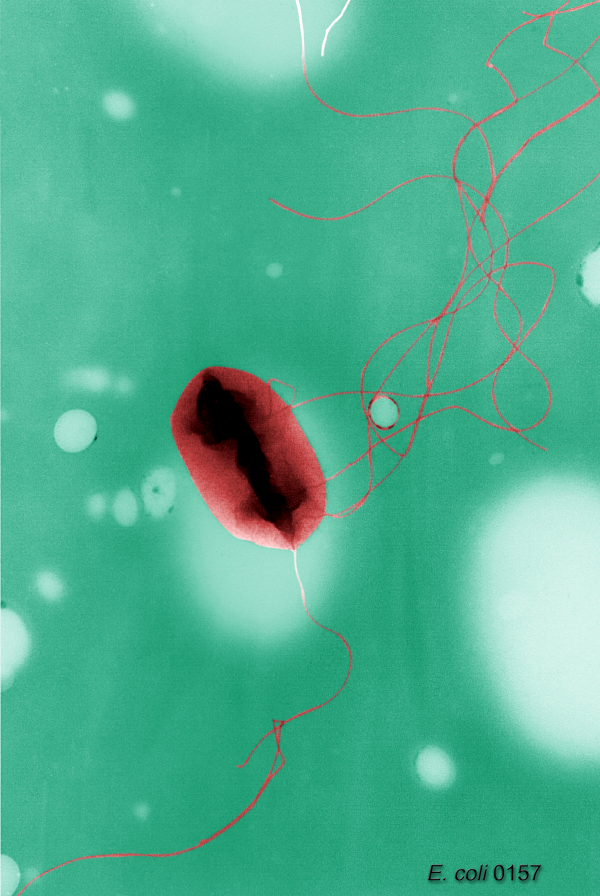
Escherichia coli strain NCTC8009

Gram-negativeRodMotileFacultative anaerobe

Kingdom

Pseudomonadati

Phylum

Pseudomonadota

Class

Gammaproteobacteria

Order

Enterobacterales

Family

Enterobacteriaceae

Genus

Escherichia

Description

Escherichia coli strain NCTC8009 is a Gram-negative, rod-shaped bacterium that exhibits a facultative anaerobic metabolism, allowing it to thrive in various oxygen conditions. This strain displays mobility due to the presence of flagella and typically forms pairs or single cells. It is classified as mesophilic, with an optimal growth temperature of 37°C. NCTC8009 is found in diverse habitats, primarily associated with hosts, including Homo sapiens (humans), various mammals (e.g., Gallus gallus, Bos taurus, Sus scrofa), and even plants like Solanum lycopersicum (tomato). Its biotic relationship is free-living, indicating its ability to exist independently while still being able to infect a wide range of hosts. This strain is known for its pathogenicity in humans, contributing to several health issues such as urinary tract infections (UTIs), gastrointestinal infections, neonatal meningitis, and septicemia. It is implicated in severe conditions like hemolytic uremic syndrome (HUS), which can lead to renal failure and other systemic complications. The strain's role in foodborne infections and gastrointestinal diseases highlights the public health significance of E. coli. Given its extensive host range and pathogenic potential, E. coli strain NCTC8009 serves as an important model for studying the dynamics of enteric infections and the mechanisms of microbial pathogenesis. Understanding its interactions with various hosts can provide insights into transmission pathways and the development of targeted interventions for preventing E. coli-related diseases.

Taxonomy

KingdomPseudomonadati
PhylumPseudomonadota
ClassGammaproteobacteria
OrderEnterobacterales
FamilyEnterobacteriaceae
GenusEscherichia
SpeciesEscherichia coli
Strainstrain NCTC8009

Profile

Physiology
Gram staining propertiesNegative
ShapeRod
MobilityYes
Flagellar presenceYes
Number of membranes2
Image of Escherichia coli strain NCTC8009
Image source: Wikipedia/Wikimedia
Ecology, Host, and Life Cycle
Oxygen requirementsFacultative anaerobe
Optimal temperature37
Temperature rangeMesophilic
HabitatHostAssociated
Biotic relationshipFree living
Host(s)Homo sapiens, Gallus gallus, Bos taurus
Cell arrangementPairs - Singles
SporulationNot Available
Energy sourceNot Available
PathogenicityHuman

Genome Summary

Escherichia coli strain NCTC8009 genome assembly, contig:

Gene Summary

Adenine Count

1441722 bp

Thymine Count

1450912 bp

Guanine Count

1462488 bp

Cytosine Count

1493697 bp

Genome Length

5848819 bp

Protein-coding Genes

7258 genes

Non-Coding Genes

1490 genes

# of Chromosomes/Plasmids

1

Genes

NameLocus TagUniProt IDStrand OrientationGene Start/EndProtein Molecular Weight
Hypothetical proteinNCTC8009_00257Not AvailableNegative164173 - 1644279262.21
Hypothetical proteinNCTC8009_00258Not AvailableNegative164516 - 16499216965.0
Hypothetical proteinNCTC8009_00259Not AvailableNegative164985 - 16557520885.3
Hypothetical proteinNCTC8009_00260Not AvailableNegative165668 - 1657934355.34
Hypothetical proteinNCTC8009_00261Not AvailableNegative165739 - 1658795268.32
Hypothetical proteinNCTC8009_00262Not AvailableNegative166003 - 16645816618.2
Tail tape measure proteinNCTC8009_00263Not AvailableNegative166458 - 16790052745.0
Tail tape measure proteinNCTC8009_00264Not AvailableNegative167840 - 16833117268.7
Hypothetical proteinNCTC8009_00265Not AvailableNegative168622 - 1687835810.06
Hypothetical proteinNCTC8009_00305Not AvailablePositive195868 - 19643121107.6

Displaying genes 71 – 80 of 8748 in total

Pathways

0 pathways

No pathways found

No metabolic pathways have been associated with this bacterium yet.

Metabolites

4785 records
Metabolite IDMetabolite nameStructureCAS number
BASm0000173(R)-3-Hydroxybutyric acidC4H8O3Chemical structure of (R)-3-Hydroxybutyric acid625-72-3
Average104.0473Da
Monoisotopic104.047344122Da
BASm0000217alpha-ribazoleC14H18N2O4Chemical structure of alpha-ribazoleNot available
Average278.3037Da
Monoisotopic278.126657074Da
BASm0000237(R)-4'-phosphopantothenateC9H18NO8PChemical structure of (R)-4'-phosphopantothenateNot available
Average299.2149Da
Monoisotopic299.0770031Da
BASm0000238(R)-3-phenyllactateC9H9O3Chemical structure of (R)-3-phenyllactateNot available
Average165.169Da
Monoisotopic165.05571773Da
BASm00002482,3-dihydroxy-3-methylbutanoateC5H10O4Chemical structure of 2,3-dihydroxy-3-methylbutanoate1756-18-9
Average134.1305Da
Monoisotopic134.0579088Da
BASm00002502,5-didehydro-D-gluconateC6H7O7Chemical structure of 2,5-didehydro-D-gluconate53736-12-2
Average191.1156Da
Monoisotopic191.019177578Da
BASm00002512-dehydropantoateC6H9O4Chemical structure of 2-dehydropantoateNot available
Average145.1333Da
Monoisotopic145.050083776Da
BASm00002532-oxopent-4-enoateC5H5O3Chemical structure of 2-oxopent-4-enoateNot available
Average113.093Da
Monoisotopic113.024417601Da
BASm00002593alpha,12alpha-dihydroxy-7-oxo-5beta-cholanateC24H37O5Chemical structure of 3alpha,12alpha-dihydroxy-7-oxo-5beta-cholanateNot available
Average405.556Da
Monoisotopic405.264647871Da
BASm00002603alpha,7alpha-dihydroxy-12-oxo-5beta-cholanateC24H37O5Chemical structure of 3alpha,7alpha-dihydroxy-12-oxo-5beta-cholanateNot available
Average405.556Da
Monoisotopic405.264647871Da

Displaying 1–10 of 4785 metabolites

Health Effects

Health ConditionRelationReference
Gi diseaseCausesPMC11149725
UtisCausesPMC11434687
Colorectal cancerCausesPMC12198655
Pyogenic liver abscessesCausesPMC12392612
UtiCausesPMC13014981
ColibacillosisCausesPMC13255289
Enteric infectionsCausesPMC13255289
Foodborne infectionsCausesPMC13255289
Clinical mastitisCausesPMC13293316
DiarrheaCausesPMC3035056

Displaying health effects 1 – 10 of 103 in total