Kingdom
Pseudomonadati
Phylum
Pseudomonadota
Class
Gammaproteobacteria
Order
Pseudomonadales
Family
Pseudomonadaceae
Genus
Pseudomonas
Description
Taxonomy
| Kingdom | Pseudomonadati |
|---|---|
| Phylum | Pseudomonadota |
| Class | Gammaproteobacteria |
| Order | Pseudomonadales |
| Family | Pseudomonadaceae |
| Genus | Pseudomonas |
| Species | Pseudomonas fluorescens |
| Strain | strain LoriBL |
Profile
| Physiology | |
|---|---|
| Gram staining properties | Negative |
| Shape | Rod |
| Mobility | Yes |
| Flagellar presence | Yes |
| Number of membranes | 2 |

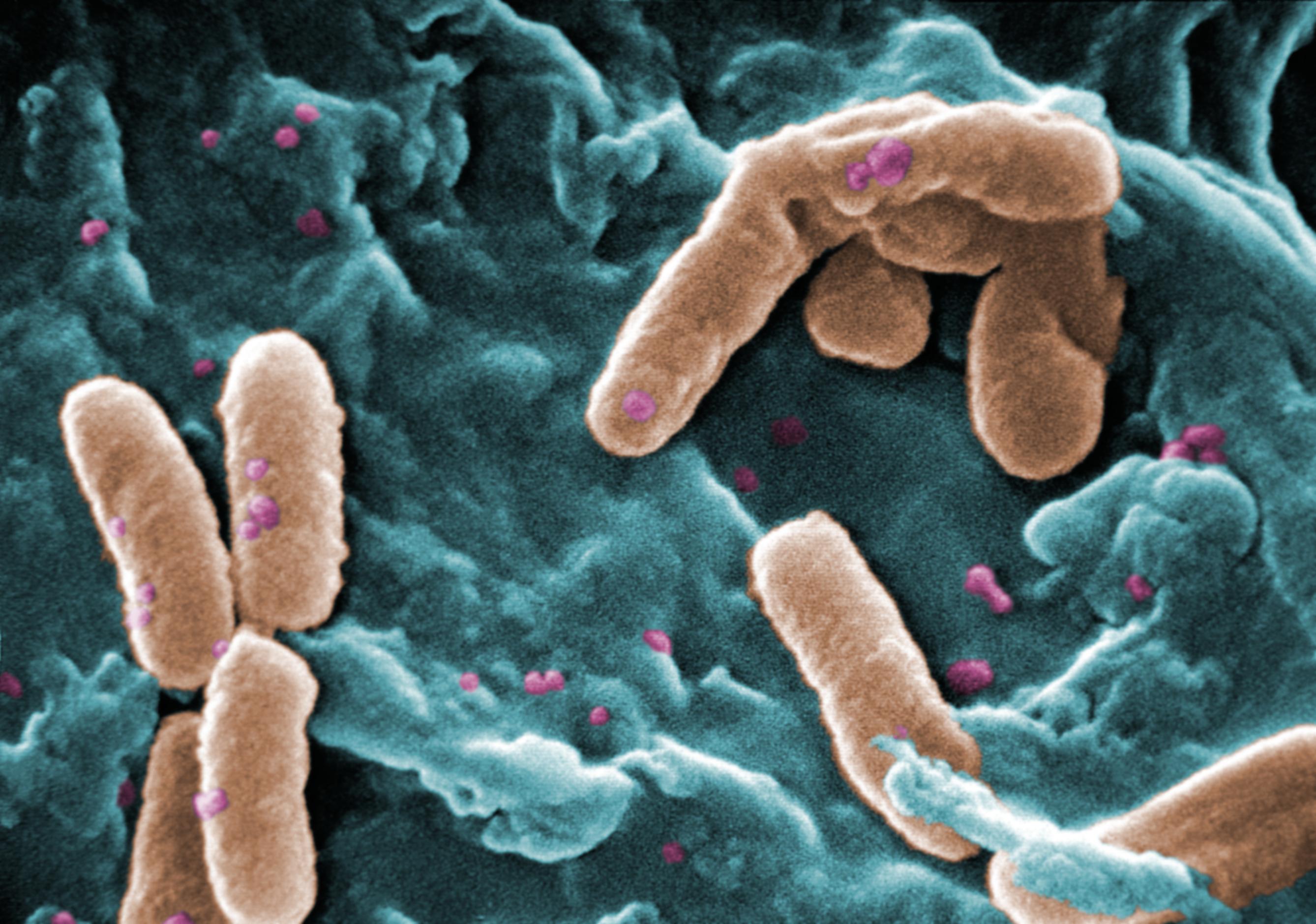
Image source: Wikipedia/Wikimedia
| Ecology, Host, and Life Cycle | |
|---|---|
| Oxygen requirements | Aerobe |
| Optimal temperature | 25 |
| Temperature range | Mesophilic |
| Habitat | Multiple |
| Biotic relationship | Free living |
| Host(s) | Homo sapiens, Metazoa, Viridiplantae |
| Cell arrangement | Singles |
| Sporulation | Not Available |
| Energy source | Heterotroph |
| Pathogenicity | Animal |
Gene Summary
Adenine Count
1174874 bp
Thymine Count
1148318 bp
Guanine Count
1763341 bp
Cytosine Count
1795729 bp
Genome Length
5882262 bp
Protein-coding Genes
5174 genes
Non-Coding Genes
185 genes
# of Chromosomes/Plasmids
1
Genes
| Name | Locus Tag | UniProt ID | Strand Orientation | Gene Start/End | Protein Molecular Weight |
|---|---|---|---|---|---|
| ammonia-dependent nad(+) synthetase | E5845_14080 | Not Available | Positive | 3028429 - 3029256 | 29743.4 |
| azurin | E5845_14085 | Not Available | Negative | 3029363 - 3029809 | 15852.2 |
| hypothetical protein | E5845_14090 | Not Available | Positive | 3030142 - 3030324 | 6706.58 |
| transglutaminase family protein | E5845_14095 | Not Available | Negative | 3030371 - 3031261 | 33279.5 |
| molybdopterin oxidoreductase | E5845_14100 | Not Available | Negative | 3031261 - 3033747 | 92883.0 |
| transglutaminase family protein | E5845_14105 | Not Available | Negative | 3033843 - 3037133 | 123754.0 |
| hypothetical protein | E5845_14110 | Not Available | Negative | 3037322 - 3037771 | 16557.1 |
| nad synthetase | E5845_14115 | Not Available | Negative | 3037768 - 3038700 | 33350.4 |
| ygiq family radical sam protein | E5845_14120 | Not Available | Negative | 3038909 - 3041212 | 85893.9 |
| replicative dna helicase | E5845_14125 | Not Available | Negative | 3041310 - 3042707 | 51529.2 |
Pathways
1474 pathways