Kingdom
Pseudomonadati
Phylum
Pseudomonadota
Class
Gammaproteobacteria
Order
Vibrionales
Family
Vibrionaceae
Genus
Photobacterium
Description
Taxonomy
| Kingdom | Pseudomonadati |
|---|---|
| Phylum | Pseudomonadota |
| Class | Gammaproteobacteria |
| Order | Vibrionales |
| Family | Vibrionaceae |
| Genus | Photobacterium |
| Species | Photobacterium damselae |
| Strain | subsp. damselae strain JM-2017 EQ875_137 |
Profile
| Physiology | |
|---|---|
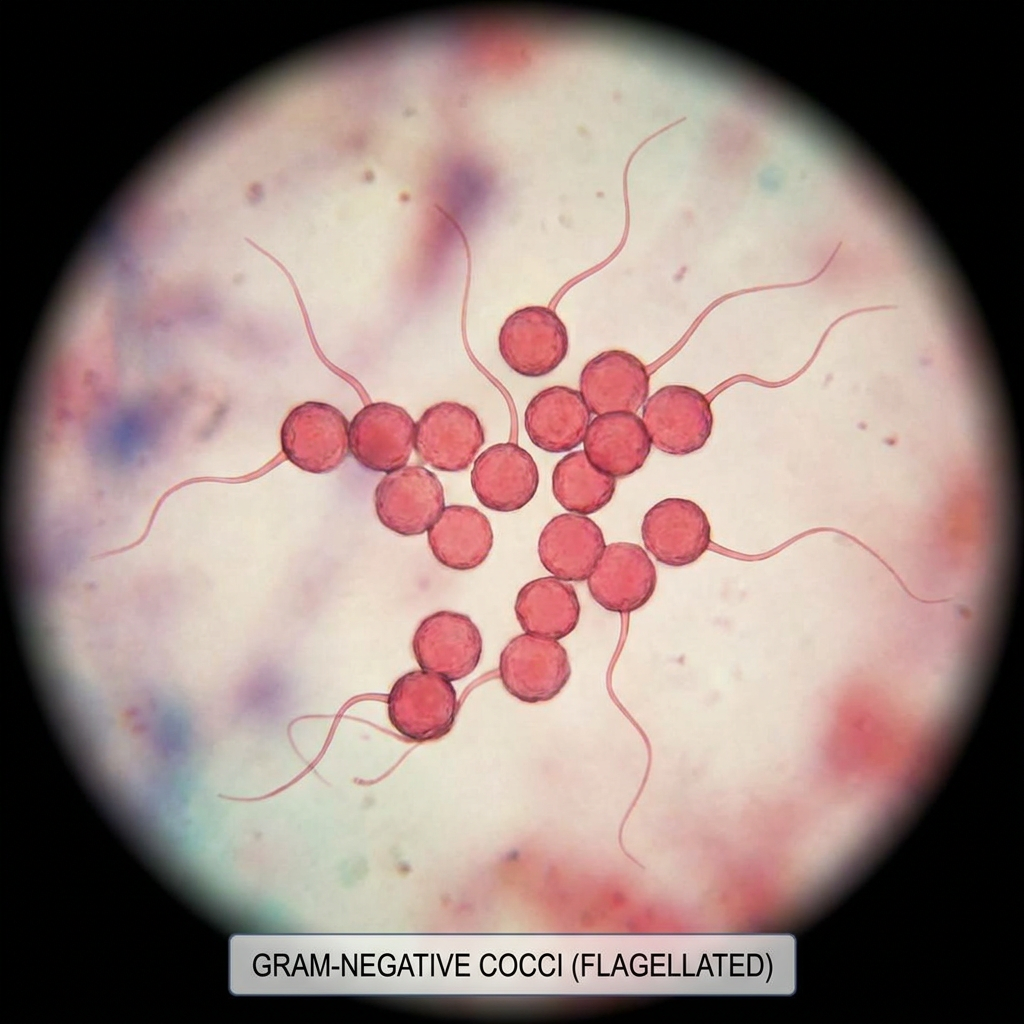
| Gram staining properties | Negative |
| Shape | Not Available |
| Mobility | Yes |
| Flagellar presence | Yes |
| Number of membranes | Not Available |
| Ecology, Host, and Life Cycle | |
|---|---|
| Oxygen requirements | Not Available |
| Optimal temperature | Not Available |
| Temperature range | mesophilic |
| Habitat | coastal waters; estuaries; Marine; oceans; seaweeds; sediments |
| Biotic relationship | Not Available |
| Host(s) | Homo sapiens, Pancrustacea, Aves |
| Cell arrangement | Not Available |
| Sporulation | Not Available |
| Energy source | Not Available |
| Pathogenicity | Not Available |
Gene Summary
Adenine Count
1300119 bp
Thymine Count
1309868 bp
Guanine Count
908294 bp
Cytosine Count
877454 bp
Genome Length
4406237 bp
Protein-coding Genes
3742 genes
Non-Coding Genes
201 genes
# of Chromosomes/Plasmids
1
Genes
| Name | Locus Tag | UniProt ID | Strand Orientation | Gene Start/End | Protein Molecular Weight |
|---|---|---|---|---|---|
| dihydroorotate dehydrogenase (quinone) | EQ875_02214 | Not Available | Negative | 2490115 - 2491128 | 36773.6 |
| hypothetical protein | EQ875_02215 | Not Available | Negative | 2491342 - 2491488 | 5542.73 |
| aminopeptidase n | EQ875_02216 | Not Available | Negative | 2491659 - 2494283 | 99542.4 |
| nicotinate phosphoribosyltransferase | EQ875_02217 | Not Available | Positive | 2494584 - 2495783 | 45365.6 |
| hypothetical protein | EQ875_02218 | Not Available | Negative | 2495870 - 2496532 | 25243.7 |
| tail-specific protease | EQ875_02219 | Not Available | Negative | 2496724 - 2498733 | 75313.4 |
| rna chaperone proq | EQ875_02220 | Not Available | Negative | 2498750 - 2499382 | 23561.2 |
| free methionine-r-sulfoxide reductase | EQ875_02221 | Not Available | Negative | 2499493 - 2499951 | 16718.2 |
| putative multidrug export atp-binding/permease protein | EQ875_02222 | Not Available | Positive | 2500015 - 2501844 | 68035.2 |
| inner membrane protein yebs | EQ875_02223 | Not Available | Positive | 2501954 - 2503147 | 44614.6 |
Pathways
0 pathways
No pathways found
No metabolic pathways have been associated with this bacterium yet.
Health Effects
| Health Condition | Relation | Reference |
|---|---|---|
| Haemorrhagic septicemia | Causes | PMC12895208 |
| Skin lesions | Causes | PMC12895208 |
| Necrotizing fasciitis | Causes | PMC12895208 |
| Soft-tissue infection | Causes | PMC8231020 |
| Chronic suppurative pneumonia | Causes | PMC9796189 |
| Splenic lymphoid depletion | Causes | PMC9796189 |
| Wound infections | Causes | PMC9796189 |
| Hemorrhagic septicemia | Causes | PMC9796189 |
| Pneumonia | Causes | PMC9796189 |