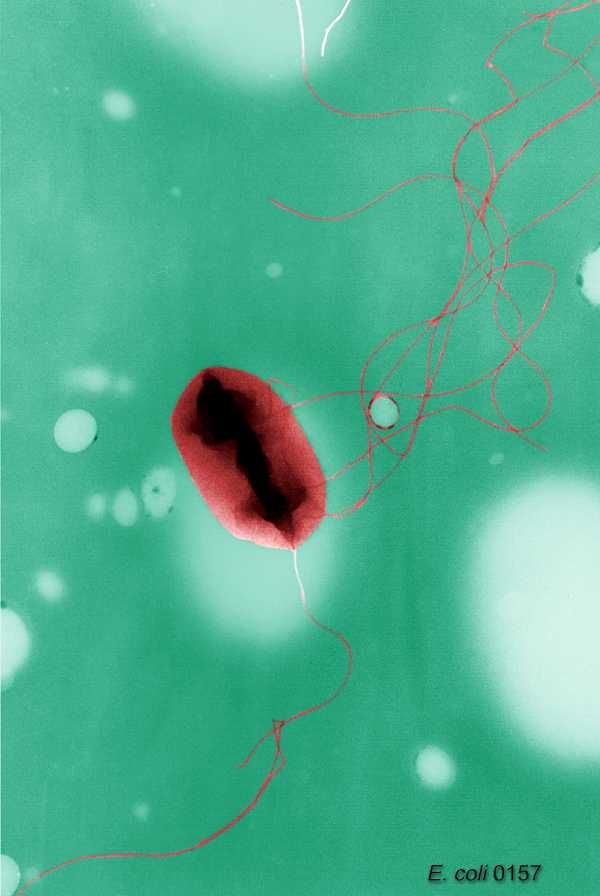
Kingdom
Pseudomonadati
Phylum
Pseudomonadota
Class
Gammaproteobacteria
Order
Enterobacterales
Family
Enterobacteriaceae
Genus
Escherichia
Description
Taxonomy
| Kingdom | Pseudomonadati |
|---|---|
| Phylum | Pseudomonadota |
| Class | Gammaproteobacteria |
| Order | Enterobacterales |
| Family | Enterobacteriaceae |
| Genus | Escherichia |
| Species | Escherichia coli |
| Strain | strain FWSEC0280 |
Profile
| Physiology | |
|---|---|
| Gram staining properties | Negative |
| Shape | Rod |
| Mobility | Yes |
| Flagellar presence | Yes |
| Number of membranes | 2 |
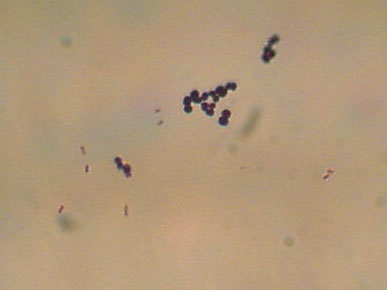
Image source: Wikipedia/Wikimedia
| Ecology, Host, and Life Cycle | |
|---|---|
| Oxygen requirements | Facultative anaerobe |
| Optimal temperature | 37 |
| Temperature range | Mesophilic |
| Habitat | HostAssociated |
| Biotic relationship | Free living |
| Host(s) | Homo sapiens, Gallus gallus, Bos taurus |
| Cell arrangement | Pairs - Singles |
| Sporulation | Not Available |
| Energy source | Not Available |
| Pathogenicity | Human |
Gene Summary
Adenine Count
1287820 bp
Thymine Count
1284913 bp
Guanine Count
1307369 bp
Cytosine Count
1322205 bp
Genome Length
5211182 bp
Protein-coding Genes
4881 genes
Non-Coding Genes
248 genes
# of Chromosomes/Plasmids
1
Genes
| Name | Locus Tag | UniProt ID | Strand Orientation | Gene Start/End | Protein Molecular Weight |
|---|---|---|---|---|---|
| sugar phosphatase yida | C9067_09825 | Not Available | Negative | 2069947 - 2070759 | 29722.8 |
| duf937 domain-containing protein | C9067_09830 | Not Available | Negative | 2070874 - 2071281 | 14145.0 |
| dna gyrase subunit b | C9067_09835 | Not Available | Negative | 2071512 - 2073926 | 89955.0 |
| dna replication/repair protein recf | C9067_09840 | Not Available | Negative | 2073955 - 2075028 | 40515.4 |
| dna polymerase iii subunit beta | C9067_09845 | Not Available | Negative | 2075028 - 2076128 | 40589.1 |
| chromosomal replication initiator protein dnaa | C9067_09850 | Not Available | Negative | 2076133 - 2077536 | 52553.7 |
| hypothetical protein | C9067_09855 | Not Available | Positive | 2077833 - 2077913 | 3111.7 |
| 50s ribosomal protein l34 | C9067_09860 | Not Available | Positive | 2078143 - 2078283 | 5380.74 |
| ribonuclease p protein component | C9067_09865 | Not Available | Positive | 2078300 - 2078659 | 13790.0 |
| membrane protein insertion efficiency factor yidd | C9067_09870 | Not Available | Positive | 2078623 - 2078880 | 9381.61 |
Pathways
1297 pathways
Health Effects
| Health Condition | Relation | Reference |
|---|---|---|
| Gi disease | Causes | PMC11149725 |
| Utis | Causes | PMC11434687 |
| Colorectal cancer | Causes | PMC12198655 |
| Pyogenic liver abscesses | Causes | PMC12392612 |
| Uti | Causes | PMC13014981 |
| Colibacillosis | Causes | PMC13255289 |
| Enteric infections | Causes | PMC13255289 |
| Foodborne infections | Causes | PMC13255289 |
| Clinical mastitis | Causes | PMC13293316 |
| Diarrhea | Causes | PMC3035056 |