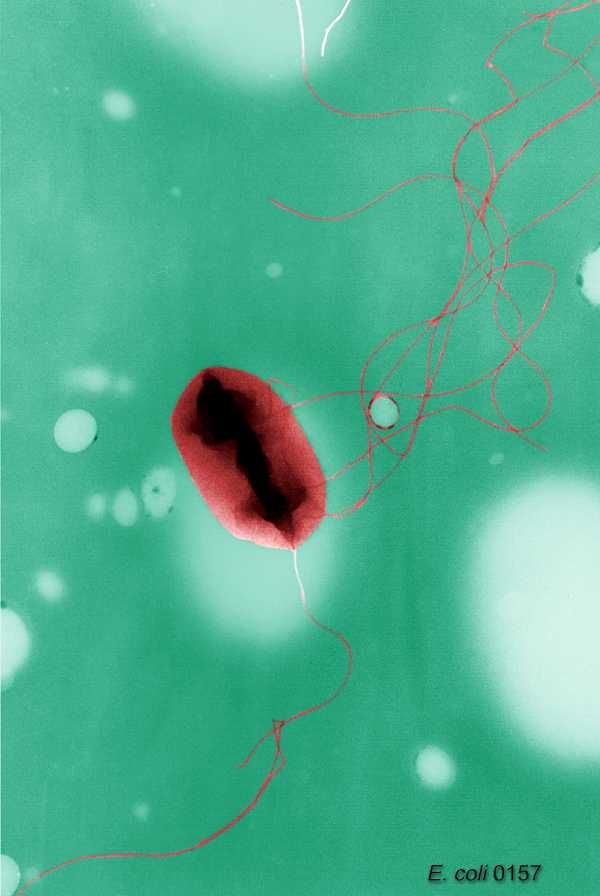
Escherichia coli strain PNUSAE019755

Gram-negativeRodMotileFacultative anaerobe

Kingdom

Pseudomonadati

Phylum

Pseudomonadota

Class

Gammaproteobacteria

Order

Enterobacterales

Family

Enterobacteriaceae

Genus

Escherichia

Description

Escherichia coli strain PNUSAE019755 is a Gram-negative, rod-shaped bacterium characterized by its facultative anaerobic metabolism and motility, attributed to the presence of flagella. This strain thrives optimally at a temperature of 37°C, fitting within the mesophilic range. It possesses a single replicon and features a double membrane structure, typical of Gram-negative bacteria. Primarily associated with hosts, this strain has a broad range of potential hosts, including Homo sapiens (humans), Gallus gallus (chickens), Bos taurus (cattle), and various other vertebrates, invertebrates, and plants. Notably, its biotic relationship is classified as free-living, indicating its ability to exist independently, although it often resides within the gastrointestinal tracts of its hosts. E. coli PNUSAE019755 is implicated in a variety of health effects, particularly in humans, where it is associated with conditions such as urinary tract infections (UTIs), gastrointestinal infections, neonatal meningitis, and foodborne illnesses. The strain is known to contribute to severe health issues such as hemolytic uremic syndrome (HUS), septicemia, and even colorectal cancer. The ecological insight derived from these traits highlights the strain's role in both pathogenicity and environmental interactions. Its capacity to inhabit diverse hosts, coupled with its potential to cause significant health issues, underlines the importance of monitoring this strain within clinical and agricultural contexts. Understanding its behavior and impact on health can inform strategies to mitigate its pathogenic effects, especially in environments where human and animal health intersect.

Taxonomy

KingdomPseudomonadati
PhylumPseudomonadota
ClassGammaproteobacteria
OrderEnterobacterales
FamilyEnterobacteriaceae
GenusEscherichia
SpeciesEscherichia coli
Strainstrain PNUSAE019755

Profile

Physiology
Gram staining propertiesNegative
ShapeRod
MobilityYes
Flagellar presenceYes
Number of membranes2
Image of Escherichia coli strain PNUSAE019755
Image source: Wikipedia/Wikimedia
Ecology, Host, and Life Cycle
Oxygen requirementsFacultative anaerobe
Optimal temperature37
Temperature rangeMesophilic
HabitatHostAssociated
Biotic relationshipFree living
Host(s)Homo sapiens, Gallus gallus, Bos taurus
Cell arrangementPairs - Singles
SporulationNot Available
Energy sourceNot Available
PathogenicityHuman

Genome Summary

Escherichia coli strain PNUSAE019755

Gene Summary

Adenine Count

1352102 bp

Thymine Count

1326421 bp

Guanine Count

1338772 bp

Cytosine Count

1368745 bp

Genome Length

5402925 bp

Protein-coding Genes

5003 genes

Non-Coding Genes

252 genes

# of Chromosomes/Plasmids

1

Genes

NameLocus TagUniProt IDStrand OrientationGene Start/EndProtein Molecular Weight
bacterioferritin-associated ferredoxinED607_RS19495Not AvailablePositive4128635 - 41288297475.27
bacterioferritinED607_RS19500Not AvailablePositive4128902 - 412937818339.0
prepilin peptidaseED607_RS19505Not AvailableNegative4129375 - 412984217199.3
30s ribosomal protein s10ED607_RS19510Not AvailablePositive4130221 - 413053211736.3
50s ribosomal protein l3ED607_RS19515Not AvailablePositive4130565 - 413119422244.8
50s ribosomal protein l4ED607_RS19520Not AvailablePositive4131205 - 413181022087.8
50s ribosomal protein l23ED607_RS19525Not AvailablePositive4131807 - 413210911199.8
50s ribosomal protein l2ED607_RS19530Not AvailablePositive4132127 - 413294829862.3
30s ribosomal protein s19ED607_RS19535Not AvailablePositive4132965 - 413324310430.9
50s ribosomal protein l22ED607_RS19540Not AvailablePositive4133258 - 413359012227.0

Displaying genes 3961 – 3970 of 5263 in total

Metabolites

4785 records
Metabolite IDMetabolite nameStructureCAS number
BASm0000173(R)-3-Hydroxybutyric acidC4H8O3Chemical structure of (R)-3-Hydroxybutyric acid625-72-3
Average104.0473Da
Monoisotopic104.047344122Da
BASm0000217alpha-ribazoleC14H18N2O4Chemical structure of alpha-ribazoleNot available
Average278.3037Da
Monoisotopic278.126657074Da
BASm0000237(R)-4'-phosphopantothenateC9H18NO8PChemical structure of (R)-4'-phosphopantothenateNot available
Average299.2149Da
Monoisotopic299.0770031Da
BASm0000238(R)-3-phenyllactateC9H9O3Chemical structure of (R)-3-phenyllactateNot available
Average165.169Da
Monoisotopic165.05571773Da
BASm00002482,3-dihydroxy-3-methylbutanoateC5H10O4Chemical structure of 2,3-dihydroxy-3-methylbutanoate1756-18-9
Average134.1305Da
Monoisotopic134.0579088Da
BASm00002502,5-didehydro-D-gluconateC6H7O7Chemical structure of 2,5-didehydro-D-gluconate53736-12-2
Average191.1156Da
Monoisotopic191.019177578Da
BASm00002512-dehydropantoateC6H9O4Chemical structure of 2-dehydropantoateNot available
Average145.1333Da
Monoisotopic145.050083776Da
BASm00002532-oxopent-4-enoateC5H5O3Chemical structure of 2-oxopent-4-enoateNot available
Average113.093Da
Monoisotopic113.024417601Da
BASm00002593alpha,12alpha-dihydroxy-7-oxo-5beta-cholanateC24H37O5Chemical structure of 3alpha,12alpha-dihydroxy-7-oxo-5beta-cholanateNot available
Average405.556Da
Monoisotopic405.264647871Da
BASm00002603alpha,7alpha-dihydroxy-12-oxo-5beta-cholanateC24H37O5Chemical structure of 3alpha,7alpha-dihydroxy-12-oxo-5beta-cholanateNot available
Average405.556Da
Monoisotopic405.264647871Da

Displaying 1–10 of 4785 metabolites

Health Effects

Health ConditionRelationReference
Gi diseaseCausesPMC11149725
UtisCausesPMC11434687
Colorectal cancerCausesPMC12198655
Pyogenic liver abscessesCausesPMC12392612
UtiCausesPMC13014981
ColibacillosisCausesPMC13255289
Enteric infectionsCausesPMC13255289
Foodborne infectionsCausesPMC13255289
Clinical mastitisCausesPMC13293316
DiarrheaCausesPMC3035056

Displaying health effects 1 – 10 of 103 in total