
Kingdom
Bacillati
Phylum
Cyanobacteriota
Class
Cyanophyceae
Order
Leptolyngbyales
Family
Leptolyngbyaceae
Genus
Leptolyngbya
Description
Taxonomy
| Kingdom | Bacillati |
|---|---|
| Phylum | Cyanobacteriota |
| Class | Cyanophyceae |
| Order | Leptolyngbyales |
| Family | Leptolyngbyaceae |
| Genus | Leptolyngbya |
| Species | Leptolyngbya sp. IPPAS B-1204 |
| Strain | Mongol_rep_c3761 |
Profile
| Physiology | |
|---|---|
| Gram staining properties | Not Available |
| Shape | Filamentous |
| Mobility | Not Available |
| Flagellar presence | Not Available |
| Number of membranes | Not Available |
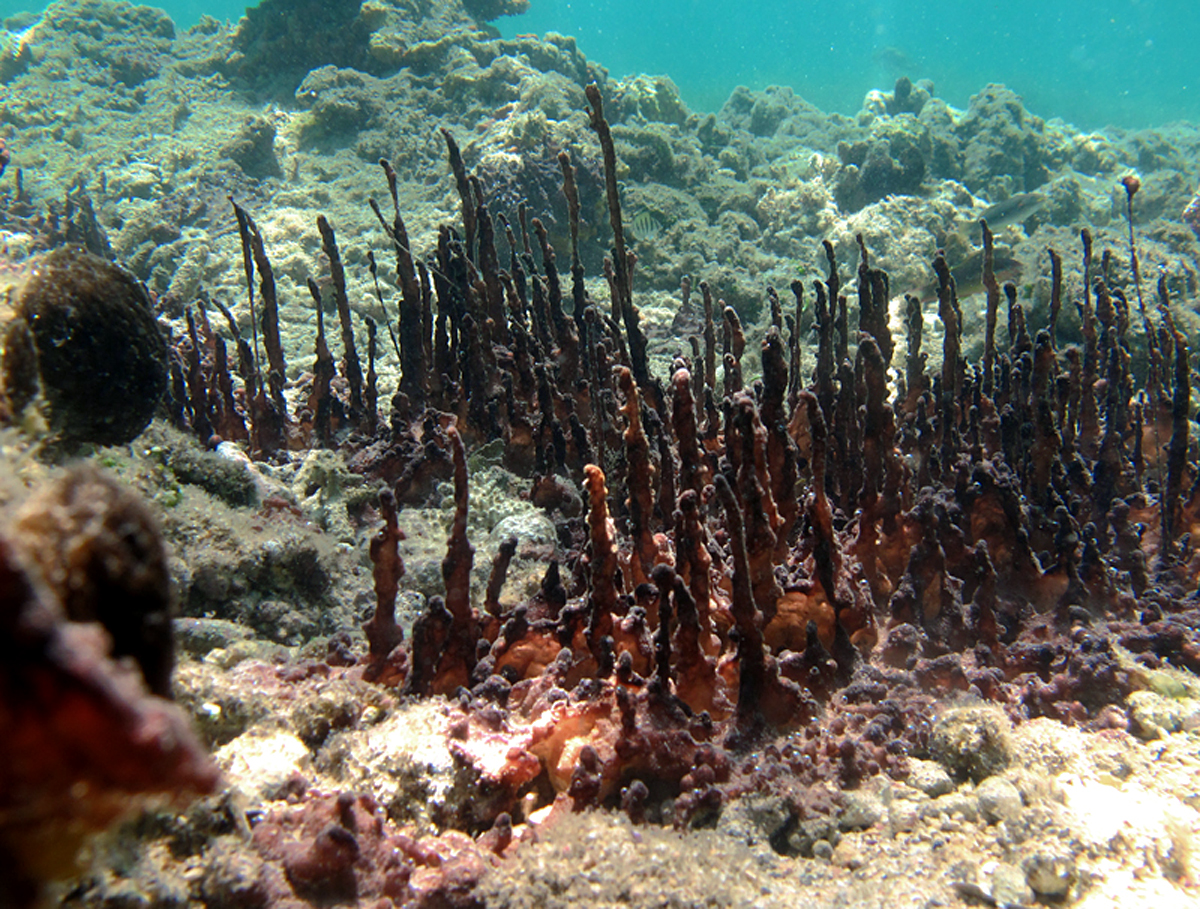
Image source: Wikipedia/Wikimedia
| Ecology, Host, and Life Cycle | |
|---|---|
| Oxygen requirements | Not Available |
| Optimal temperature | Not Available |
| Temperature range | Not Available |
| Habitat | Not Available |
| Biotic relationship | Not Available |
| Host(s) | Not Available |
| Cell arrangement | Not Available |
| Sporulation | Not Available |
| Energy source | Not Available |
| Pathogenicity | Not Available |
Gene Summary
Adenine Count
2013762 bp
Thymine Count
2005968 bp
Guanine Count
2072214 bp
Cytosine Count
2082622 bp
Genome Length
8174685 bp
Protein-coding Genes
6716 genes
Non-Coding Genes
83 genes
# of Chromosomes/Plasmids
1
Genes
| Name | Locus Tag | UniProt ID | Strand Orientation | Gene Start/End | Protein Molecular Weight |
|---|---|---|---|---|---|
| glycosyltransferase family 1 protein | EDM05_11645 | Not Available | Negative | 2598745 - 2599887 | 41687.6 |
| glycosyltransferase | EDM05_11650 | Not Available | Negative | 2599887 - 2601101 | 45179.6 |
| rhodanese-like domain-containing protein | EDM05_11655 | Not Available | Negative | 2601175 - 2601663 | 18044.3 |
| glycosyltransferase family 9 protein | EDM05_11660 | Not Available | Negative | 2601789 - 2604023 | 81753.0 |
| glycosyltransferase family 2 protein | EDM05_11665 | Not Available | Negative | 2604061 - 2604888 | 30626.8 |
| lipopolysaccharide heptosyltransferase ii | EDM05_11670 | Not Available | Negative | 2604944 - 2606059 | 40597.3 |
| d-glycero-beta-d-manno-heptose 1-phosphate adenylyltransferase | EDM05_11675 | Not Available | Negative | 2606070 - 2607563 | 53481.3 |
| had family hydrolase | EDM05_11680 | Not Available | Negative | 2607560 - 2608249 | 24746.7 |
| sdr family oxidoreductase | EDM05_11685 | Not Available | Negative | 2608264 - 2608989 | 25979.6 |
| glycosyltransferase | EDM05_11690 | Not Available | Negative | 2609195 - 2611201 | 73336.5 |
Pathways
0 pathways
No pathways found
No metabolic pathways have been associated with this bacterium yet.
Health Effects
No health effects information available for this bacterium.