
Kingdom
Bacillati
Phylum
Cyanobacteriota
Class
Cyanophyceae
Order
Leptolyngbyales
Family
Leptolyngbyaceae
Genus
Leptolyngbya
Description
Taxonomy
| Kingdom | Bacillati |
|---|---|
| Phylum | Cyanobacteriota |
| Class | Cyanophyceae |
| Order | Leptolyngbyales |
| Family | Leptolyngbyaceae |
| Genus | Leptolyngbya |
| Species | Leptolyngbya sp. IPPAS B-1204 |
| Strain | Mongol_rep_c3761 |
Profile
| Physiology | |
|---|---|
| Gram staining properties | Not Available |
| Shape | Filamentous |
| Mobility | Not Available |
| Flagellar presence | Not Available |
| Number of membranes | Not Available |
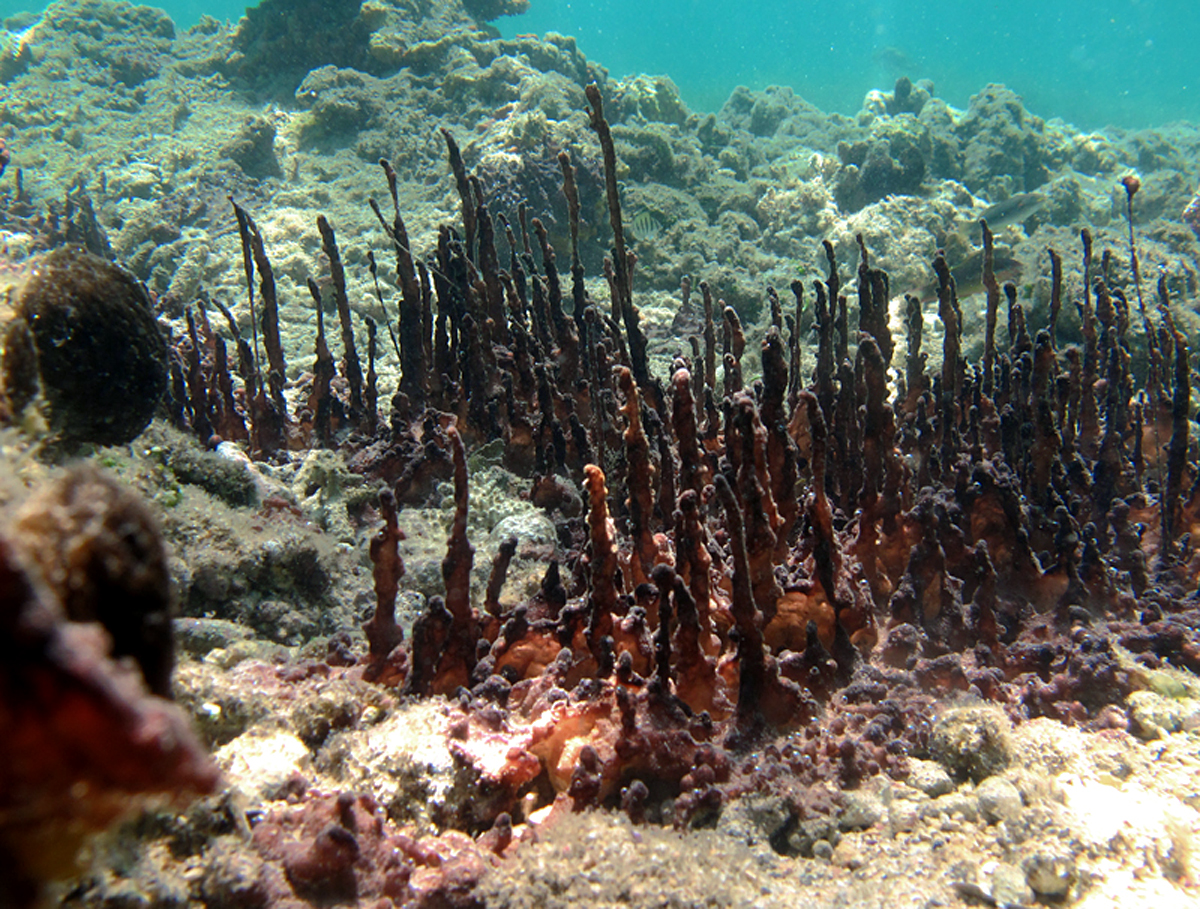
Image source: Wikipedia/Wikimedia
| Ecology, Host, and Life Cycle | |
|---|---|
| Oxygen requirements | Not Available |
| Optimal temperature | Not Available |
| Temperature range | Not Available |
| Habitat | Not Available |
| Biotic relationship | Not Available |
| Host(s) | Not Available |
| Cell arrangement | Not Available |
| Sporulation | Not Available |
| Energy source | Not Available |
| Pathogenicity | Not Available |
Gene Summary
Adenine Count
2013762 bp
Thymine Count
2005968 bp
Guanine Count
2072214 bp
Cytosine Count
2082622 bp
Genome Length
8174685 bp
Protein-coding Genes
6716 genes
Non-Coding Genes
83 genes
# of Chromosomes/Plasmids
1
Genes
| Name | Locus Tag | UniProt ID | Strand Orientation | Gene Start/End | Protein Molecular Weight |
|---|---|---|---|---|---|
| hypothetical protein | EDM05_11595 | Not Available | Positive | 2584472 - 2585092 | 23001.8 |
| giy-yig nuclease family protein | EDM05_11600 | Not Available | Negative | 2585497 - 2585814 | 12570.0 |
| hypothetical protein | EDM05_11605 | Not Available | Positive | 2586180 - 2587454 | 48195.4 |
| crispr-associated endonuclease cas1 | EDM05_11610 | Not Available | Positive | 2587753 - 2588742 | 37191.3 |
| crispr-associated endonuclease cas2 | EDM05_11615 | Not Available | Positive | 2588761 - 2589039 | 10775.2 |
| transposase | EDM05_11620 | Not Available | Positive | 2594675 - 2595115 | 16613.0 |
| is630 family transposase | EDM05_11625 | Not Available | Positive | 2594980 - 2595621 | 24022.3 |
| duf4142 domain-containing protein | EDM05_11630 | Not Available | Positive | 2595698 - 2596336 | 22916.4 |
| hypothetical protein | EDM05_11635 | Not Available | Positive | 2596683 - 2597252 | 20216.5 |
| cdar family transcriptional regulator | EDM05_11640 | Not Available | Positive | 2597404 - 2598693 | 46725.4 |
Pathways
0 pathways
No pathways found
No metabolic pathways have been associated with this bacterium yet.
Health Effects
No health effects information available for this bacterium.