
Kingdom
Bacillati
Phylum
Cyanobacteriota
Class
Cyanophyceae
Order
Leptolyngbyales
Family
Leptolyngbyaceae
Genus
Leptolyngbya
Description
Taxonomy
| Kingdom | Bacillati |
|---|---|
| Phylum | Cyanobacteriota |
| Class | Cyanophyceae |
| Order | Leptolyngbyales |
| Family | Leptolyngbyaceae |
| Genus | Leptolyngbya |
| Species | Leptolyngbya sp. IPPAS B-1204 |
| Strain | Mongol_rep_c3761 |
Profile
| Physiology | |
|---|---|
| Gram staining properties | Not Available |
| Shape | Filamentous |
| Mobility | Not Available |
| Flagellar presence | Not Available |
| Number of membranes | Not Available |
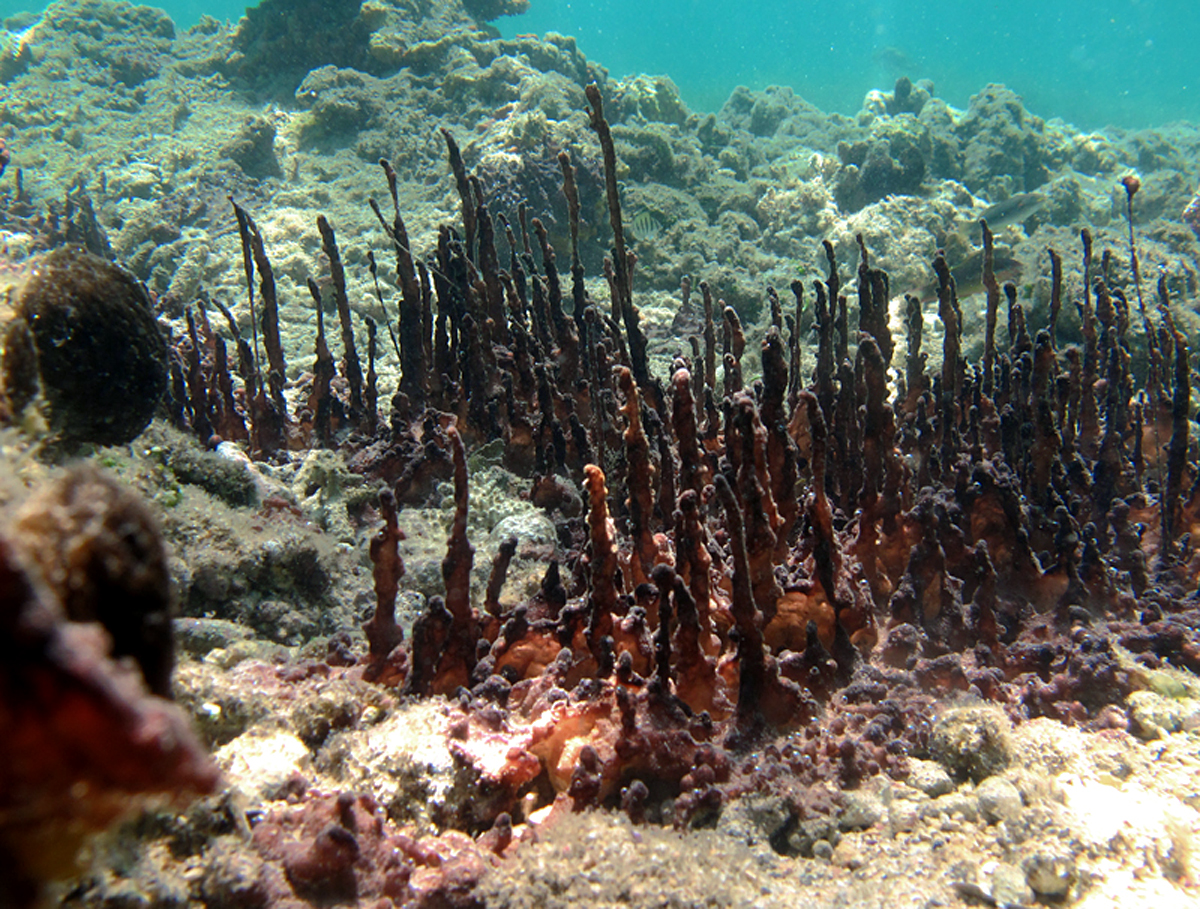
Image source: Wikipedia/Wikimedia
| Ecology, Host, and Life Cycle | |
|---|---|
| Oxygen requirements | Not Available |
| Optimal temperature | Not Available |
| Temperature range | Not Available |
| Habitat | Not Available |
| Biotic relationship | Not Available |
| Host(s) | Not Available |
| Cell arrangement | Not Available |
| Sporulation | Not Available |
| Energy source | Not Available |
| Pathogenicity | Not Available |
Gene Summary
Adenine Count
2013762 bp
Thymine Count
2005968 bp
Guanine Count
2072214 bp
Cytosine Count
2082622 bp
Genome Length
8174685 bp
Protein-coding Genes
6716 genes
Non-Coding Genes
83 genes
# of Chromosomes/Plasmids
1
Genes
| Name | Locus Tag | UniProt ID | Strand Orientation | Gene Start/End | Protein Molecular Weight |
|---|---|---|---|---|---|
| fad-dependent oxidoreductase | EDM05_11285 | Not Available | Negative | 2513276 - 2515105 | 67138.5 |
| hypothetical protein | EDM05_11290 | Not Available | Negative | 2515624 - 2515824 | 7779.45 |
| mechanosensitive ion channel family protein | EDM05_11295 | Not Available | Negative | 2516400 - 2517995 | 58889.7 |
| hypothetical protein | EDM05_11300 | Not Available | Positive | 2518910 - 2519209 | 11265.3 |
| glycoside hydrolase family 10 protein | EDM05_11305 | Not Available | Negative | 2519351 - 2520649 | 49630.9 |
| translational gtpase typa | EDM05_11310 | Not Available | Positive | 2521016 - 2522806 | 66003.6 |
| hypothetical protein | EDM05_11315 | Not Available | Negative | 2522971 - 2523294 | 11995.8 |
| sugar abc transporter permease | EDM05_11320 | Not Available | Positive | 2524043 - 2524873 | 31335.8 |
| dna/rna nuclease sfsa | EDM05_11325 | Not Available | Positive | 2525163 - 2525885 | 26556.3 |
| photosystem i iron-sulfur center protein psac | EDM05_11330 | Not Available | Positive | 2526069 - 2526314 | 8786.61 |
Pathways
0 pathways
No pathways found
No metabolic pathways have been associated with this bacterium yet.
Health Effects
No health effects information available for this bacterium.