
Kingdom
Bacillati
Phylum
Cyanobacteriota
Class
Cyanophyceae
Order
Leptolyngbyales
Family
Leptolyngbyaceae
Genus
Leptolyngbya
Description
Taxonomy
| Kingdom | Bacillati |
|---|---|
| Phylum | Cyanobacteriota |
| Class | Cyanophyceae |
| Order | Leptolyngbyales |
| Family | Leptolyngbyaceae |
| Genus | Leptolyngbya |
| Species | Leptolyngbya sp. IPPAS B-1204 |
| Strain | Mongol_rep_c3761 |
Profile
| Physiology | |
|---|---|
| Gram staining properties | Not Available |
| Shape | Filamentous |
| Mobility | Not Available |
| Flagellar presence | Not Available |
| Number of membranes | Not Available |
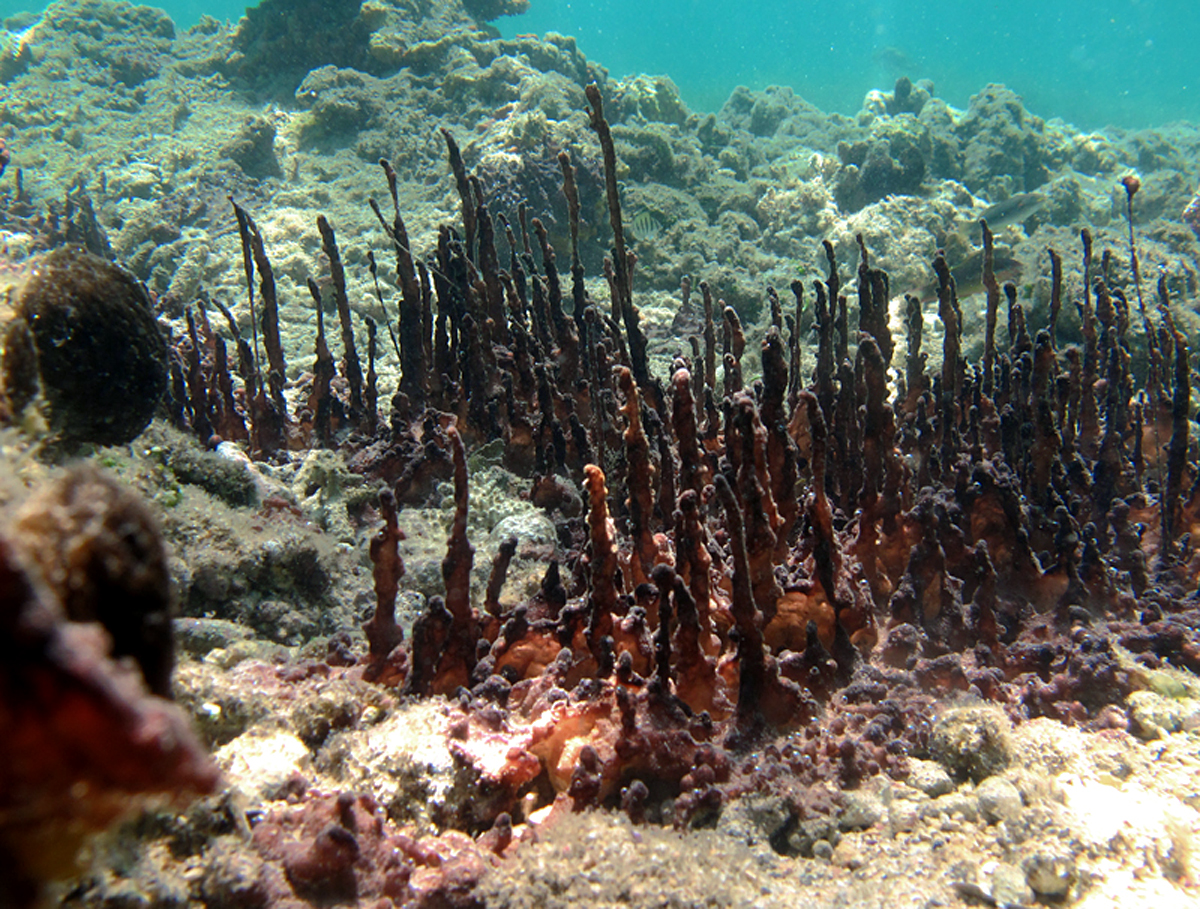
Image source: Wikipedia/Wikimedia
| Ecology, Host, and Life Cycle | |
|---|---|
| Oxygen requirements | Not Available |
| Optimal temperature | Not Available |
| Temperature range | Not Available |
| Habitat | Not Available |
| Biotic relationship | Not Available |
| Host(s) | Not Available |
| Cell arrangement | Not Available |
| Sporulation | Not Available |
| Energy source | Not Available |
| Pathogenicity | Not Available |
Gene Summary
Adenine Count
2013762 bp
Thymine Count
2005968 bp
Guanine Count
2072214 bp
Cytosine Count
2082622 bp
Genome Length
8174685 bp
Protein-coding Genes
6716 genes
Non-Coding Genes
83 genes
# of Chromosomes/Plasmids
1
Genes
| Name | Locus Tag | UniProt ID | Strand Orientation | Gene Start/End | Protein Molecular Weight |
|---|---|---|---|---|---|
| lysr family transcriptional regulator | EDM05_09790 | Not Available | Negative | 2175026 - 2176030 | 37320.3 |
| fasciclin domain-containing protein | EDM05_09795 | Not Available | Positive | 2176574 - 2176975 | 13840.9 |
| heat repeat domain-containing protein | EDM05_09800 | Not Available | Negative | 2176990 - 2177745 | 27613.9 |
| gaf domain-containing protein | EDM05_09805 | Not Available | Positive | 2177971 - 2179974 | 74772.4 |
| abc transporter atp-binding protein | EDM05_09810 | Not Available | Negative | 2179992 - 2180969 | 36736.9 |
| glutamate-5-semialdehyde dehydrogenase | EDM05_09815 | Not Available | Negative | 2181069 - 2182370 | 46299.7 |
| hypothetical protein | EDM05_09820 | Not Available | Positive | 2182369 - 2182926 | 20313.6 |
| duf4347 domain-containing protein | EDM05_09830 | Not Available | Positive | 2183985 - 2187803 | 134222.0 |
| nudix domain-containing protein | EDM05_09835 | Not Available | Negative | 2187863 - 2188390 | 19783.5 |
| acetyl-coa carboxylase biotin carboxylase subunit | EDM05_09840 | Not Available | Negative | 2188383 - 2189741 | 50026.1 |
Pathways
0 pathways
No pathways found
No metabolic pathways have been associated with this bacterium yet.
Health Effects
No health effects information available for this bacterium.