
Kingdom
Bacillati
Phylum
Cyanobacteriota
Class
Cyanophyceae
Order
Leptolyngbyales
Family
Leptolyngbyaceae
Genus
Leptolyngbya
Description
Taxonomy
| Kingdom | Bacillati |
|---|---|
| Phylum | Cyanobacteriota |
| Class | Cyanophyceae |
| Order | Leptolyngbyales |
| Family | Leptolyngbyaceae |
| Genus | Leptolyngbya |
| Species | Leptolyngbya sp. IPPAS B-1204 |
| Strain | Mongol_rep_c3761 |
Profile
| Physiology | |
|---|---|
| Gram staining properties | Not Available |
| Shape | Filamentous |
| Mobility | Not Available |
| Flagellar presence | Not Available |
| Number of membranes | Not Available |
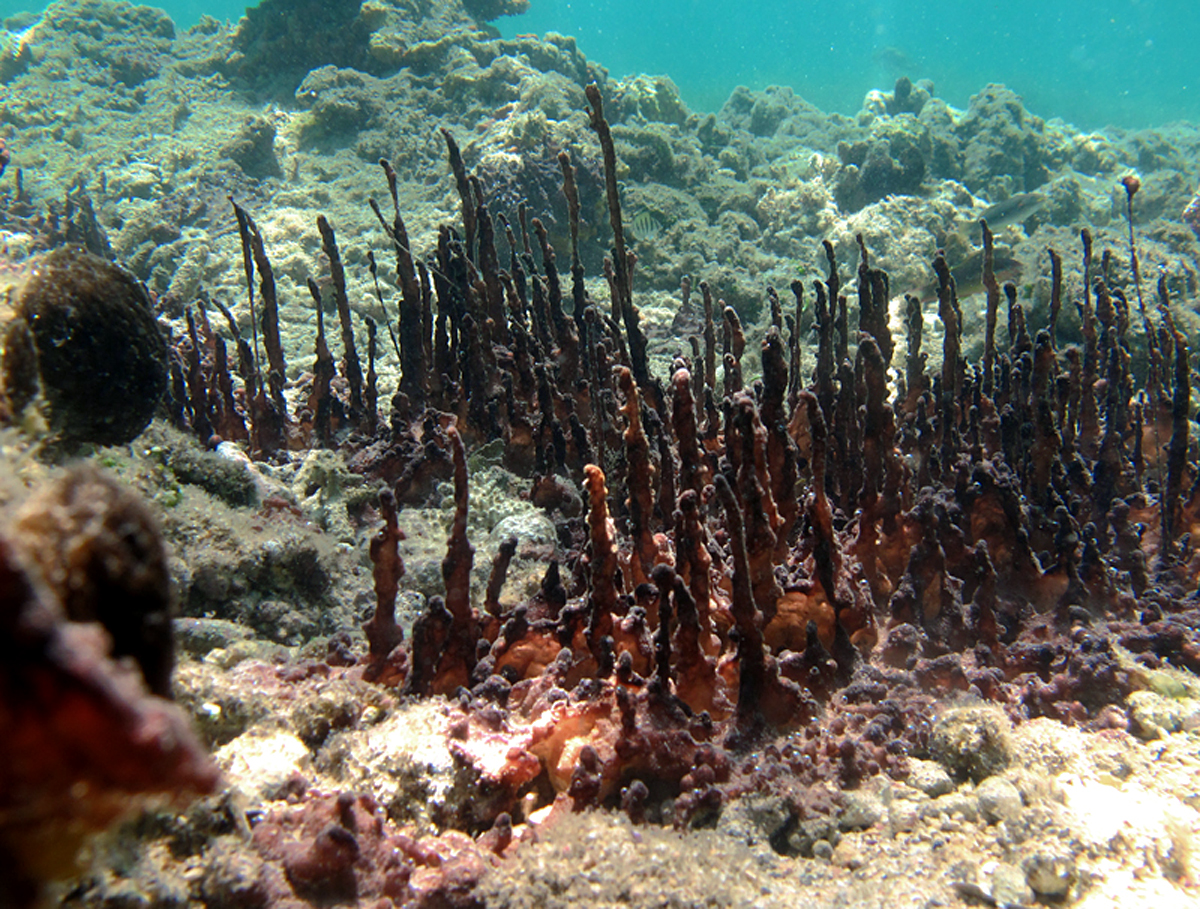
Image source: Wikipedia/Wikimedia
| Ecology, Host, and Life Cycle | |
|---|---|
| Oxygen requirements | Not Available |
| Optimal temperature | Not Available |
| Temperature range | Not Available |
| Habitat | Not Available |
| Biotic relationship | Not Available |
| Host(s) | Not Available |
| Cell arrangement | Not Available |
| Sporulation | Not Available |
| Energy source | Not Available |
| Pathogenicity | Not Available |
Gene Summary
Adenine Count
2013762 bp
Thymine Count
2005968 bp
Guanine Count
2072214 bp
Cytosine Count
2082622 bp
Genome Length
8174685 bp
Protein-coding Genes
6716 genes
Non-Coding Genes
83 genes
# of Chromosomes/Plasmids
1
Genes
| Name | Locus Tag | UniProt ID | Strand Orientation | Gene Start/End | Protein Molecular Weight |
|---|---|---|---|---|---|
| uma2 family endonuclease | EDM05_07325 | Not Available | Positive | 1679742 - 1680305 | 21346.6 |
| urea abc transporter substrate-binding protein | EDM05_07335 | Not Available | Positive | 1681165 - 1682511 | 48447.1 |
| branched-chain amino acid abc transporter permease | EDM05_07340 | Not Available | Positive | 1682784 - 1683944 | 41549.6 |
| urea abc transporter permease subunit urtc | EDM05_07345 | Not Available | Positive | 1683982 - 1685154 | 42870.3 |
| urea abc transporter atp-binding protein urtd | EDM05_07350 | Not Available | Positive | 1685129 - 1686010 | 32334.7 |
| urea abc transporter atp-binding subunit urte | EDM05_07355 | Not Available | Positive | 1686121 - 1686822 | 25743.7 |
| class i sam-dependent methyltransferase | EDM05_07360 | Not Available | Negative | 1686831 - 1688033 | 45080.6 |
| hypothetical protein | EDM05_07365 | Not Available | Positive | 1688022 - 1688201 | 6186.39 |
| hypothetical protein | EDM05_07375 | Not Available | Positive | 1688656 - 1693638 | 182695.0 |
| peptidoglycan-binding protein | EDM05_07380 | Not Available | Positive | 1694294 - 1695913 | 60330.4 |
Pathways
0 pathways
No pathways found
No metabolic pathways have been associated with this bacterium yet.
Health Effects
No health effects information available for this bacterium.