
Kingdom
Bacillati
Phylum
Cyanobacteriota
Class
Cyanophyceae
Order
Leptolyngbyales
Family
Leptolyngbyaceae
Genus
Leptolyngbya
Description
Taxonomy
| Kingdom | Bacillati |
|---|---|
| Phylum | Cyanobacteriota |
| Class | Cyanophyceae |
| Order | Leptolyngbyales |
| Family | Leptolyngbyaceae |
| Genus | Leptolyngbya |
| Species | Leptolyngbya sp. IPPAS B-1204 |
| Strain | Mongol_rep_c3761 |
Profile
| Physiology | |
|---|---|
| Gram staining properties | Not Available |
| Shape | Filamentous |
| Mobility | Not Available |
| Flagellar presence | Not Available |
| Number of membranes | Not Available |
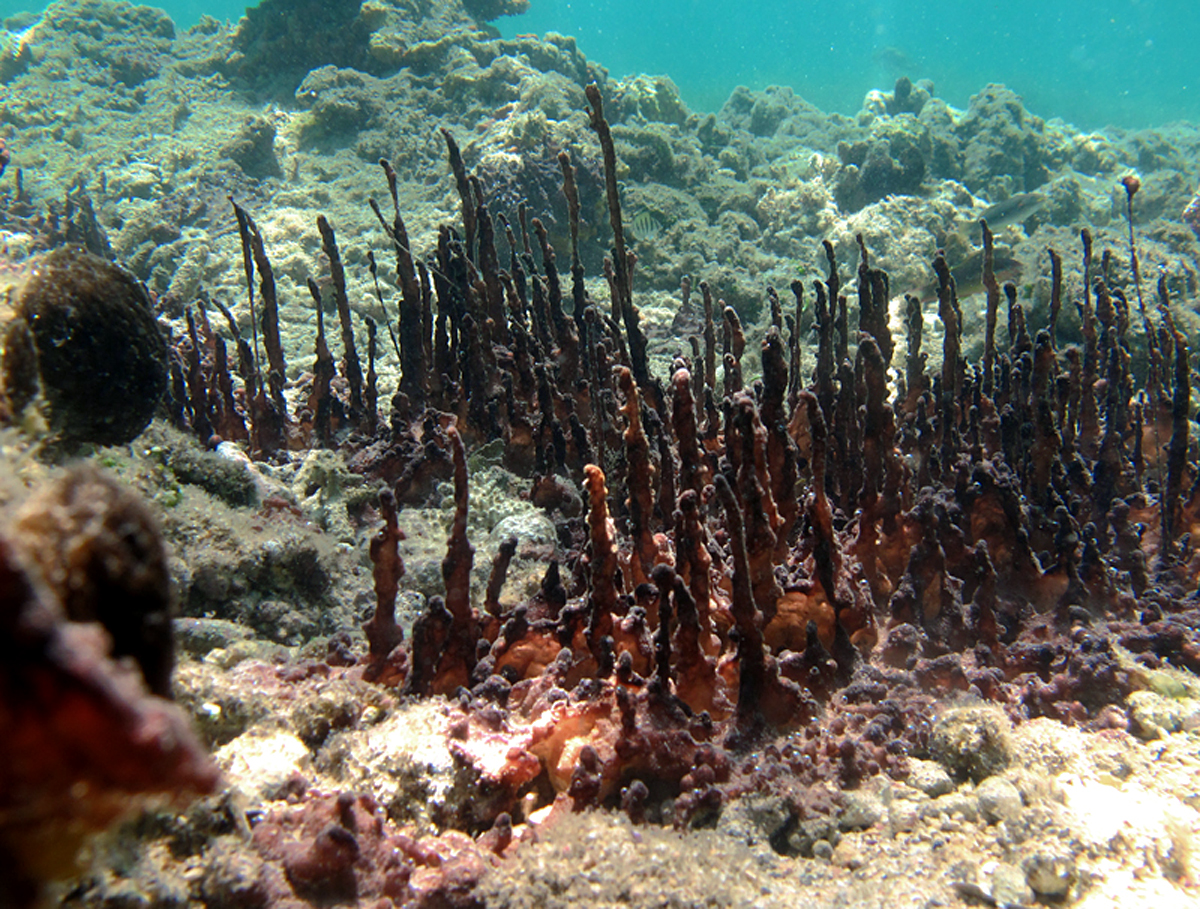
Image source: Wikipedia/Wikimedia
| Ecology, Host, and Life Cycle | |
|---|---|
| Oxygen requirements | Not Available |
| Optimal temperature | Not Available |
| Temperature range | Not Available |
| Habitat | Not Available |
| Biotic relationship | Not Available |
| Host(s) | Not Available |
| Cell arrangement | Not Available |
| Sporulation | Not Available |
| Energy source | Not Available |
| Pathogenicity | Not Available |
Gene Summary
Adenine Count
2013762 bp
Thymine Count
2005968 bp
Guanine Count
2072214 bp
Cytosine Count
2082622 bp
Genome Length
8174685 bp
Protein-coding Genes
6716 genes
Non-Coding Genes
83 genes
# of Chromosomes/Plasmids
1
Genes
| Name | Locus Tag | UniProt ID | Strand Orientation | Gene Start/End | Protein Molecular Weight |
|---|---|---|---|---|---|
| hypothetical protein | EDM05_07275 | Not Available | Negative | 1670192 - 1670452 | 9830.51 |
| xre family transcriptional regulator | EDM05_07280 | Not Available | Positive | 1670627 - 1670839 | 8330.14 |
| hypothetical protein | EDM05_07285 | Not Available | Negative | 1671098 - 1671499 | 15059.0 |
| di-trans,poly-cis-decaprenylcistransferase | EDM05_07290 | Not Available | Negative | 1671564 - 1672313 | 29131.0 |
| tigr00159 family protein | EDM05_07295 | Not Available | Negative | 1672310 - 1673215 | 33224.2 |
| diaminopimelate decarboxylase | EDM05_07300 | Not Available | Negative | 1673410 - 1674795 | 50498.4 |
| ribosomal-protein-alanine n-acetyltransferase | EDM05_07305 | Not Available | Positive | 1674969 - 1675592 | 23406.9 |
| atp-dependent clp protease atp-binding subunit | EDM05_07310 | Not Available | Positive | 1675816 - 1678293 | 91524.1 |
| urease accessory protein uree | EDM05_07315 | Not Available | Positive | 1678409 - 1678864 | 16956.4 |
| urease accessory protein uref | EDM05_07320 | Not Available | Positive | 1678953 - 1679627 | 24941.8 |
Pathways
0 pathways
No pathways found
No metabolic pathways have been associated with this bacterium yet.
Health Effects
No health effects information available for this bacterium.