
Kingdom
Pseudomonadati
Phylum
Pseudomonadota
Class
Gammaproteobacteria
Order
Vibrionales
Family
Vibrionaceae
Genus
Vibrio
Description
Taxonomy
| Kingdom | Pseudomonadati |
|---|---|
| Phylum | Pseudomonadota |
| Class | Gammaproteobacteria |
| Order | Vibrionales |
| Family | Vibrionaceae |
| Genus | Vibrio |
| Species | Vibrio anguillarum |
| Strain | strain 030305-1/5 |
Profile
| Physiology | |
|---|---|
| Gram staining properties | Negative |
| Shape | CurvedShaped |
| Mobility | Yes |
| Flagellar presence | Not Available |
| Number of membranes | Not Available |
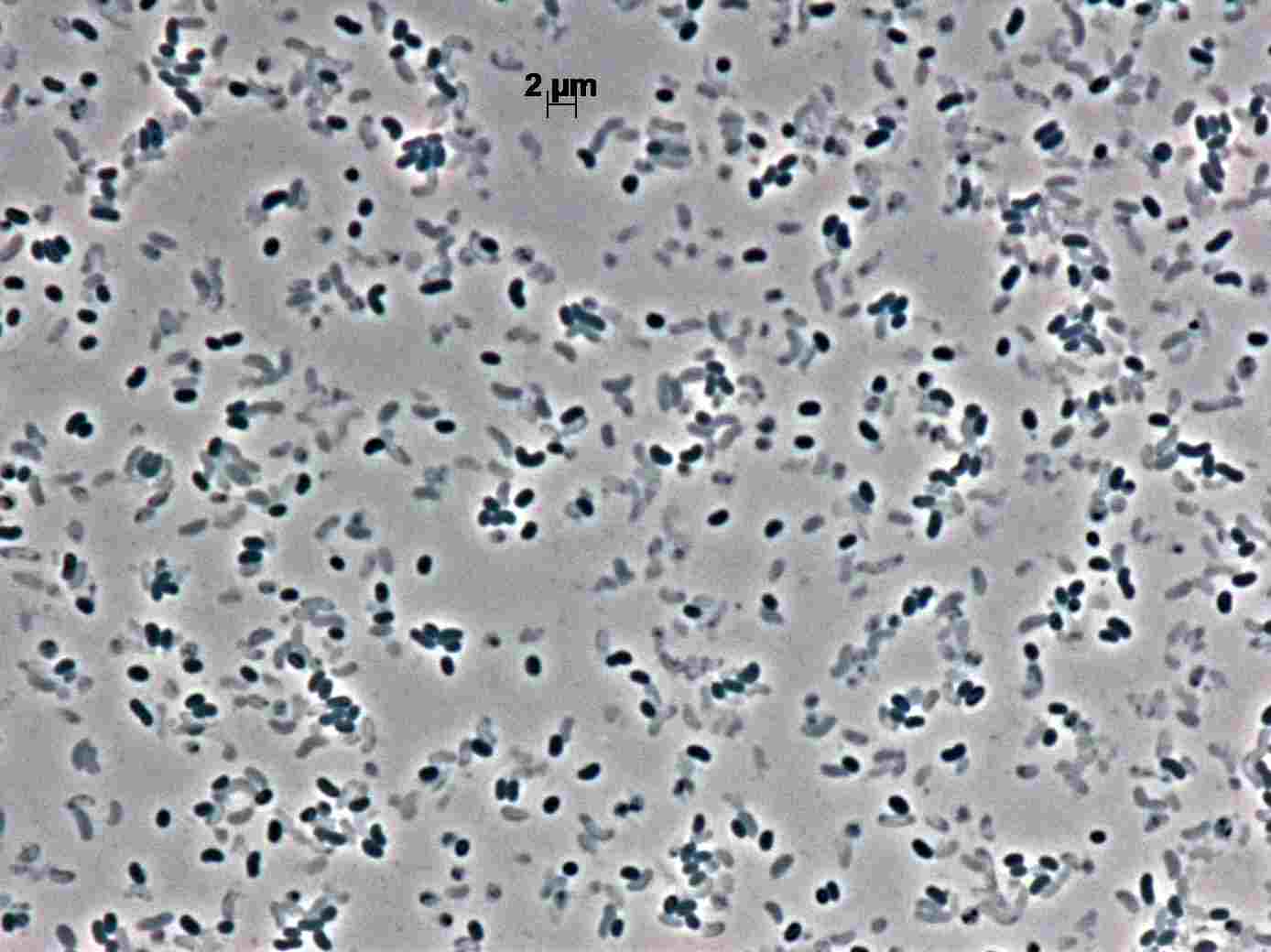
Image source: Wikipedia/Wikimedia
| Ecology, Host, and Life Cycle | |
|---|---|
| Oxygen requirements | Facultative |
| Optimal temperature | Not Available |
| Temperature range | Mesophilic |
| Habitat | HostAssociated |
| Biotic relationship | Free living |
| Host(s) | Homo sapiens |
| Cell arrangement | Singles |
| Sporulation | Nonsporulating |
| Energy source | Heterotroph |
| Pathogenicity | Animal |
Gene Summary
Adenine Count
1291350 bp
Thymine Count
1280356 bp
Guanine Count
1006706 bp
Cytosine Count
1017217 bp
Genome Length
4596370 bp
Protein-coding Genes
4641 genes
Non-Coding Genes
103 genes
# of Chromosomes/Plasmids
1
Genes
| Name | Locus Tag | UniProt ID | Strand Orientation | Gene Start/End | Protein Molecular Weight |
|---|---|---|---|---|---|
| hypothetical protein | D9U34_09710 | Not Available | Positive | 2171652 - 2172353 | 26672.9 |
| hypothetical protein | D9U34_09715 | Not Available | Positive | 2172350 - 2172790 | 16043.2 |
| hypothetical protein | D9U34_09720 | Not Available | Positive | 2172905 - 2173519 | 21022.3 |
| antibiotic acetyltransferase | D9U34_09730 | Not Available | Positive | 2174205 - 2174559 | 13078.8 |
| acyltransferase | D9U34_09735 | Not Available | Negative | 2174751 - 2176745 | 75390.3 |
| 3-deoxy-d-manno-octulosonic acid kinase | D9U34_09740 | Not Available | Negative | 2176756 - 2177505 | 29155.9 |
| lipopolysaccharide heptosyltransferase family protein | D9U34_09745 | Not Available | Positive | 2177567 - 2178637 | 39565.6 |
| glycosyltransferase family 2 protein | D9U34_09750 | Not Available | Positive | 2178634 - 2179419 | 29900.5 |
| lipopolysaccharide heptosyltransferase family protein | D9U34_09755 | Not Available | Negative | 2179388 - 2180422 | 38212.0 |
| pantetheine-phosphate adenylyltransferase | D9U34_09760 | Not Available | Positive | 2180546 - 2181037 | 18101.8 |
Pathways
0 pathways
No pathways found
No metabolic pathways have been associated with this bacterium yet.
Health Effects
| Health Condition | Relation | Reference |
|---|---|---|
| Vibriosis | Causes | PMC8416912 |
| Vibriosis | Causes | PMC11577842 |
| Vibriosis | Causes | PMC11790442 |
| Hemorrhagic septicemia | Causes | PMC11790442 |


