
Kingdom
Pseudomonadati
Phylum
Pseudomonadota
Class
Gammaproteobacteria
Order
Vibrionales
Family
Vibrionaceae
Genus
Vibrio
Description
Taxonomy
| Kingdom | Pseudomonadati |
|---|---|
| Phylum | Pseudomonadota |
| Class | Gammaproteobacteria |
| Order | Vibrionales |
| Family | Vibrionaceae |
| Genus | Vibrio |
| Species | Vibrio anguillarum |
| Strain | strain 030305-1/5 |
Profile
| Physiology | |
|---|---|
| Gram staining properties | Negative |
| Shape | CurvedShaped |
| Mobility | Yes |
| Flagellar presence | Not Available |
| Number of membranes | Not Available |
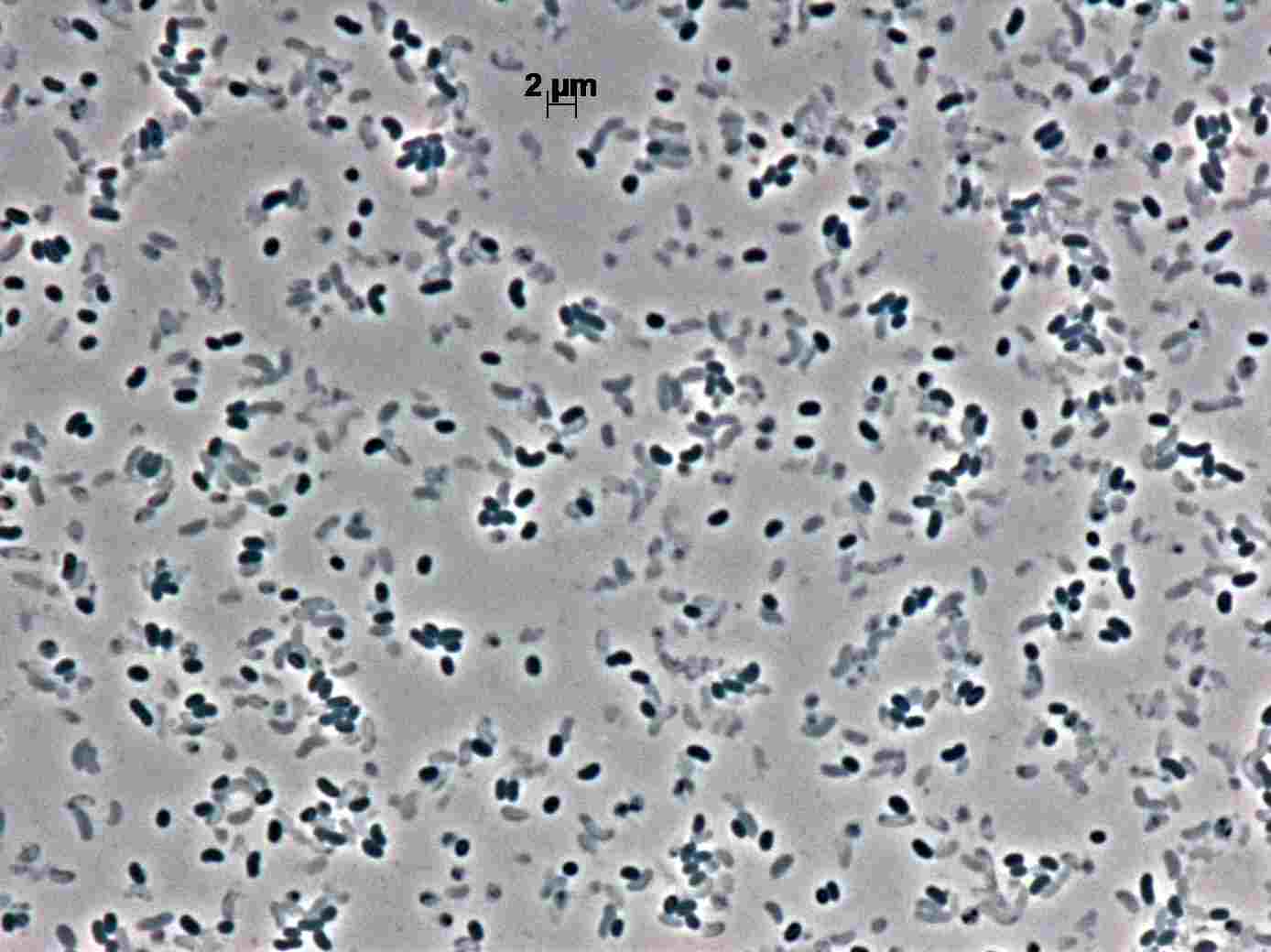
Image source: Wikipedia/Wikimedia
| Ecology, Host, and Life Cycle | |
|---|---|
| Oxygen requirements | Facultative |
| Optimal temperature | Not Available |
| Temperature range | Mesophilic |
| Habitat | HostAssociated |
| Biotic relationship | Free living |
| Host(s) | Homo sapiens |
| Cell arrangement | Singles |
| Sporulation | Nonsporulating |
| Energy source | Heterotroph |
| Pathogenicity | Animal |
Gene Summary
Adenine Count
1291350 bp
Thymine Count
1280356 bp
Guanine Count
1006706 bp
Cytosine Count
1017217 bp
Genome Length
4596370 bp
Protein-coding Genes
4641 genes
Non-Coding Genes
103 genes
# of Chromosomes/Plasmids
1
Genes
| Name | Locus Tag | UniProt ID | Strand Orientation | Gene Start/End | Protein Molecular Weight |
|---|---|---|---|---|---|
| dead/deah box helicase | D9U34_00630 | Not Available | Positive | 110352 - 113279 | 110277.0 |
| transcriptional regulator | D9U34_00635 | Not Available | Positive | 113598 - 113936 | 12788.3 |
| hypothetical protein | D9U34_00640 | Not Available | Positive | 113927 - 114295 | 12616.4 |
| duf4312 family protein | D9U34_00645 | Not Available | Positive | 114292 - 114585 | 11176.7 |
| duf4311 domain-containing protein | D9U34_00650 | Not Available | Positive | 114610 - 115386 | 27334.2 |
| duf4310 family protein | D9U34_00655 | Not Available | Positive | 115397 - 116044 | 22002.3 |
| amidohydrolase/deacetylase family metallohydrolase | D9U34_00660 | Not Available | Positive | 116090 - 117253 | 41735.9 |
| Ncrna_class:other | Not Available | Not Available | Positive | 116131 - 116315 | Not Available |
| dgae family pyridoxal phosphate-dependent ammonia lyase | D9U34_00665 | Not Available | Positive | 117237 - 118361 | 40379.4 |
| oxo-acid lyase | D9U34_00670 | Not Available | Positive | 118352 - 119098 | 26418.7 |
Pathways
0 pathways
No pathways found
No metabolic pathways have been associated with this bacterium yet.
Health Effects
| Health Condition | Relation | Reference |
|---|---|---|
| Vibriosis | Causes | PMC8416912 |
| Vibriosis | Causes | PMC11577842 |
| Vibriosis | Causes | PMC11790442 |
| Hemorrhagic septicemia | Causes | PMC11790442 |


