Kingdom
Pseudomonadati
Phylum
Pseudomonadota
Class
Gammaproteobacteria
Order
Pseudomonadales
Family
Pseudomonadaceae
Genus
Pseudomonas
Description
Taxonomy
| Kingdom | Pseudomonadati |
|---|---|
| Phylum | Pseudomonadota |
| Class | Gammaproteobacteria |
| Order | Pseudomonadales |
| Family | Pseudomonadaceae |
| Genus | Pseudomonas |
| Species | Pseudomonas cichorii |
| Strain | strain ICMP 3353 |
Profile
| Physiology | |
|---|---|
| Gram staining properties | Negative |
| Shape | Not Available |
| Mobility | Not Available |
| Flagellar presence | Not Available |
| Number of membranes | Not Available |

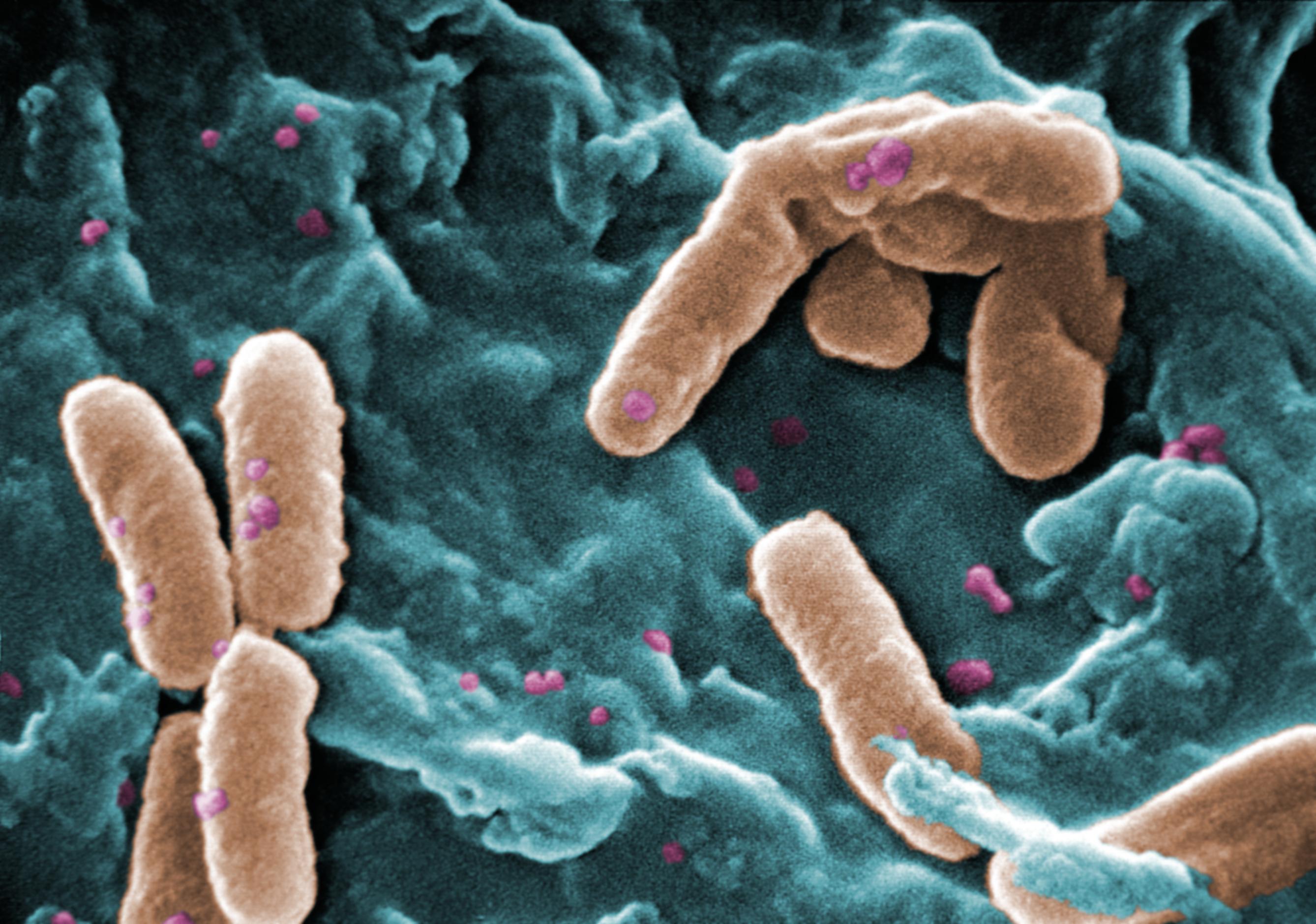
Image source: Wikipedia/Wikimedia
| Ecology, Host, and Life Cycle | |
|---|---|
| Oxygen requirements | Not Available |
| Optimal temperature | Not Available |
| Temperature range | Not Available |
| Habitat | Not Available |
| Biotic relationship | Not Available |
| Host(s) | Viridiplantae, Solanum lycopersicum, Geranium |
| Cell arrangement | Not Available |
| Sporulation | Not Available |
| Energy source | Not Available |
| Pathogenicity | Not Available |
Gene Summary
Adenine Count
1244678 bp
Thymine Count
1244772 bp
Guanine Count
1768612 bp
Cytosine Count
1762269 bp
Genome Length
6028563 bp
Protein-coding Genes
4796 genes
Non-Coding Genes
132 genes
# of Chromosomes/Plasmids
1
Genes
| Name | Locus Tag | UniProt ID | Strand Orientation | Gene Start/End | Protein Molecular Weight |
|---|---|---|---|---|---|
| response regulator with chey-like receiver, aaa-type atpase | ALQ04_04254 | Not Available | Negative | 2080790 - 2082115 | 49808.9 |
| hypothetical protein | ALQ04_04255 | Not Available | Positive | 2082489 - 2082755 | 9383.09 |
| magnesium chelatase subunit chld | ALQ04_04256 | Not Available | Negative | 2082838 - 2083350 | 18891.0 |
| magnesium chelatase, chli subunit | ALQ04_04257 | Not Available | Negative | 2083506 - 2084537 | 37055.2 |
| cobn protein | ALQ04_04258 | Not Available | Negative | 2084537 - 2088301 | 139349.0 |
| cobalamin biosynthesis protein cobw | ALQ04_04259 | Not Available | Negative | 2088305 - 2089369 | 38414.0 |
| hypothetical protein | ALQ04_04260 | Not Available | Positive | 2089781 - 2090224 | 15349.5 |
| cobm protein | ALQ04_04261 | Not Available | Positive | 2090266 - 2091012 | 26681.3 |
| fe/s bioproteinsis protein nfua | ALQ04_04262 | Not Available | Negative | 2091224 - 2091817 | 21527.4 |
| acyltransferase 3 | ALQ04_04263 | Not Available | Negative | 2091887 - 2092909 | 38470.1 |
Pathways
0 pathways
No pathways found
No metabolic pathways have been associated with this bacterium yet.