Kingdom
Pseudomonadati
Phylum
Pseudomonadota
Class
Gammaproteobacteria
Order
Pseudomonadales
Family
Pseudomonadaceae
Genus
Pseudomonas
Description
Taxonomy
| Kingdom | Pseudomonadati |
|---|---|
| Phylum | Pseudomonadota |
| Class | Gammaproteobacteria |
| Order | Pseudomonadales |
| Family | Pseudomonadaceae |
| Genus | Pseudomonas |
| Species | Pseudomonas syringae group genomosp. 3 |
| Strain | No strain |
Profile
| Physiology | |
|---|---|
| Gram staining properties | Not Available |
| Shape | Not Available |
| Mobility | Not Available |
| Flagellar presence | Not Available |
| Number of membranes | Not Available |

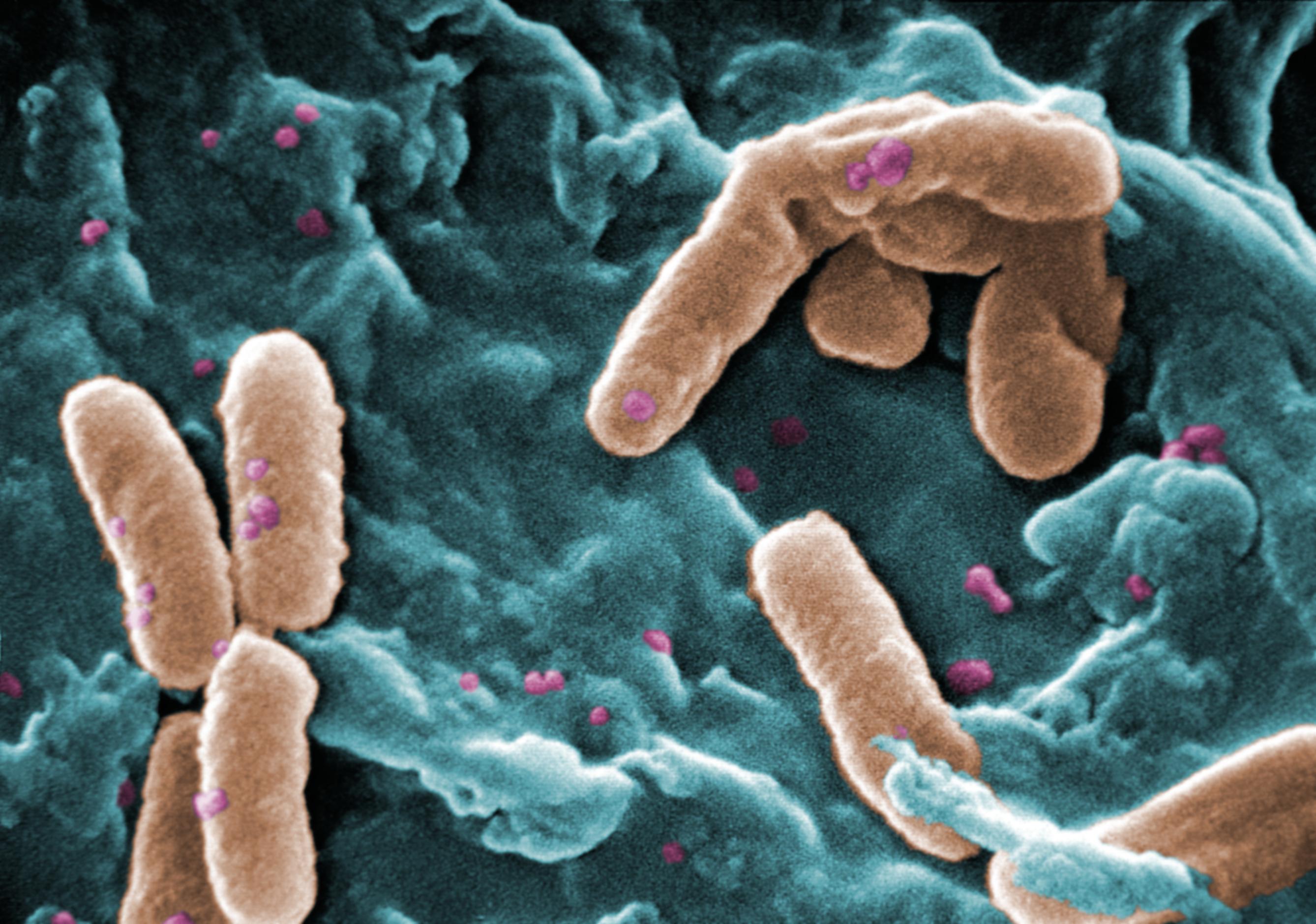
Image source: Wikipedia/Wikimedia
| Ecology, Host, and Life Cycle | |
|---|---|
| Oxygen requirements | Not Available |
| Optimal temperature | Not Available |
| Temperature range | Not Available |
| Habitat | Not Available |
| Biotic relationship | Not Available |
| Host(s) | Not Available |
| Cell arrangement | Not Available |
| Sporulation | Not Available |
| Energy source | Not Available |
| Pathogenicity | Not Available |
Gene Summary
Adenine Count
1302693 bp
Thymine Count
1313375 bp
Guanine Count
1843684 bp
Cytosine Count
1831501 bp
Genome Length
6318234 bp
Protein-coding Genes
5692 genes
Non-Coding Genes
74 genes
# of Chromosomes/Plasmids
1
Genes
| Name | Locus Tag | UniProt ID | Strand Orientation | Gene Start/End | Protein Molecular Weight |
|---|---|---|---|---|---|
| ribonuclease activity regulator protein rraa | ALQ06_02639 | Not Available | Positive | 2170517 - 2171005 | 17482.1 |
| cmax protein | ALQ06_02640 | Not Available | Positive | 2171017 - 2172012 | 37797.4 |
| crfx protein | ALQ06_02641 | Not Available | Positive | 2172098 - 2172346 | 8788.34 |
| membrane protein | ALQ06_02642 | Not Available | Positive | 2172349 - 2173173 | 28973.6 |
| rna polymerase sigma factor sigx | ALQ06_02643 | Not Available | Positive | 2173277 - 2173846 | 22522.1 |
| outer membrane porin oprf | ALQ06_02644 | Not Available | Positive | 2173953 - 2174987 | 36523.2 |
| uroporphyrin-iii c-methyltransferase | ALQ06_02645 | Not Available | Negative | 2175075 - 2175836 | 26921.9 |
| assimilatory nitrate reductase large subunit | ALQ06_100143 | Not Available | Negative | 2175847 - 2178573 | 99421.1 |
| assimilatory nitrate reductase electron transfer subunit domain protein | ALQ06_02646 | Not Available | Negative | 2178564 - 2179793 | 44257.8 |
| putative serine/threonine protein kinase | ALQ06_02647 | Not Available | Negative | 2180075 - 2181736 | 61831.9 |
Pathways
0 pathways
No pathways found
No metabolic pathways have been associated with this bacterium yet.
Health Effects
No health effects information available for this bacterium.