
Kingdom
Pseudomonadati
Phylum
Pseudomonadota
Class
Gammaproteobacteria
Order
Pseudomonadales
Family
Pseudomonadaceae
Genus
Pseudomonas
Description
Taxonomy
| Kingdom | Pseudomonadati |
|---|---|
| Phylum | Pseudomonadota |
| Class | Gammaproteobacteria |
| Order | Pseudomonadales |
| Family | Pseudomonadaceae |
| Genus | Pseudomonas |
| Species | Pseudomonas amygdali |
| Strain | pv. morsprunorum strain ICMP 3897 |
Profile
| Physiology | |
|---|---|
| Gram staining properties | Negative |
| Shape | Rod |
| Mobility | Yes |
| Flagellar presence | Not Available |
| Number of membranes | Not Available |
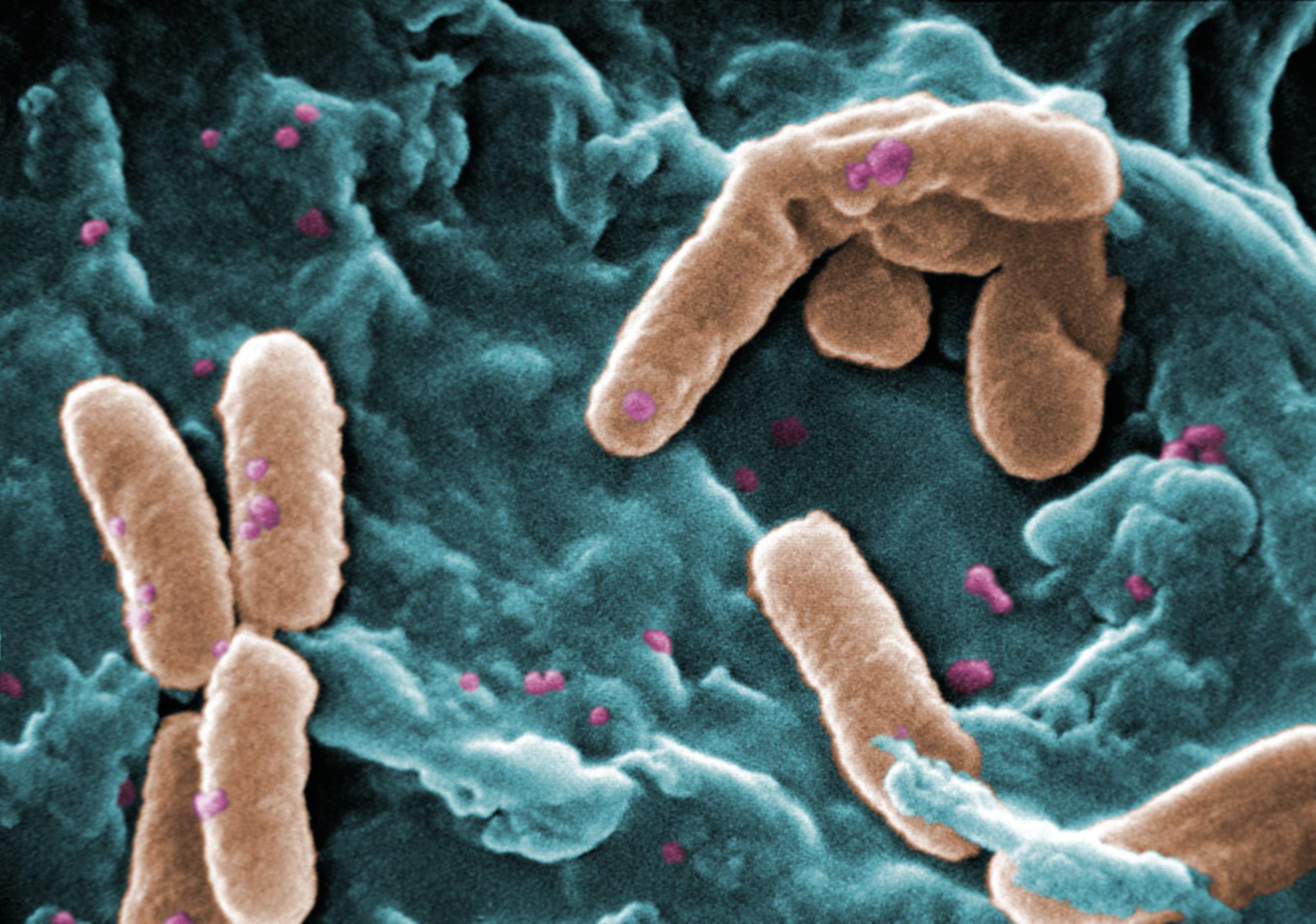
Image source: Wikipedia/Wikimedia
| Ecology, Host, and Life Cycle | |
|---|---|
| Oxygen requirements | Not Available |
| Optimal temperature | Not Available |
| Temperature range | Not Available |
| Habitat | Not Available |
| Biotic relationship | Not Available |
| Host(s) | Prunus, Prunus avium |
| Cell arrangement | Not Available |
| Sporulation | Not Available |
| Energy source | Not Available |
| Pathogenicity | Not Available |
Gene Summary
Adenine Count
1265154 bp
Thymine Count
1266662 bp
Guanine Count
1758869 bp
Cytosine Count
1755394 bp
Genome Length
6062753 bp
Protein-coding Genes
5637 genes
Non-Coding Genes
201 genes
# of Chromosomes/Plasmids
1
Genes
| Name | Locus Tag | UniProt ID | Strand Orientation | Gene Start/End | Protein Molecular Weight |
|---|---|---|---|---|---|
| taurine dioxygenase | ALQ31_01968 | Not Available | Positive | 146366 - 147235 | 32076.4 |
| acetyltransferase | ALQ31_01969 | Not Available | Negative | 147278 - 147793 | 19596.2 |
| hypothetical protein | ALQ31_01970 | Not Available | Positive | 147861 - 149075 | 43651.8 |
| hypothetical protein | ALQ31_05669 | Not Available | Positive | 149081 - 149191 | 3816.62 |
| methyl-accepting chemotaxis protein | ALQ31_01971 | Not Available | Positive | 149344 - 151272 | 68186.4 |
| membrane protein | ALQ31_01972 | Not Available | Negative | 151303 - 152235 | 32999.5 |
| transcriptional regulator, lysr family | ALQ31_01973 | Not Available | Positive | 152310 - 153164 | 30747.4 |
| 1-aminocyclopropane-1-carboxylate deaminase | ALQ31_01974 | Not Available | Negative | 153215 - 154231 | 36853.1 |
| transcriptional regulator, asnc family | ALQ31_01975 | Not Available | Positive | 154407 - 154925 | 19012.5 |
| hypothetical protein | ALQ31_01976 | Not Available | Positive | 155075 - 155983 | 31305.1 |
Pathways
0 pathways
No pathways found
No metabolic pathways have been associated with this bacterium yet.
Health Effects
| Health Condition | Relation | Reference |
|---|---|---|
| Canker disease | Causes | PMC3723570 |
| Bacterial canker | Causes | PMC10747947 |
| Bacterial canker | Causes | PMC9343901 |


