Kingdom
Pseudomonadati
Phylum
Pseudomonadota
Class
Alphaproteobacteria
Order
Rhodobacterales
Family
Paracoccaceae
Genus
Paracoccus
Description
Taxonomy
| Kingdom | Pseudomonadati |
|---|---|
| Phylum | Pseudomonadota |
| Class | Alphaproteobacteria |
| Order | Rhodobacterales |
| Family | Paracoccaceae |
| Genus | Paracoccus |
| Species | Paracoccus pantotrophus |
| Strain | strain DSM 2944 |
Profile
| Physiology | |
|---|---|
| Gram staining properties | Not Available |
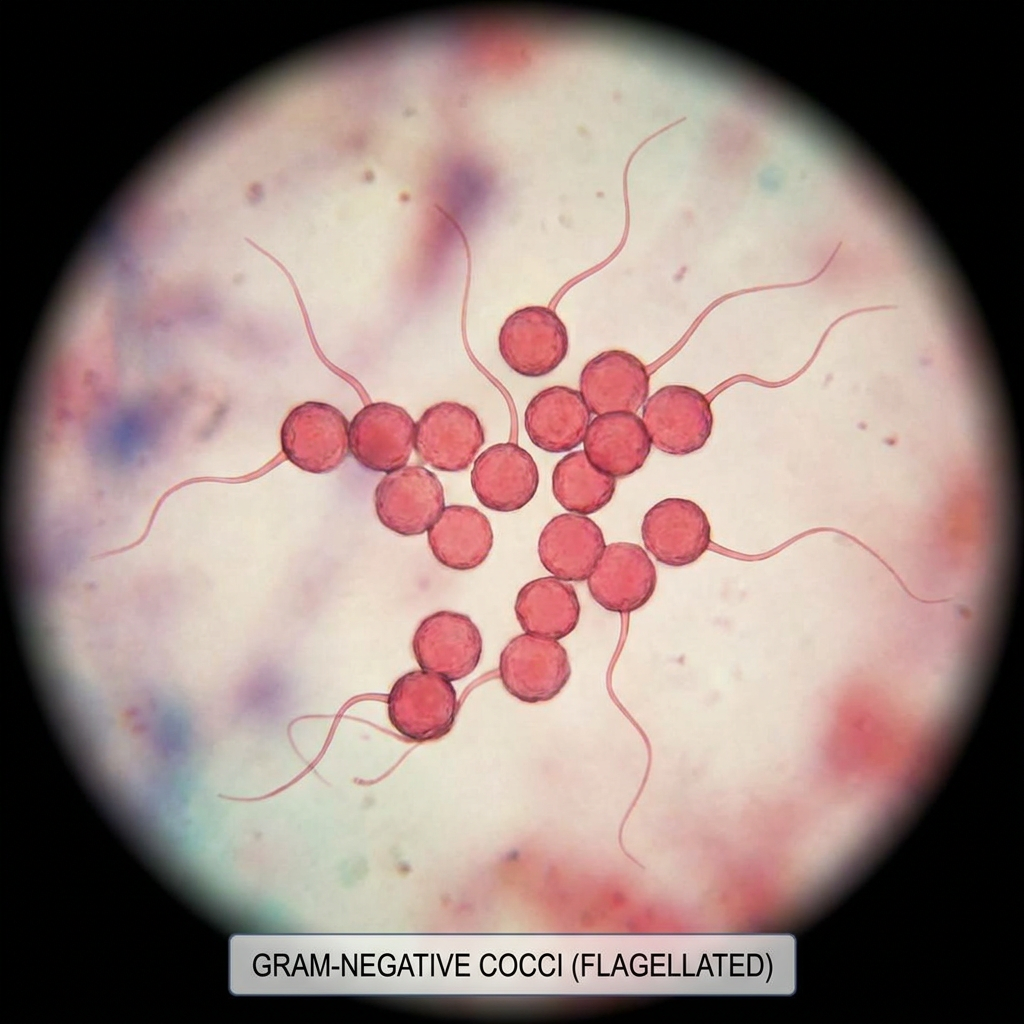
| Shape | Cocci |
| Mobility | Not Available |
| Flagellar presence | Yes |
| Number of membranes | Not Available |
| Ecology, Host, and Life Cycle | |
|---|---|
| Oxygen requirements | Not Available |
| Optimal temperature | Not Available |
| Temperature range | Not Available |
| Habitat | activated sludge |
| Biotic relationship | Not Available |
| Host(s) | Not Available |
| Cell arrangement | Not Available |
| Sporulation | Not Available |
| Energy source | Not Available |
| Pathogenicity | Not Available |
Gene Summary
Adenine Count
713533 bp
Thymine Count
714965 bp
Guanine Count
1494092 bp
Cytosine Count
1486895 bp
Genome Length
4409710 bp
Protein-coding Genes
4002 genes
Non-Coding Genes
194 genes
# of Chromosomes/Plasmids
1
Genes
| Name | Locus Tag | UniProt ID | Strand Orientation | Gene Start/End | Protein Molecular Weight |
|---|---|---|---|---|---|
| polyketide cyclase/dehydrase/lipid transport protein | BDE18_0159 | Not Available | Negative | 150954 - 151505 | 19809.5 |
| uncharacterized protein duf2380 | BDE18_0160 | Not Available | Negative | 151509 - 152060 | 19754.5 |
| amino acid/amide abc transporter substrate-binding protein (haat family) | BDE18_0161 | Not Available | Positive | 152176 - 153363 | 43190.9 |
| pqq-dependent catabolism-associated beta-propeller protein | BDE18_0162 | Not Available | Positive | 153372 - 154343 | 34512.9 |
| hypothetical protein | BDE18_0163 | Not Available | Positive | 154370 - 154948 | 19925.0 |
| abc-2 type transport system atp-binding protein | BDE18_0164 | Not Available | Positive | 154986 - 155705 | 25697.0 |
| abc-2 type transport system permease protein | BDE18_0165 | Not Available | Positive | 155702 - 156538 | 31083.0 |
| hypothetical protein | BDE18_0166 | Not Available | Positive | 156535 - 157131 | 22255.6 |
| molybdenum cofactor guanylyltransferase | BDE18_0167 | Not Available | Positive | 157128 - 157730 | 20777.1 |
| putative hydroxymethylpyrimidine transport system permease protein | BDE18_0168 | Not Available | Negative | 157727 - 158458 | 25844.0 |
Pathways
0 pathways
No pathways found
No metabolic pathways have been associated with this bacterium yet.
Health Effects
No health effects information available for this bacterium.