
Kingdom
Pseudomonadati
Phylum
Pseudomonadota
Class
Gammaproteobacteria
Order
Vibrionales
Family
Vibrionaceae
Genus
Photobacterium
Description
Taxonomy
| Kingdom | Pseudomonadati |
|---|---|
| Phylum | Pseudomonadota |
| Class | Gammaproteobacteria |
| Order | Vibrionales |
| Family | Vibrionaceae |
| Genus | Photobacterium |
| Species | Photobacterium damselae |
| Strain | strain BT-6 CFSAN065500_43 |
Profile
| Physiology | |
|---|---|
| Gram staining properties | Negative |
| Shape | Coccus |
| Mobility | Yes |
| Flagellar presence | Yes |
| Number of membranes | Not Available |
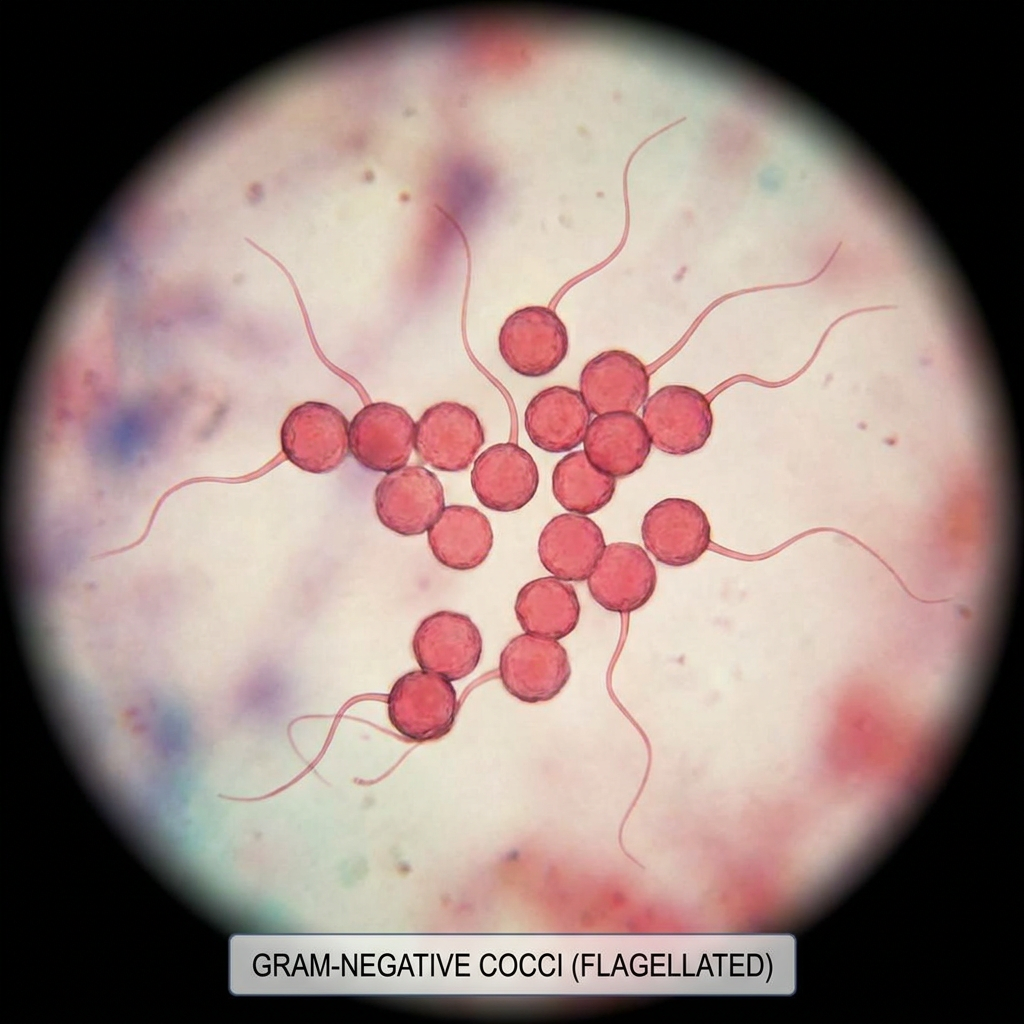
AI-generated image based on bacteria physiology
| Ecology, Host, and Life Cycle | |
|---|---|
| Oxygen requirements | Not Available |
| Optimal temperature | Not Available |
| Temperature range | mesophilic |
| Habitat | Italian aquaculture; Marine |
| Biotic relationship | Not Available |
| Host(s) | Homo sapiens, Alca torda |
| Cell arrangement | Not Available |
| Sporulation | Not Available |
| Energy source | Not Available |
| Pathogenicity | Not Available |
Gene Summary
Adenine Count
1317805 bp
Thymine Count
1343305 bp
Guanine Count
924455 bp
Cytosine Count
882234 bp
Genome Length
4467799 bp
Protein-coding Genes
3795 genes
Non-Coding Genes
159 genes
# of Chromosomes/Plasmids
1
Genes
| Name | Locus Tag | UniProt ID | Strand Orientation | Gene Start/End | Protein Molecular Weight |
|---|---|---|---|---|---|
| lps assembly protein lptd | CTM90_15440 | Not Available | Negative | 3495614 - 3497962 | 88793.7 |
| co-chaperone djla | CTM90_15445 | Not Available | Positive | 3498135 - 3498974 | 31286.7 |
| bifunctional trna pseudouridine(32) synthase/23s rrna pseudouridine(746) synthase rlua | CTM90_15450 | Not Available | Negative | 3499049 - 3499771 | 27879.5 |
| rna polymerase-associated protein rapa | CTM90_15455 | Not Available | Negative | 3499952 - 3502870 | 110140.0 |
| phoh family protein | CTM90_15460 | Not Available | Positive | 3503205 - 3504581 | 51324.5 |
| thiamine abc transporter atp-binding protein | CTM90_15465 | Not Available | Negative | 3504671 - 3505375 | 25765.4 |
| thiamine/thiamine pyrophosphate abc transporter, permease protein | CTM90_15470 | Not Available | Negative | 3505368 - 3506963 | 58344.7 |
| thiamine abc transporter substrate binding subunit | CTM90_15475 | Not Available | Negative | 3507036 - 3508025 | 37023.3 |
| duf547 domain-containing protein | CTM90_15480 | Not Available | Negative | 3508277 - 3509077 | 30864.7 |
| 3-isopropylmalate dehydratase small subunit | CTM90_15485 | Not Available | Negative | 3509139 - 3509741 | 22616.6 |
Pathways
0 pathways
No pathways found
No metabolic pathways have been associated with this bacterium yet.
