
Kingdom
Pseudomonadati
Phylum
Pseudomonadota
Class
Gammaproteobacteria
Order
Vibrionales
Family
Vibrionaceae
Genus
Photobacterium
Description
Taxonomy
| Kingdom | Pseudomonadati |
|---|---|
| Phylum | Pseudomonadota |
| Class | Gammaproteobacteria |
| Order | Vibrionales |
| Family | Vibrionaceae |
| Genus | Photobacterium |
| Species | Photobacterium damselae |
| Strain | strain BT-6 CFSAN065500_43 |
Profile
| Physiology | |
|---|---|
| Gram staining properties | Negative |
| Shape | Coccus |
| Mobility | Yes |
| Flagellar presence | Yes |
| Number of membranes | Not Available |
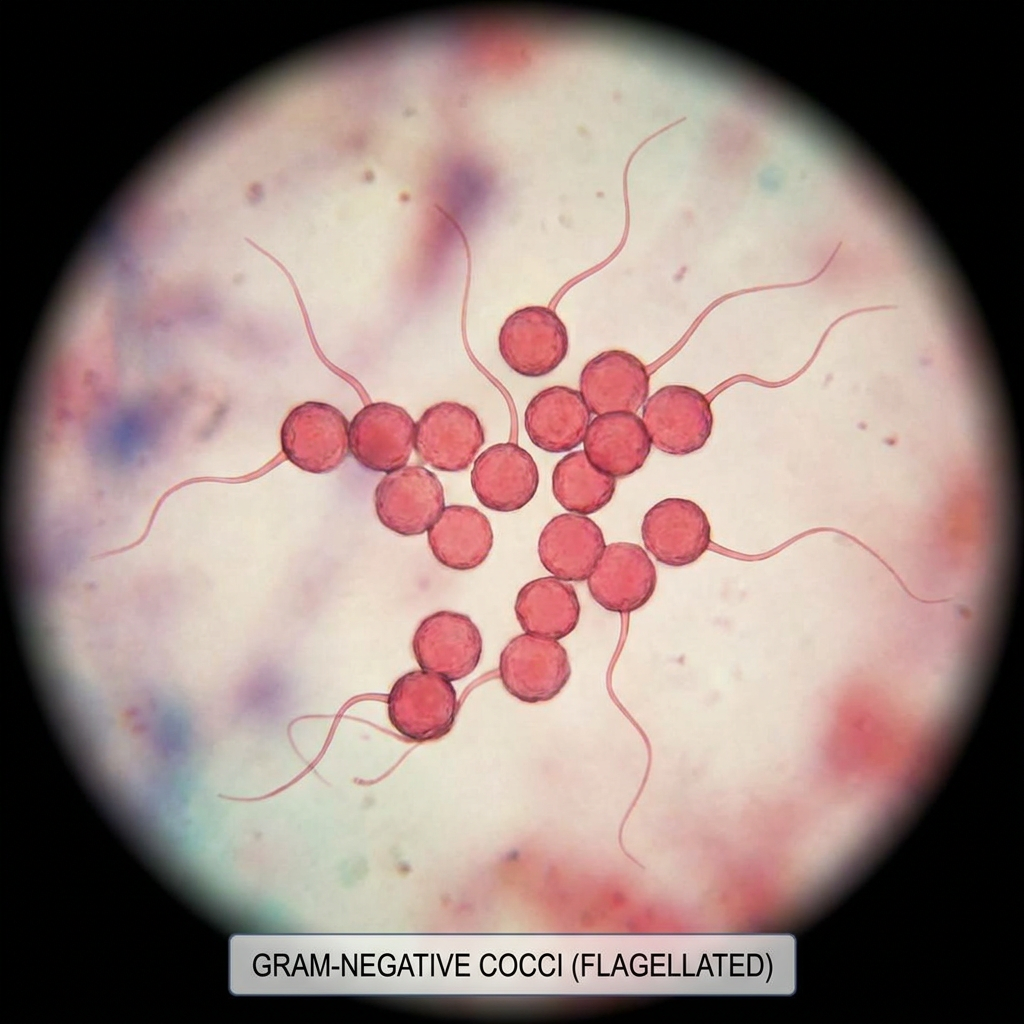
AI-generated image based on bacteria physiology
| Ecology, Host, and Life Cycle | |
|---|---|
| Oxygen requirements | Not Available |
| Optimal temperature | Not Available |
| Temperature range | mesophilic |
| Habitat | Italian aquaculture; Marine |
| Biotic relationship | Not Available |
| Host(s) | Homo sapiens, Alca torda |
| Cell arrangement | Not Available |
| Sporulation | Not Available |
| Energy source | Not Available |
| Pathogenicity | Not Available |
Gene Summary
Adenine Count
1317805 bp
Thymine Count
1343305 bp
Guanine Count
924455 bp
Cytosine Count
882234 bp
Genome Length
4467799 bp
Protein-coding Genes
3795 genes
Non-Coding Genes
159 genes
# of Chromosomes/Plasmids
1
Genes
| Name | Locus Tag | UniProt ID | Strand Orientation | Gene Start/End | Protein Molecular Weight |
|---|---|---|---|---|---|
| type iv-a pilus assembly atpase pilb | CTM90_09115 | Not Available | Negative | 2080092 - 2081783 | 62473.8 |
| prepilin-type n-terminal cleavage/methylation domain-containing protein | CTM90_09120 | Not Available | Negative | 2081793 - 2082221 | 14478.4 |
| 1,6-anhydro-n-acetylmuramyl-l-alanine amidase ampd | CTM90_09125 | Not Available | Positive | 2082692 - 2083270 | 21498.2 |
| pyruvate dehydrogenase complex transcriptional repressor pdhr | CTM90_09130 | Not Available | Positive | 2083630 - 2084403 | 29661.5 |
| pyruvate dehydrogenase (acetyl-transferring), homodimeric type | CTM90_09135 | Not Available | Positive | 2084484 - 2087144 | 99358.0 |
| pyruvate dehydrogenase complex dihydrolipoyllysine-residue acetyltransferase | CTM90_09140 | Not Available | Positive | 2087157 - 2089028 | 64787.5 |
| dihydrolipoyl dehydrogenase | CTM90_09145 | Not Available | Positive | 2089206 - 2090636 | 50898.8 |
| hypothetical protein | CTM90_09150 | Not Available | Negative | 2090720 - 2091265 | 19428.7 |
| lruc domain-containing protein | CTM90_09155 | Not Available | Negative | 2091278 - 2093344 | 74311.8 |
| methyl-accepting chemotaxis protein | CTM90_09160 | Not Available | Negative | 2093536 - 2095449 | 69575.5 |
Pathways
0 pathways
No pathways found
No metabolic pathways have been associated with this bacterium yet.
