Kingdom
Bacillati
Phylum
Bacillota
Class
Bacilli
Order
Lactobacillales
Family
Lactobacillaceae
Genus
Lactobacillus
Description
Taxonomy
| Kingdom | Bacillati |
|---|---|
| Phylum | Bacillota |
| Class | Bacilli |
| Order | Lactobacillales |
| Family | Lactobacillaceae |
| Genus | Lactobacillus |
| Species | Lactobacillus jensenii |
| Strain | strain UMB0077 |
Profile
| Physiology | |
|---|---|
| Gram staining properties | Not Available |
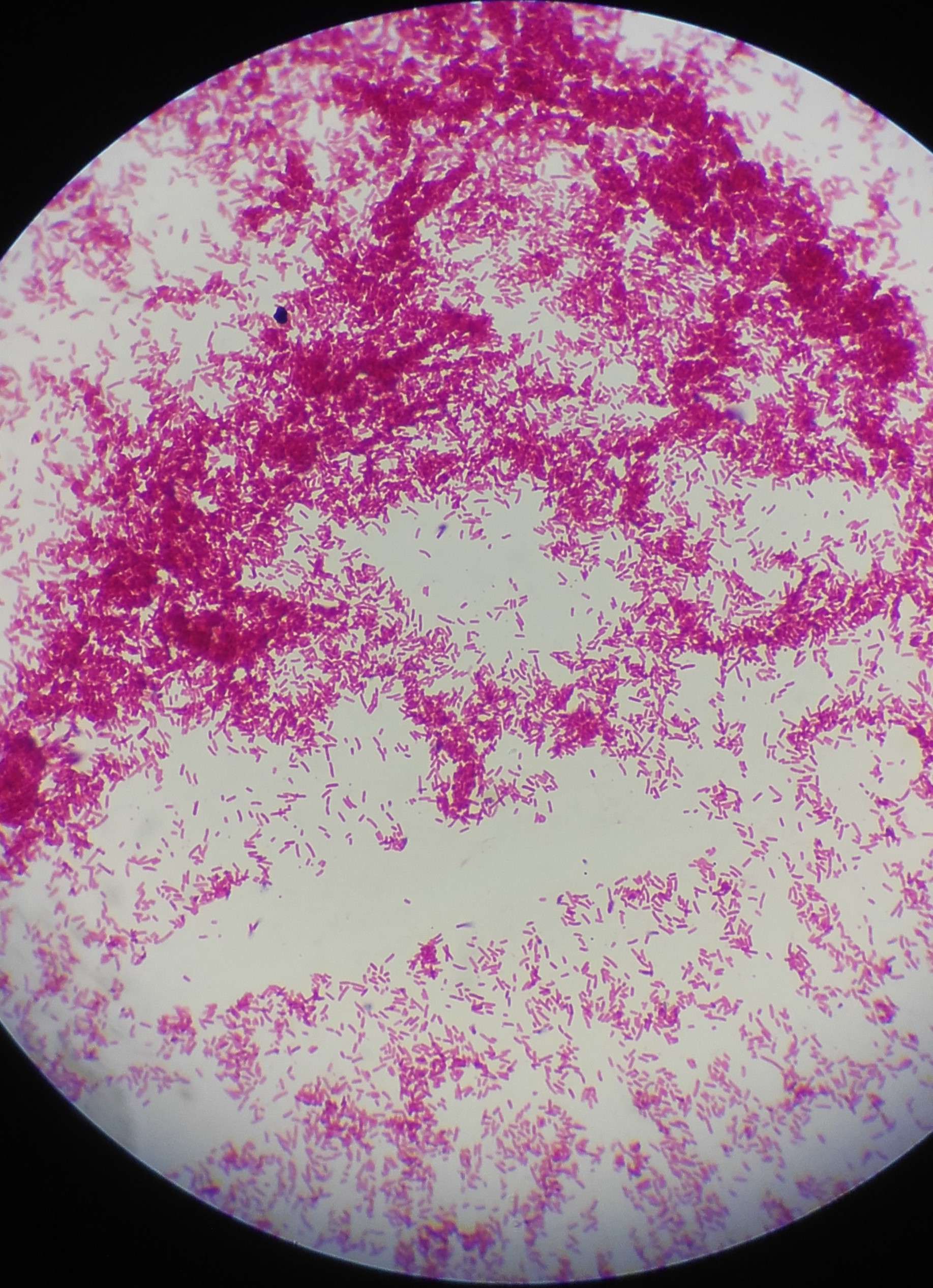
| Shape | Rod |
| Mobility | Not Available |
| Flagellar presence | Yes |
| Number of membranes | Not Available |

Image source: Wikipedia/Wikimedia
| Ecology, Host, and Life Cycle | |
|---|---|
| Oxygen requirements | Not Available |
| Optimal temperature | Not Available |
| Temperature range | Not Available |
| Habitat | vagina |
| Biotic relationship | Not Available |
| Host(s) | Homo sapiens |
| Cell arrangement | Not Available |
| Sporulation | Not Available |
| Energy source | Not Available |
| Pathogenicity | Not Available |
Gene Summary
Adenine Count
574180 bp
Thymine Count
580341 bp
Guanine Count
299231 bp
Cytosine Count
301717 bp
Genome Length
1756562 bp
Protein-coding Genes
1603 genes
Non-Coding Genes
184 genes
# of Chromosomes/Plasmids
1
Genes
| Name | Locus Tag | UniProt ID | Strand Orientation | Gene Start/End | Protein Molecular Weight |
|---|---|---|---|---|---|
| n-acetylglucosamine kinase | CYJ90_07885 | Not Available | Positive | 1560013 - 1560909 | 31945.9 |
| magnesium transporter cora family protein | CYJ90_07890 | Not Available | Negative | 1560954 - 1561760 | 31393.6 |
| is982 family transposase | CYJ90_07895 | Not Available | Negative | 1561772 - 1561897 | 4832.77 |
| 23s rrna (pseudouridine(1915)-n(3))-methyltransferase rlmh | CYJ90_07905 | Not Available | Negative | 1563285 - 1563764 | 17948.9 |
| pdz domain-containing protein | CYJ90_07910 | Not Available | Negative | 1564230 - 1565504 | 43683.3 |
| mbl fold metallo-hydrolase | CYJ90_07915 | Not Available | Negative | 1565583 - 1566380 | 29877.3 |
| hypothetical protein | CYJ90_07920 | Not Available | Negative | 1566399 - 1567202 | 30570.2 |
| hypothetical protein | CYJ90_07925 | Not Available | Negative | 1567206 - 1568558 | 51284.8 |
| cell wall metabolism sensor histidine kinase walk | CYJ90_07930 | Not Available | Negative | 1568548 - 1570404 | 69126.7 |
| dna-binding response regulator | CYJ90_07935 | Not Available | Negative | 1570449 - 1571162 | 27335.9 |
Pathways
65 pathways
Health Effects
No health effects information available for this bacterium.