Kingdom
Bacillati
Phylum
Bacillota
Class
Bacilli
Order
Lactobacillales
Family
Lactobacillaceae
Genus
Lactobacillus
Description
Taxonomy
| Kingdom | Bacillati |
|---|---|
| Phylum | Bacillota |
| Class | Bacilli |
| Order | Lactobacillales |
| Family | Lactobacillaceae |
| Genus | Lactobacillus |
| Species | Lactobacillus jensenii |
| Strain | strain UMB0077 |
Profile
| Physiology | |
|---|---|
| Gram staining properties | Not Available |
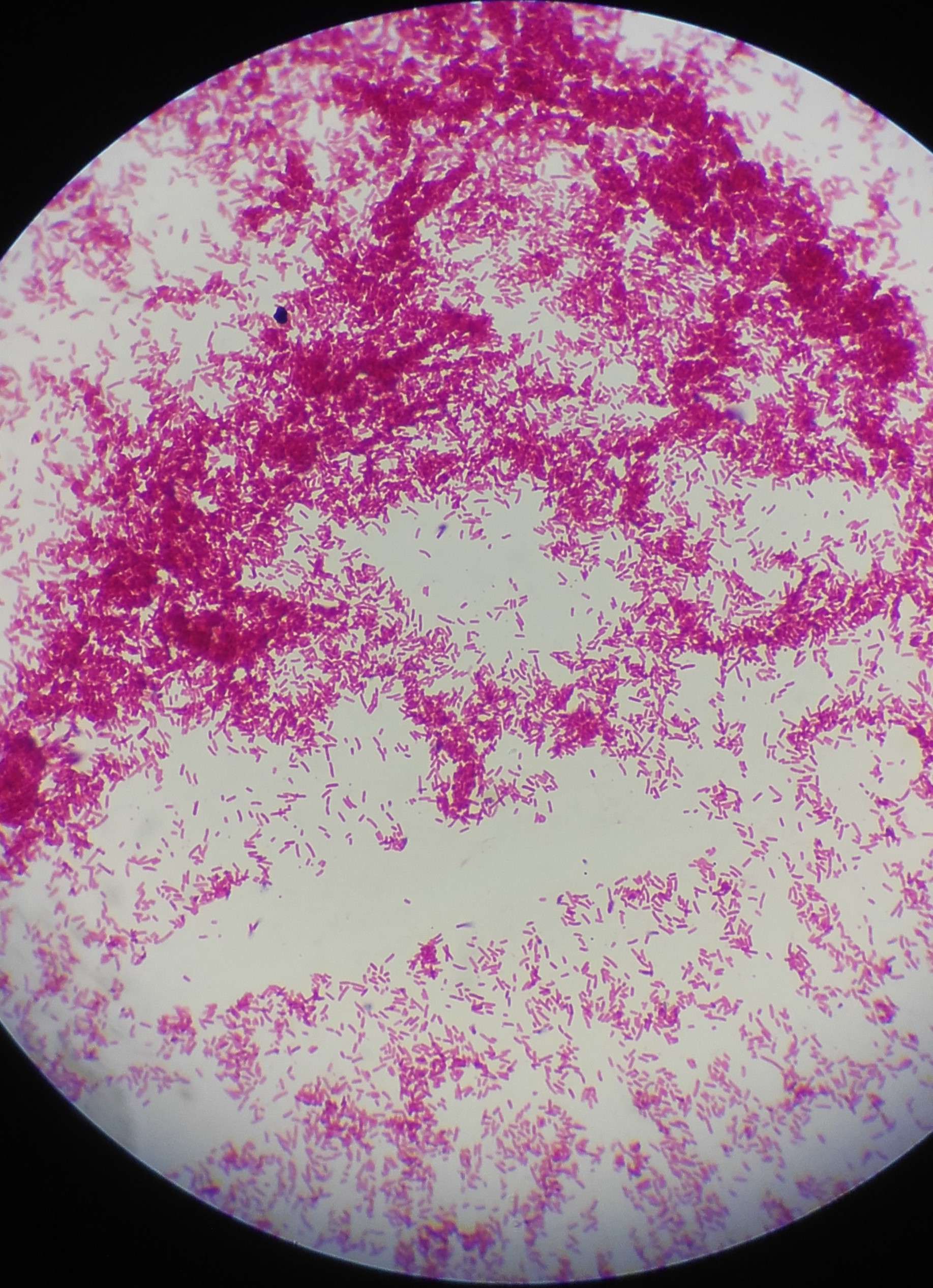
| Shape | Rod |
| Mobility | Not Available |
| Flagellar presence | Yes |
| Number of membranes | Not Available |

Image source: Wikipedia/Wikimedia
| Ecology, Host, and Life Cycle | |
|---|---|
| Oxygen requirements | Not Available |
| Optimal temperature | Not Available |
| Temperature range | Not Available |
| Habitat | vagina |
| Biotic relationship | Not Available |
| Host(s) | Homo sapiens |
| Cell arrangement | Not Available |
| Sporulation | Not Available |
| Energy source | Not Available |
| Pathogenicity | Not Available |
Gene Summary
Adenine Count
574180 bp
Thymine Count
580341 bp
Guanine Count
299231 bp
Cytosine Count
301717 bp
Genome Length
1756562 bp
Protein-coding Genes
1603 genes
Non-Coding Genes
184 genes
# of Chromosomes/Plasmids
1
Genes
| Name | Locus Tag | UniProt ID | Strand Orientation | Gene Start/End | Protein Molecular Weight |
|---|---|---|---|---|---|
| rlua family pseudouridine synthase | CYJ90_07290 | Not Available | Positive | 1448474 - 1449379 | 33533.6 |
| carbamoyl phosphate synthase small subunit | CYJ90_07295 | Not Available | Positive | 1449387 - 1450445 | 38476.1 |
| carbamoyl phosphate synthase large subunit | CYJ90_07300 | Not Available | Positive | 1450447 - 1453620 | 118740.0 |
| hypothetical protein | CYJ90_07305 | Not Available | Positive | 1453714 - 1453896 | 6542.39 |
| hypothetical protein | CYJ90_07310 | Not Available | Positive | 1454168 - 1454716 | 21991.4 |
| hypothetical protein | CYJ90_07315 | Not Available | Positive | 1455628 - 1455873 | 9665.94 |
| hypothetical protein | CYJ90_07320 | Not Available | Negative | 1456059 - 1456736 | 25132.6 |
| alpha/beta hydrolase | CYJ90_07325 | Not Available | Negative | 1456836 - 1457696 | 31929.8 |
| polysaccharide biosynthesis protein | CYJ90_07330 | Not Available | Negative | 1457753 - 1459399 | 60947.4 |
| leucine--trna ligase | CYJ90_07335 | Not Available | Negative | 1459490 - 1461904 | 92254.3 |
Pathways
65 pathways
Health Effects
No health effects information available for this bacterium.