
Kingdom
Bacillati
Phylum
Bacillota
Class
Bacilli
Order
Lactobacillales
Family
Lactobacillaceae
Genus
Lactobacillus
Description
Taxonomy
| Kingdom | Bacillati |
|---|---|
| Phylum | Bacillota |
| Class | Bacilli |
| Order | Lactobacillales |
| Family | Lactobacillaceae |
| Genus | Lactobacillus |
| Species | Lactobacillus sp. UMNPBX3 |
| Strain | MOF2W3B1C8S141428_32_80 |
Profile
| Physiology | |
|---|---|
| Gram staining properties | Not Available |
| Shape | Rod |
| Mobility | Not Available |
| Flagellar presence | Yes |
| Number of membranes | Not Available |
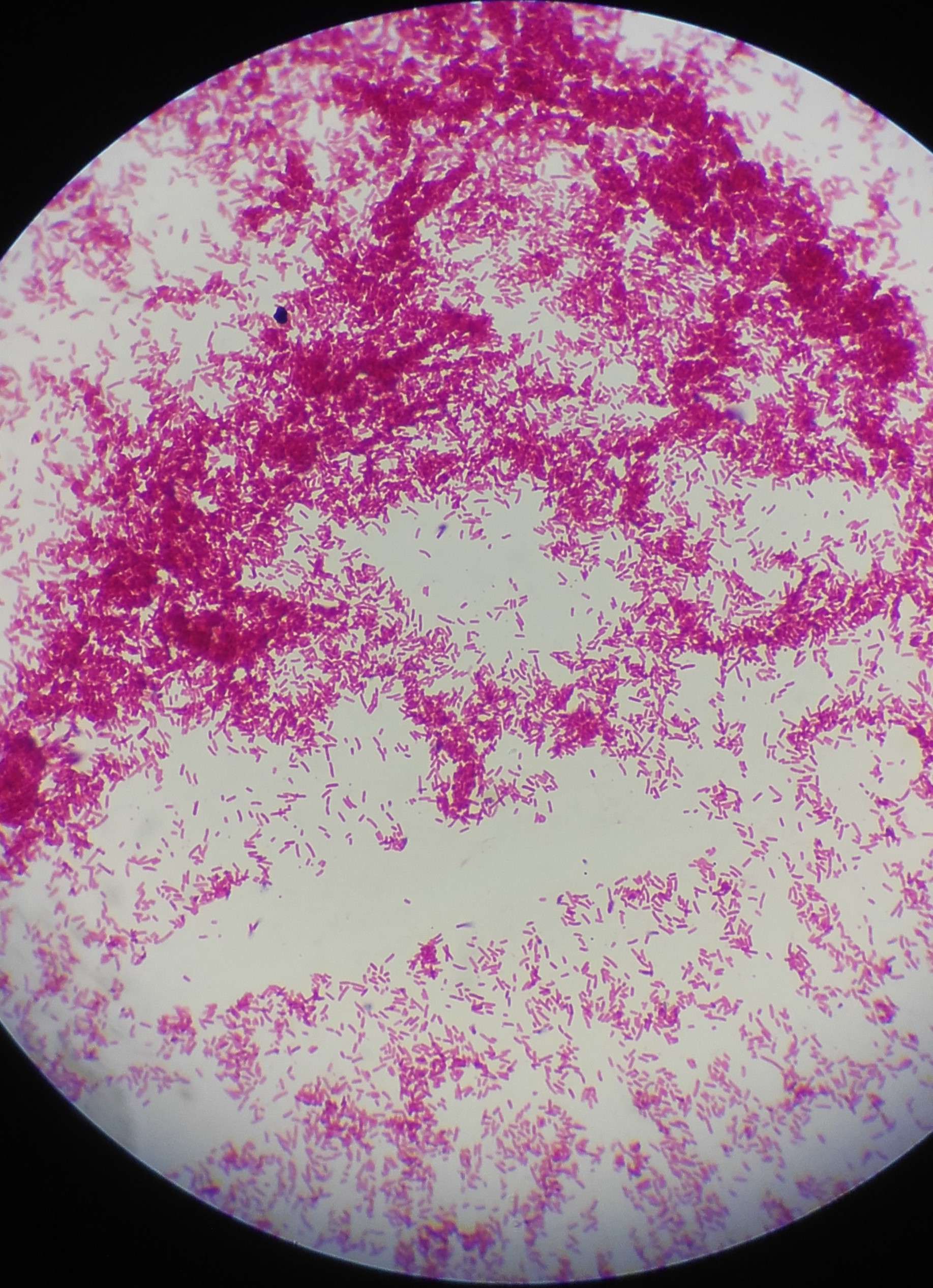
Image source: Wikipedia/Wikimedia
| Ecology, Host, and Life Cycle | |
|---|---|
| Oxygen requirements | Not Available |
| Optimal temperature | Not Available |
| Temperature range | Not Available |
| Habitat | Not Available |
| Biotic relationship | Not Available |
| Host(s) | Not Available |
| Cell arrangement | Not Available |
| Sporulation | Not Available |
| Energy source | Not Available |
| Pathogenicity | Not Available |
Gene Summary
Adenine Count
630322 bp
Thymine Count
633585 bp
Guanine Count
404190 bp
Cytosine Count
394805 bp
Genome Length
2063024 bp
Protein-coding Genes
1858 genes
Non-Coding Genes
103 genes
# of Chromosomes/Plasmids
1
Genes
| Name | Locus Tag | UniProt ID | Strand Orientation | Gene Start/End | Protein Molecular Weight |
|---|---|---|---|---|---|
| hypothetical protein | CP354_07190 | Not Available | Positive | 1406893 - 1407204 | 12347.6 |
| acetyltransferase | CP354_07195 | Not Available | Positive | 1407266 - 1409131 | 70171.8 |
| marr family transcriptional regulator | CP354_07200 | Not Available | Positive | 1409142 - 1409597 | 17887.5 |
| cof-type had-iib family hydrolase | CP354_07205 | Not Available | Positive | 1409602 - 1410408 | 30121.4 |
| lysm peptidoglycan-binding domain-containing protein | CP354_07210 | Not Available | Positive | 1410731 - 1411333 | 21278.2 |
| Tmrna,resume consensus sequence (at 88): tataactgcaaacaataa | Not Available | Not Available | Positive | 1411437 - 1411808 | Not Available |
| dna-binding response regulator | CP354_07220 | Not Available | Positive | 1411953 - 1412672 | 27808.2 |
| two-component sensor histidine kinase | CP354_07225 | Not Available | Positive | 1412672 - 1414159 | 57141.9 |
| sugar transporter | CP354_07230 | Not Available | Positive | 1414328 - 1415188 | 30553.4 |
| acetyltransferase | CP354_07235 | Not Available | Negative | 1415262 - 1415876 | 22636.2 |
Pathways
0 pathways
No pathways found
No metabolic pathways have been associated with this bacterium yet.
Health Effects
No health effects information available for this bacterium.


