
Kingdom
Pseudomonadati
Phylum
Verrucomicrobiota
Class
Verrucomicrobiia
Order
Verrucomicrobiales
Family
Akkermansiaceae
Genus
Akkermansia
Description
Taxonomy
| Kingdom | Pseudomonadati |
|---|---|
| Phylum | Verrucomicrobiota |
| Class | Verrucomicrobiia |
| Order | Verrucomicrobiales |
| Family | Akkermansiaceae |
| Genus | Akkermansia |
| Species | Akkermansia glycaniphila |
| Strain | No strain |
Profile
| Physiology | |
|---|---|
| Gram staining properties | Gram-negative |
| Shape | ovoid |
| Mobility | non-motile |
| Flagellar presence | Yes |
| Number of membranes | Not Available |
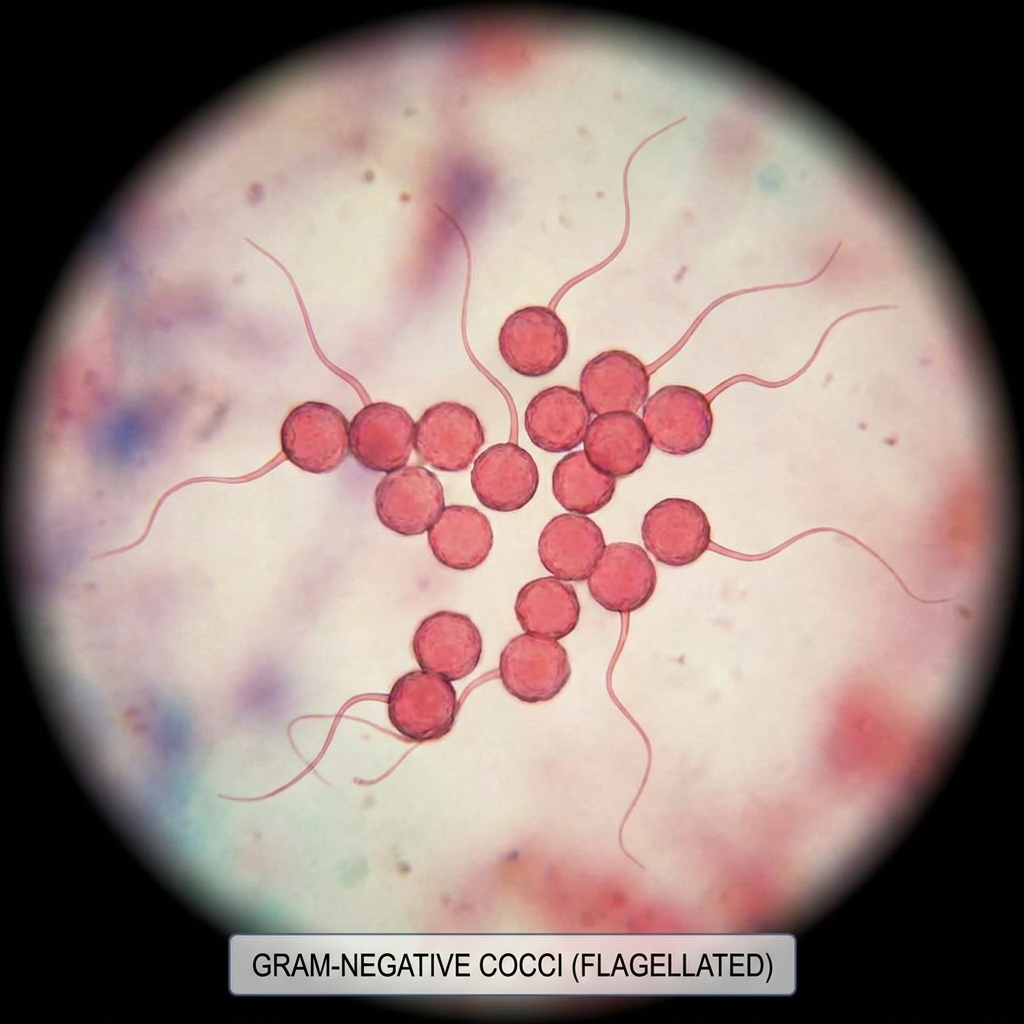
AI-generated image based on bacteria physiology
| Ecology, Host, and Life Cycle | |
|---|---|
| Oxygen requirements | anaerobic |
| Optimal temperature | 29 |
| Temperature range | mesophilic |
| Habitat | Not Available |
| Biotic relationship | Not Available |
| Host(s) | Not Available |
| Cell arrangement | Not Available |
| Sporulation | Not Available |
| Energy source | Not Available |
| Pathogenicity | Not Available |
Gene Summary
Adenine Count
664540 bp
Thymine Count
637461 bp
Guanine Count
866647 bp
Cytosine Count
905430 bp
Genome Length
3074078 bp
Protein-coding Genes
2514 genes
Non-Coding Genes
62 genes
# of Chromosomes/Plasmids
1
Genes
| Name | Locus Tag | UniProt ID | Strand Orientation | Gene Start/End | Protein Molecular Weight |
|---|---|---|---|---|---|
| lysm peptidoglycan-binding domain-containing protein | PYTT_RS06260 | Not Available | Positive | 1507085 - 1507762 | 24028.1 |
| lysm peptidoglycan-binding domain-containing protein | PYTT_RS06265 | Not Available | Positive | 1507788 - 1508090 | 10725.0 |
| l,d-transpeptidase family protein | PYTT_RS06270 | Not Available | Positive | 1508121 - 1509080 | 33299.7 |
| hypothetical protein | PYTT_RS06275 | Not Available | Positive | 1509096 - 1509518 | 15567.1 |
| histidinol dehydrogenase | PYTT_RS06280 | Not Available | Positive | 1509639 - 1510934 | 46214.8 |
| recq family atp-dependent dna helicase | PYTT_RS06285 | Not Available | Positive | 1510990 - 1512897 | 70061.4 |
| multidrug transporter subunit mdtd | PYTT_RS06290 | Not Available | Positive | 1512968 - 1514407 | 51469.4 |
| o-acetylhomoserine aminocarboxypropyltransferase/cysteine synthase family protein | PYTT_RS06295 | Not Available | Negative | 1514439 - 1515728 | 46519.2 |
| phosphodiesterase yaei | PYTT_RS06300 | Not Available | Negative | 1516023 - 1516883 | 32028.3 |
| aminopeptidase | PYTT_RS06305 | Not Available | Negative | 1516895 - 1518007 | 41283.5 |
Pathways
0 pathways
No pathways found
No metabolic pathways have been associated with this bacterium yet.
Health Effects
No health effects information available for this bacterium.
