
Kingdom
Pseudomonadati
Phylum
Pseudomonadota
Class
Betaproteobacteria
Order
Burkholderiales
Family
Alcaligenaceae
Genus
Achromobacter
Description
Taxonomy
| Kingdom | Pseudomonadati |
|---|---|
| Phylum | Pseudomonadota |
| Class | Betaproteobacteria |
| Order | Burkholderiales |
| Family | Alcaligenaceae |
| Genus | Achromobacter |
| Species | Achromobacter insolitus |
| Strain | strain NCTC13520 |
Profile
| Physiology | |
|---|---|
| Gram staining properties | Gram-negative |
| Shape | sphere |
| Mobility | Not Available |
| Flagellar presence | Yes |
| Number of membranes | Not Available |
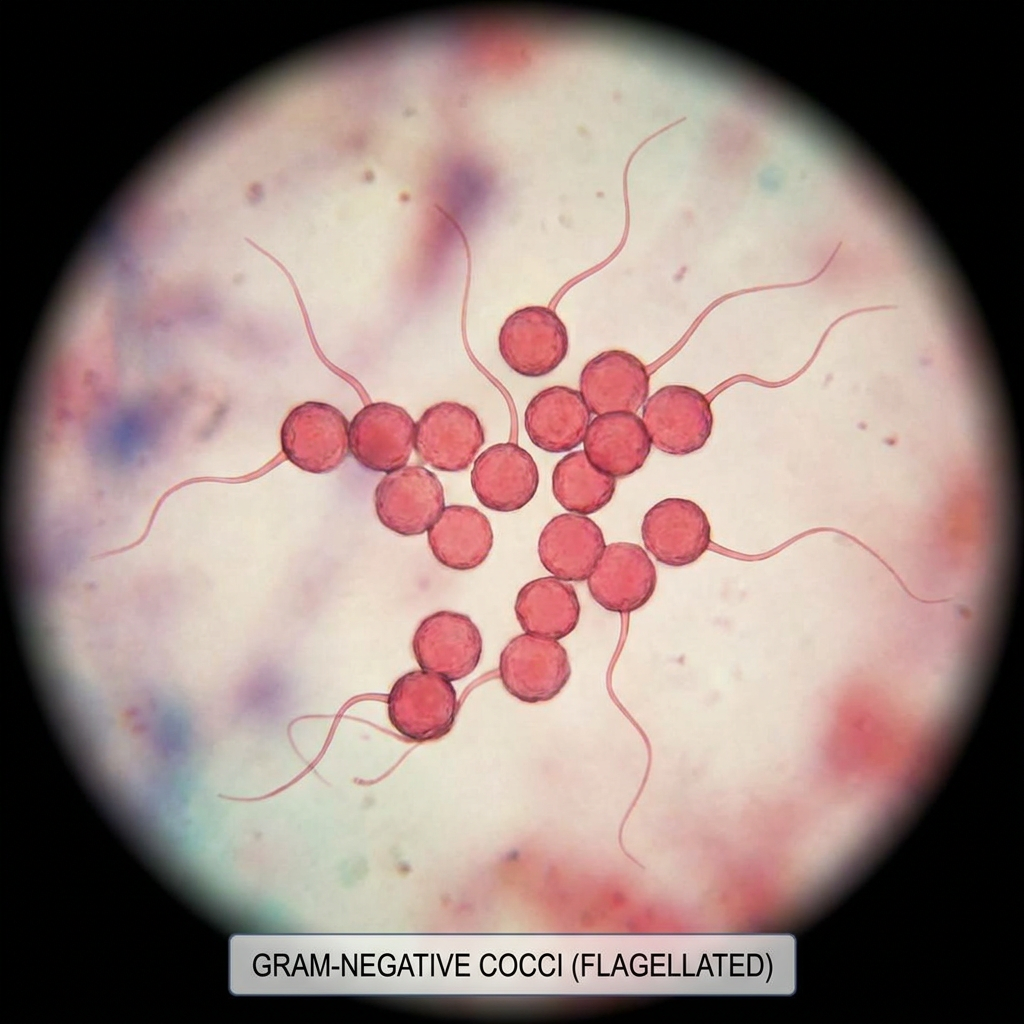
AI-generated image based on bacteria physiology
| Ecology, Host, and Life Cycle | |
|---|---|
| Oxygen requirements | aerobic |
| Optimal temperature | Not Available |
| Temperature range | Not Available |
| Habitat | electronic waste contaminated soil; permafrost |
| Biotic relationship | Not Available |
| Host(s) | Not Available |
| Cell arrangement | Not Available |
| Sporulation | Not Available |
| Energy source | Not Available |
| Pathogenicity | Not Available |
Gene Summary
Adenine Count
1130953 bp
Thymine Count
1127856 bp
Guanine Count
2108641 bp
Cytosine Count
2105026 bp
Genome Length
6472476 bp
Protein-coding Genes
5848 genes
Non-Coding Genes
109 genes
# of Chromosomes/Plasmids
1
Genes
| Name | Locus Tag | UniProt ID | Strand Orientation | Gene Start/End | Protein Molecular Weight |
|---|---|---|---|---|---|
| acyl-coa dehydrogenase | EL339_RS25415 | Not Available | Negative | 5539994 - 5542249 | 81465.2 |
| nucleoside recognition domain-containing protein | EL339_RS25420 | Not Available | Positive | 5542403 - 5543632 | 43356.4 |
| pyruvate kinase | EL339_RS25425 | Not Available | Negative | 5543688 - 5545130 | 51992.4 |
| glycerate kinase | EL339_RS25430 | Not Available | Positive | 5545239 - 5546381 | 38114.0 |
| 16s rrna (adenine(1518)-n(6)/adenine(1519)-n(6))- dimethyltransferase rsma | EL339_RS25435 | Not Available | Negative | 5546471 - 5547262 | 29534.6 |
| peptidylprolyl isomerase | EL339_RS25440 | Not Available | Negative | 5547281 - 5548867 | 57633.7 |
| lps-assembly protein lptd | EL339_RS25445 | Not Available | Negative | 5548864 - 5551224 | 88028.0 |
| aminoglycoside phosphotransferase family protein | EL339_RS25450 | Not Available | Positive | 5551394 - 5552434 | 39087.4 |
| n-acetylmuramate alpha-1-phosphate uridylyltransferase muru | EL339_RS25455 | Not Available | Positive | 5552434 - 5553120 | 24383.3 |
| duf6776 family protein | EL339_RS25460 | Not Available | Positive | 5553268 - 5553966 | 25862.1 |
Pathways
0 pathways
No pathways found
No metabolic pathways have been associated with this bacterium yet.
Health Effects
No health effects information available for this bacterium.

