Kingdom
Pseudomonadati
Phylum
Pseudomonadota
Class
Gammaproteobacteria
Order
Pseudomonadales
Family
Pseudomonadaceae
Genus
Pseudomonas
Description
Taxonomy
| Kingdom | Pseudomonadati |
|---|---|
| Phylum | Pseudomonadota |
| Class | Gammaproteobacteria |
| Order | Pseudomonadales |
| Family | Pseudomonadaceae |
| Genus | Pseudomonas |
| Species | Pseudomonas fluorescens |
| Strain | strain NCTC10783 |
Profile
| Physiology | |
|---|---|
| Gram staining properties | Negative |
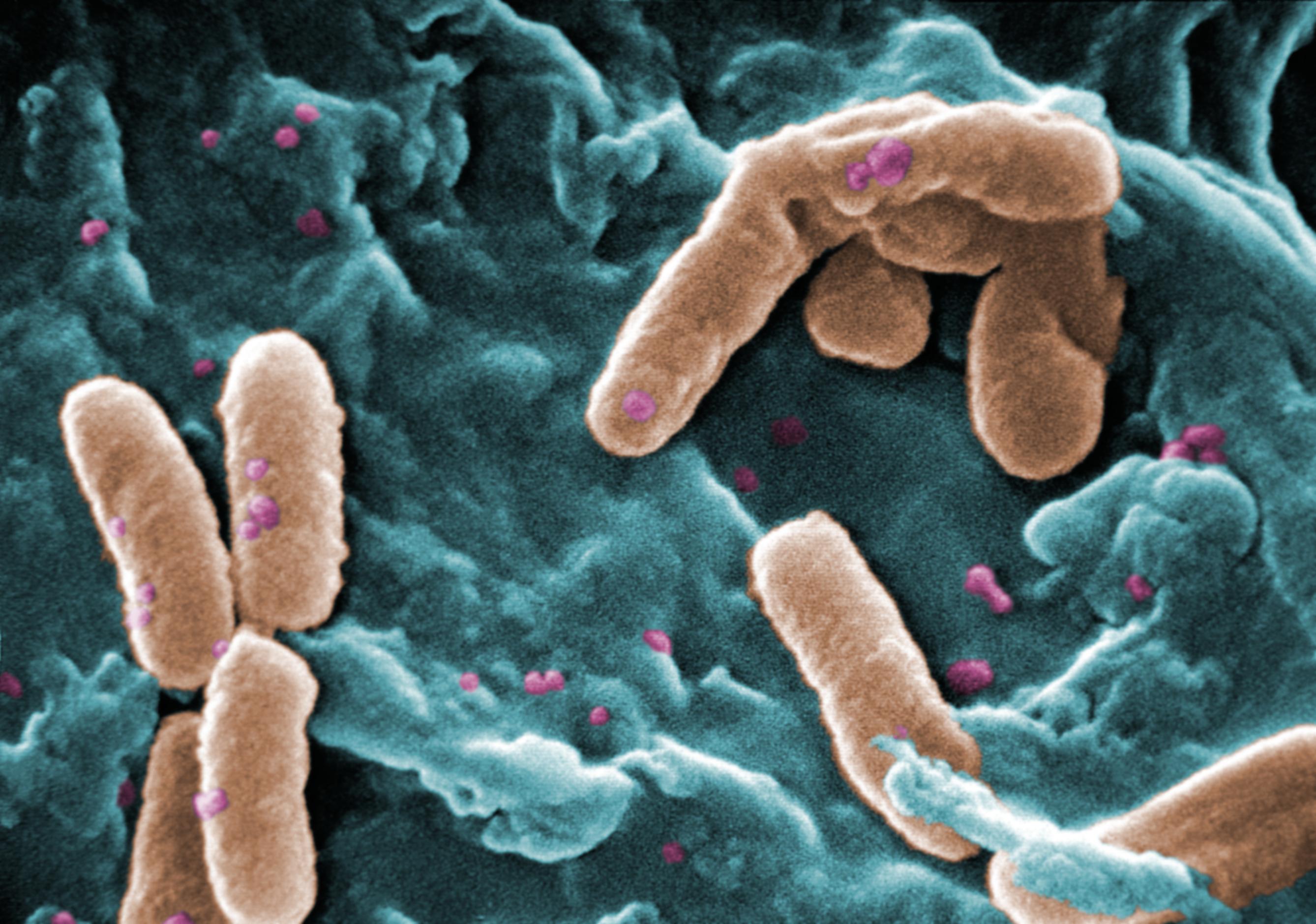
| Shape | Rod |
| Mobility | Yes |
| Flagellar presence | Yes |
| Number of membranes | 2 |

Image source: Wikipedia/Wikimedia
| Ecology, Host, and Life Cycle | |
|---|---|
| Oxygen requirements | Aerobe |
| Optimal temperature | 25 |
| Temperature range | Mesophilic |
| Habitat | Multiple |
| Biotic relationship | Free living |
| Host(s) | Homo sapiens, Metazoa, Viridiplantae |
| Cell arrangement | Singles |
| Sporulation | Not Available |
| Energy source | Heterotroph |
| Pathogenicity | Animal |
Gene Summary
Adenine Count
1171376 bp
Thymine Count
1169842 bp
Guanine Count
2261827 bp
Cytosine Count
2263384 bp
Genome Length
6866429 bp
Protein-coding Genes
6149 genes
Non-Coding Genes
254 genes
# of Chromosomes/Plasmids
1
Genes
| Name | Locus Tag | UniProt ID | Strand Orientation | Gene Start/End | Protein Molecular Weight |
|---|---|---|---|---|---|
| aldo/keto reductase | EL286_RS23635 | Not Available | Positive | 4965485 - 4966297 | 29031.8 |
| hypothetical protein | EL286_RS23640 | Not Available | Positive | 4966466 - 4967386 | 34702.9 |
| acyl-coa dehydrogenase family protein | EL286_RS23645 | Not Available | Negative | 4967411 - 4968619 | 43269.1 |
| acyl-coa dehydrogenase family protein | EL286_RS23650 | Not Available | Negative | 4968668 - 4969957 | 46521.2 |
| bifunctional d-glycero-beta-d-manno-heptose-7-phosphate kinase/d-glycero-beta-d-manno-heptose 1-phosphate adenylyltransferase hlde | EL286_RS23655 | Not Available | Negative | 4970085 - 4971509 | 50351.8 |
| lipid a export permease/atp-binding protein msba | EL286_RS23660 | Not Available | Negative | 4971550 - 4973361 | 66445.0 |
| hypothetical protein | EL286_RS23665 | Not Available | Positive | 4973469 - 4974119 | 24987.2 |
| o-antigen ligase waal | EL286_RS23670 | Not Available | Positive | 4974127 - 4975332 | 44387.3 |
| alpha-1,3-rhamnosyltransferase | EL286_RS23675 | Not Available | Negative | 4975351 - 4976235 | 33549.4 |
| glycosyltransferase | EL286_RS23680 | Not Available | Negative | 4976396 - 4977352 | 36627.2 |
Pathways
1342 pathways