Kingdom
Pseudomonadati
Phylum
Pseudomonadota
Class
Gammaproteobacteria
Order
Pseudomonadales
Family
Pseudomonadaceae
Genus
Pseudomonas
Description
Taxonomy
| Kingdom | Pseudomonadati |
|---|---|
| Phylum | Pseudomonadota |
| Class | Gammaproteobacteria |
| Order | Pseudomonadales |
| Family | Pseudomonadaceae |
| Genus | Pseudomonas |
| Species | Pseudomonas fluorescens |
| Strain | strain NCTC10783 |
Profile
| Physiology | |
|---|---|
| Gram staining properties | Negative |
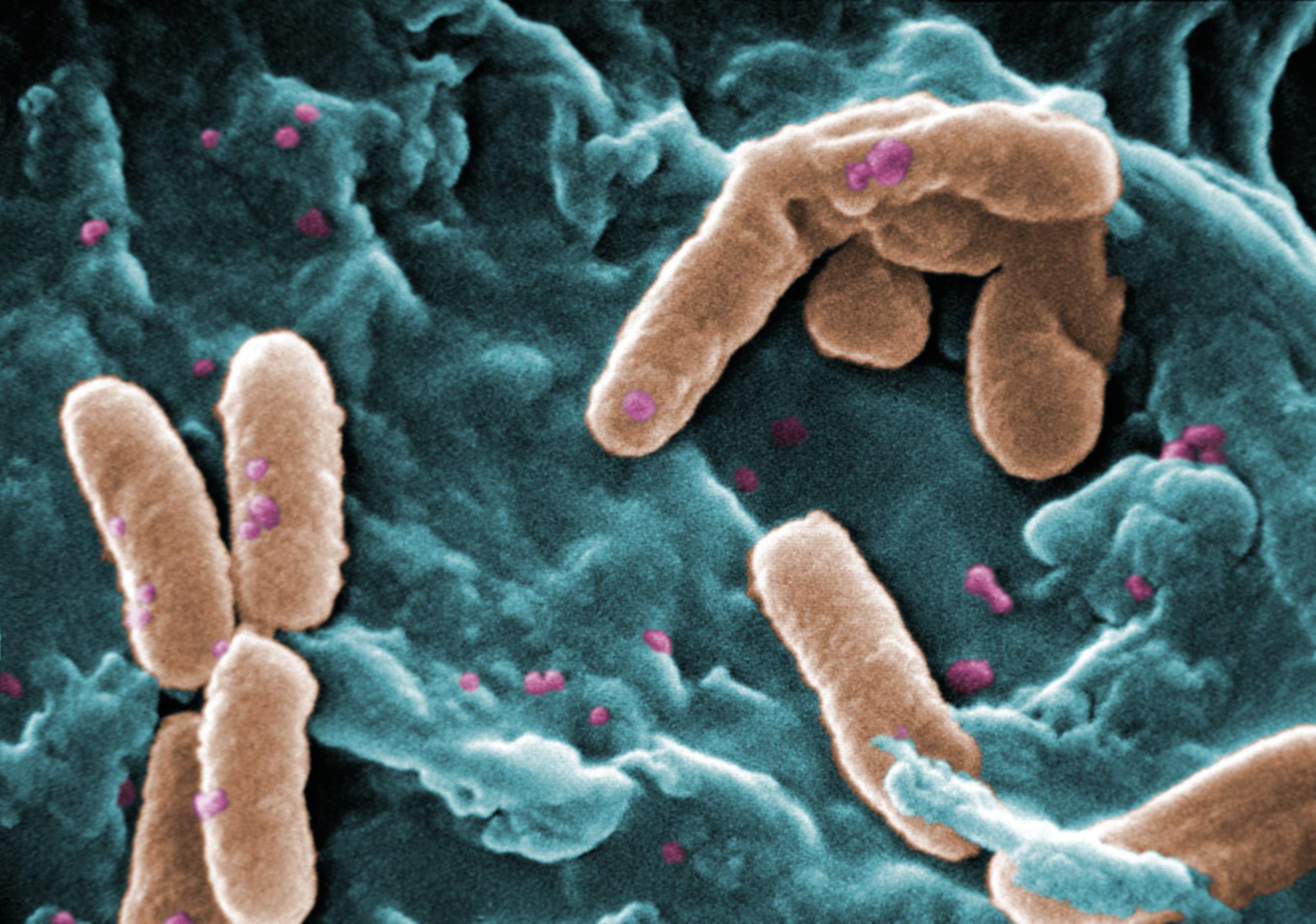
| Shape | Rod |
| Mobility | Yes |
| Flagellar presence | Yes |
| Number of membranes | 2 |

Image source: Wikipedia/Wikimedia
| Ecology, Host, and Life Cycle | |
|---|---|
| Oxygen requirements | Aerobe |
| Optimal temperature | 25 |
| Temperature range | Mesophilic |
| Habitat | Multiple |
| Biotic relationship | Free living |
| Host(s) | Homo sapiens, Metazoa, Viridiplantae |
| Cell arrangement | Singles |
| Sporulation | Not Available |
| Energy source | Heterotroph |
| Pathogenicity | Animal |
Gene Summary
Adenine Count
1171376 bp
Thymine Count
1169842 bp
Guanine Count
2261827 bp
Cytosine Count
2263384 bp
Genome Length
6866429 bp
Protein-coding Genes
6149 genes
Non-Coding Genes
254 genes
# of Chromosomes/Plasmids
1
Genes
| Name | Locus Tag | UniProt ID | Strand Orientation | Gene Start/End | Protein Molecular Weight |
|---|---|---|---|---|---|
| alpha/beta hydrolase | EL286_RS00170 | Not Available | Negative | 33494 - 34141 | 23421.9 |
| amino acid abc transporter substrate-binding protein | EL286_RS00175 | Not Available | Positive | 34438 - 35463 | 37045.0 |
| phosphatidylcholine synthase | EL286_RS00180 | Not Available | Positive | 35575 - 36291 | 26620.3 |
| nuclear transport factor 2 family protein | EL286_RS00185 | Not Available | Positive | 36362 - 36844 | 18269.6 |
| glutathione s-transferase c-terminal domain-containing protein | EL286_RS00190 | Not Available | Positive | 36911 - 37612 | 26335.8 |
| giy-yig nuclease family protein | EL286_RS00195 | Not Available | Positive | 37605 - 37919 | 11236.6 |
| catb-related o-acetyltransferase | EL286_RS00200 | Not Available | Positive | 37948 - 38637 | 25610.0 |
| glutathione s-transferase family protein | EL286_RS00205 | Not Available | Positive | 38758 - 39693 | 33980.8 |
| vit1/ccc1 transporter family protein | EL286_RS00210 | Not Available | Positive | 39697 - 40449 | 25690.3 |
| hypothetical protein | EL286_RS00215 | Not Available | Positive | 40538 - 41449 | 33542.1 |
Pathways
0 pathways
No pathways found
No metabolic pathways have been associated with this bacterium yet.