Kingdom
Pseudomonadati
Phylum
Pseudomonadota
Class
Gammaproteobacteria
Order
Pseudomonadales
Family
Pseudomonadaceae
Genus
Pseudomonas
Description
Taxonomy
| Kingdom | Pseudomonadati |
|---|---|
| Phylum | Pseudomonadota |
| Class | Gammaproteobacteria |
| Order | Pseudomonadales |
| Family | Pseudomonadaceae |
| Genus | Pseudomonas |
| Species | Pseudomonas fluorescens |
| Strain | strain NCTC10783 |
Profile
| Physiology | |
|---|---|
| Gram staining properties | Negative |
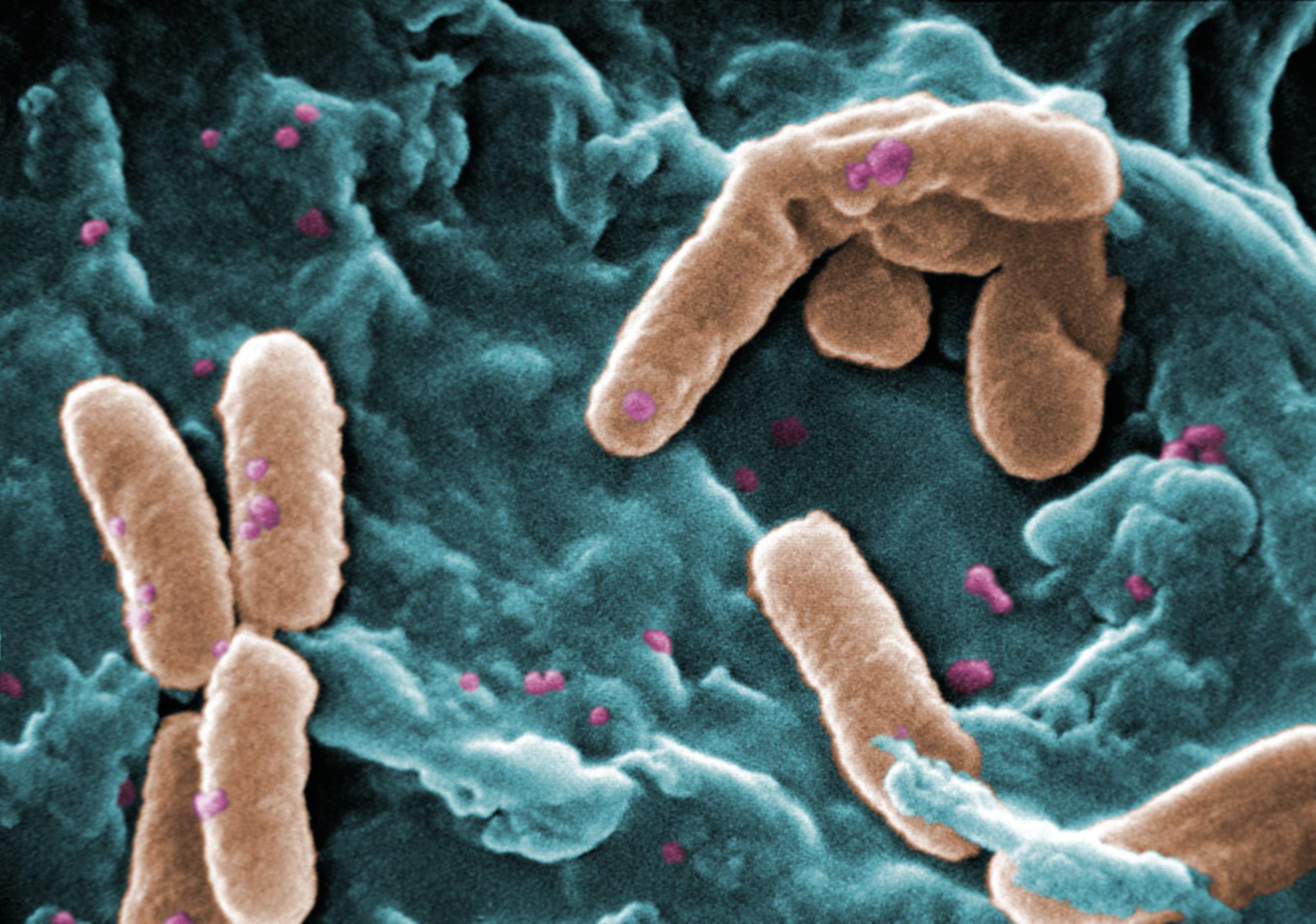
| Shape | Rod |
| Mobility | Yes |
| Flagellar presence | Yes |
| Number of membranes | 2 |

Image source: Wikipedia/Wikimedia
| Ecology, Host, and Life Cycle | |
|---|---|
| Oxygen requirements | Aerobe |
| Optimal temperature | 25 |
| Temperature range | Mesophilic |
| Habitat | Multiple |
| Biotic relationship | Free living |
| Host(s) | Homo sapiens, Metazoa, Viridiplantae |
| Cell arrangement | Singles |
| Sporulation | Not Available |
| Energy source | Heterotroph |
| Pathogenicity | Animal |
Gene Summary
Adenine Count
1171376 bp
Thymine Count
1169842 bp
Guanine Count
2261827 bp
Cytosine Count
2263384 bp
Genome Length
6866429 bp
Protein-coding Genes
6149 genes
Non-Coding Genes
254 genes
# of Chromosomes/Plasmids
1
Genes
| Name | Locus Tag | UniProt ID | Strand Orientation | Gene Start/End | Protein Molecular Weight |
|---|---|---|---|---|---|
| fusc family protein | EL286_RS04345 | Not Available | Positive | 914256 - 915242 | 33820.8 |
| amp nucleosidase | EL286_RS04350 | Not Available | Positive | 915724 - 918571 | 103191.0 |
| tetratricopeptide repeat protein | EL286_RS04355 | Not Available | Positive | 918549 - 922130 | 134989.0 |
| pellicle/biofilm biosynthesis outer membrane protein pelc | EL286_RS04360 | Not Available | Positive | 922170 - 922688 | 18677.2 |
| peld ggdef domain-containing protein | EL286_RS04365 | Not Available | Positive | 922694 - 924061 | 51019.7 |
| tetratricopeptide repeat protein | EL286_RS04370 | Not Available | Positive | 924039 - 925028 | 36656.7 |
| gt4 family glycosyltransferase pelf | EL286_RS04375 | Not Available | Positive | 925025 - 926548 | 56676.9 |
| exopolysaccharide pel transporter pelg | EL286_RS04380 | Not Available | Positive | 926550 - 927920 | 51634.6 |
| hypothetical protein | EL286_RS04385 | Not Available | Negative | 927961 - 928191 | 8726.58 |
| helix-turn-helix domain-containing protein | EL286_RS04390 | Not Available | Positive | 928317 - 928793 | 18133.6 |
Pathways
0 pathways
No pathways found
No metabolic pathways have been associated with this bacterium yet.